'Panama Papers' probe: Stiglitz quits, cites lack of transparency
Nobel Prize-winning economist: It's amazing how the government tried to undermine us
Reuters Buenos Aires The committee set up to investigate lack of transparency in Panama’s financial system itself lacks transparency, Nobel Prize-winning economist Joseph Stiglitz told Reuters after resigning from the “Panama Papers” commission.
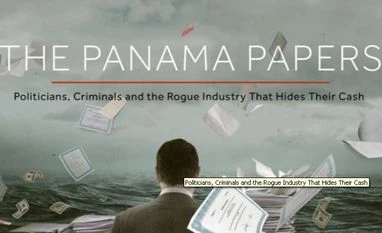
The leak in April of more than 11.5 million documents from the Panamanian law firm Mossack Fonseca, dubbed the “Panama Papers,” detailed financial information from offshore accounts and potential tax evasion by the rich and powerful.
Stiglitz and Swiss anti-corruption expert Mark Pieth joined a seven-member commission tasked with probing Panama’s notoriously opaque financial system, but they say they found the government unwilling to back an open investigation.
Both quit the group on Friday after they say Panama refused to guarantee the committee’s report would be made public. “I thought the government was more committed, but obviously they’re not,” Stiglitz said. “It’s amazing how they tried to undermine us.”
The Panamanian government defended the committee’s “autonomous” management in a statement issued later on Friday, and while it said it regretted the resignations of Stiglitz and Pieth, it chalked them up to unspecified “internal differences.” Panama’s President Juan Carlos Varela said in April that the independent commission would review the country’s financial and legal practices.
In its first full meeting of the investigative committee in New York on June 4-5, there was consensus that the government of Panama needed to commit to making the final report public, whatever its findings, Stiglitz and Pieth said. But they said they got a letter from the government last week backing off from its commitment to making the committee’s finding public.
“We can only infer that the government is facing pressure from those who are making profits from the current non-transparent financial system in Panama,” Stiglitz said.
Commission member Alberto Aleman, former administrator of the Panama Canal, rejected assertions that the committee lacked transparency, and said the five remaining members, four of which are Panamanian, would continue their work. “The report has to be delivered to the president of Panama, and then the president of Panama will decide when and how it will be made public,” he said.
The Panama Papers cover a period of almost 40 years, from 1977 until December 2015, and show that some companies set up in tax havens with the help of Mossack Fonseca may have been used for money laundering, arms and drug deals as well as tax evasion.
In addition to embarrassing leaders worldwide who had interests tied to secretive business concerns, the leak heaped pressure on Panama, well-known for its lax financial laws, to clean up its act.
“I have had a close look at the so called Panama Papers, and I must admit that even as an expert on economic and organised crime, I was amazed to see so much of what we talk about in theory was confirmed in practice,” Pieth said in a telephone interview.
In the papers he said he found evidence of crimes such as money laundering for child prostitution rings. “We’re being asked to do this as a courtesy for them and we’re paraded in front of the world media first, and then we’re told to shut up when they don't like it,” Pieth, a criminal law professor at Basel University, said.

 "'Panama Papers' probe: Stiglitz quits, cites lack of transparency")


 Connect with us on WhatsApp