
Timeline of China's attempts to prevent stock market meltdown
Chinese stock markets have plunged nearly 30% over the previous three weeks
 "Timeline of China's attempts to prevent stock market meltdown")
Explore Business Standard
Chinese stock markets have plunged nearly 30% over the previous three weeks
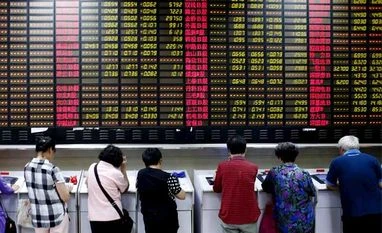
The Chinese government has taken a series of steps since late June to stave off a crash in its stock markets, which plunged nearly 30% over the previous three weeks since touching a peak on June 12, hit by tight liquidity conditions ahead of the quarter-end and uncertainty over the central bank's easing policy.
June 27 (Saturday) - China's central bank cuts guidance lending rates and trims the amount of cash that some banks must hold as reserves, in a move widely interpreted as mainly a step to support the slumping stock market.
June 29 - Markets continue to crash. The state-backed provider of margin financing, China Securities Finance Corp, publicly says that the risk of margin trading is controllable and margin calls are relatively small.
Later in the day, China says it will allow pension funds managed by local governments to invest in the stock market for the first time, potentially channelling more than 1 trillion yuan ($161 billion) into the equity market.
The China Securities Regulatory Commission (CSRC) issues a statement, attacking pessimists for "talking down" the Chinese market and economy, urging investors to remain calm.
Rumours swirl about pending policy interventions, including a freeze on IPOs, official instructions to institutional investors not to sell shares, and the implementation of a stamp tax on share sales to dissuade selloffs. None are confirmed although some companies announce share purchasing plans. The securities regulatory continues to approve IPOs.
Benchmark indexes shrug off the monetary easing to end down over 3% after a day of see-saw trade, leading domestic media to call it "Black Monday". The Shanghai Composite Index closes down 3.3%.
June 30 - Rumours spread that some overseas and domestic institutions had deliberately sold short to damage the market.
China's Financial Futures Exchange denies rumours that foreign investors, including Goldman Sachs , have been shorting Chinese stocks using index futures.
Primary indexes post a sharp recovery in afternoon trade to end up over 6%, the CSI300 index's best single-day gain since 2009. SSEC closes down 5.5%.
July 1 - Stocks tumble again, surrendering much of the previous day's sharp gains to end down around 5%. After markets close, the Shanghai and Shenzhen stock exchanges announce plans to lower securities transaction fees by 30% from August.
Key indexes plunge again, surrendering much of the previous gains. SSEC closes down 5.2%.
July 2 - The CSRC announces relaxation of rules on margin trading before market open, lowering threshold for individual investors to trade on margins and expanding brokerages' funding channels.
The CSRC announces setting up a team to look into illegal manipulation and investigate cases if needed.
Key indexes end down sharply. SSEC down 3.5%.
July 3 - China Financial Futures Exchange (CFFEX) suspends 19 accounts from short-selling for one month, sources with direct knowledge tell Reuters.
Benchmark indexes slump again despite the regulator's efforts to stop the slide. SSEC loses 5.8%.
July 4 (Saturday) - China's top 21 securities brokerages pledge to invest at least 120 billion yuan ($19.33 billion) collectively to help stabilize the country's stock markets.
Twenty-eight Chinese companies planning to list on the country's stock exchanges say they would suspend their initial public offering plans.
July 5 (Sunday) - China state-owned investment company Central Huijin Investment Ltd says it has recently purchased exchange-traded funds (ETFs) to support the market and will continue to do so.
The CSRC announces that People's Bank of China (PBOC) will inject liquidity directly to the state-backed margin finance company to stabilize the tumbling stock market.
July 6 - Main stock indexes open up more than 7% on the rescue measures, but give back most gains during the day to close up 2.4%. Companies continue to rush to halt trading in shares.
July 8 - Chinese regulators come out with another series of support statements and measures, most of them in the morning before market open, in particular raising margin requirements for short positions taken against the small-cap CSI500 Index, and making it easier for insurers to buy blue chips. The CSRC warns of "panic" and "irrational selling" in the market.
At this point more than 40% of listed companies have successfully requested trading halts.
SSEC closes down 6.75%.
($1 = 6.2 yuan)
First Published: Jul 08 2015 | 1:54 PM IST

