
US Congress passes $618.7 billion annual Defense Bill
It includes a $3.2 billion increase in military spending when there has been no similar increase in non-defense funding
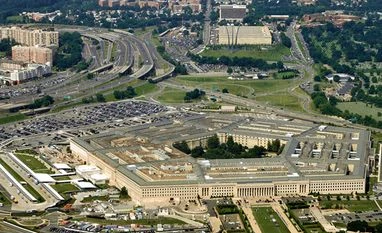 "US Congress passes $618.7 billion annual Defense Bill")
WebinarsNew
Deep DiveNew
Explore Business Standard
It includes a $3.2 billion increase in military spending when there has been no similar increase in non-defense funding
The US Senate overwhelmingly passed a compromise version of an annual defense policy bill on Thursday without controversial provisions such as requiring women to register for the draft or allowing contractors to make religion-based hiring decisions.
Ninety-two senators backed the $618.7 billion National Defense Authorization Act, or NDAA, and seven opposed it. Because it passed the House of Representatives by a similarly large margin last week, the bill now goes to the White House for President Barack Obama to veto or sign into law.
A White House spokesman told a briefing he did not yet have a position on the bill to report.
The 2016 bill, the last of Obama's presidency, includes some Republican-backed initiatives with which he has disagreed in the past. It includes a $3.2 billion increase in military spending when there has been no similar increase in non-defense funding.
The bill also bars closures of military bases, although top Pentagon officials say they have too much capacity, and it blocks planned reductions in active-duty troop numbers.
And it continues policies that bar transfers of prisoners to US soil from the detention centre at Guantanamo Bay, Cuba, which Obama had hoped to close. While his administration has shipped most inmates from the controversial prison, the Democrat is not expected to accomplish his goal of shuttering it before he leaves office January 20.
Obama's successor, Republican Donald Trump, wants to keep Guantanamo open and expand it.
The NDAA passed both chambers in the Republican-led Congress with margins large enough to overcome a veto, and the compromise legislation features many provisions such as a military pay raise and an expansion of a landmark human rights bill, that are extremely popular in Congress.
After months of negotiation, the Senate and House Armed Services committees unveiled a compromise version of the NDAA last month that left out the Russell Amendment, a "religious freedom" measure Democrats said would have let federal contractors discriminate against workers on the basis of gender or sexual orientation, overturning Obama's executive order.
Some House Republicans said they hoped to revisit that provision after Trump takes office when they do not have to worry about a veto threat from a Democratic White House.
The bill also excluded a provision that would have required women to register for the military draft, now that Pentagon leaders are moving to allow them into combat.
A provision recommending that the US conducts yearly high-level military exchanges with Taiwan, which Beijing sees as a breakaway province, made it into the final bill.
China's defen\ce ministry said in a statement on its official microblog on Friday that it was "firmly opposed" to the move, which would "inevitably damage US interests".
First Published: Dec 09 2016 | 7:27 PM IST


 Connect with us on WhatsApp