Uber dealt another blow in UK, loses bid to block worker rights for drivers
Uber, which could be valued at $120 billion in a flotation, has faced protests, regulatory crackdowns and licence losses around the world as it challenges existing competitors and rapidly expands
Reuters London Uber has lost its latest court bid to stop its British drivers being classified as workers, entitling them to rights such as the minimum wage, in a decision which jeopardises the taxi app's business model.
Two drivers successfully argued at a tribunal in 2016 that the Silicon Valley firm exerted significant control over them to provide an on-demand service, and that they should cease to be considered as self-employed, which gives few protections in law.
An employment appeal tribunal upheld that decision last year, prompting Uber to go to the Court of Appeal. On Wednesday, a majority of judges there said they agreed with the previous verdicts and rejected Uber's arguments.
"They approve the reasoning of the Employment Tribunal, which relied on a number of features of Uber's working arrangements as being inconsistent with the driver having a direct contractual relationship with the passenger," the Court of Appeal said in a summary.
Uber said it would appeal the verdict, meaning the legal process will continue.
"This decision was not unanimous and does not reflect the reasons why the vast majority of drivers choose to use the Uber app," said a spokeswoman.
"We have been granted permission to appeal to the Supreme Court and will do so."
Uber, which could be valued at $120 billion in a flotation, has faced protests, regulatory crackdowns and licence losses around the world as it challenges existing competitors and rapidly expands.
In Britain, the self-employed are entitled to only basic protections such as health and safety, but workers receive the minimum wage, paid holidays and rest breaks. Uber has introduced a number of benefits for drivers this year.
Unions argue that the gig economy - where people often work for various firms at the same time without fixed contracts - is exploitative, whilst Uber says its drivers enjoy the flexibility and on average earn much more than the minimum wage.
Uber says its practices have been widely used for decades in Britain by minicabs, private hire vehicles which cannot be hailed in the street like traditional black taxis.
The Independent Workers Union of Great Britain, which backed the two drivers in the case, attacked Uber for appealing court decisions which have gone against the firm.
"It is becoming increasingly ridiculous for so-called 'gig economy' companies to argue that the law is unclear when they lose virtually every tribunal and court case," said General Secretary Jason Moyer-Lee.

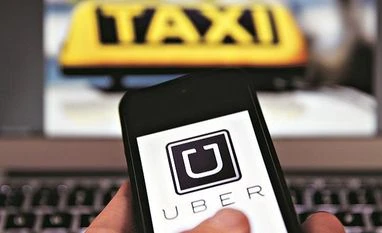 "Uber dealt another blow in UK, loses bid to block worker rights for drivers")

