Do you really need all those diagnostic tests?

Due to inadequate regulations and low awareness, doctors often make patients take unnecessary tests
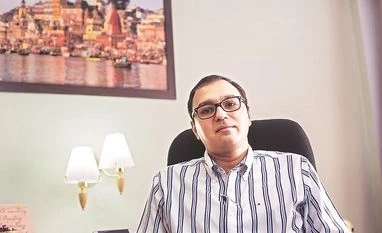
Vishal Rao, head and neck surgeon, HealthCare Global Cancer Center, Bengaluru
Vishal Rao, head and neck surgeon at HealthCare Global Cancer Center, Bengaluru
Nikita Puri
Last Updated : Mar 18 2017 | 12:27 AM IST
A few months ago, when US-based Meera Goswami (name changed) came down to Bengaluru for a holiday, persistent neck-ache made her see a doctor. When it didn’t improve in the next few days, she was asked by her doctor to do an ultrasound scan. The scan showed a tiny nodule in the thyroid gland, and the doctor suggested inserting a needle to check what it was. When Goswami was told this nodule could be “suspicious for cancer”, she approached Vishal Rao, the head and neck surgeon at HealthCare Global Cancer Center. 

From neck pain (owing to her lifestyle) to cancer is a big leap: this was nothing but a case of over-diagnosis, says Rao. “This is what we’d call “laboratory cancer”, it’s so small that it will not trouble you,” he says, adding, “We shouldn’t keep doing different scans and go searching for small cancers: there are studies proving that many illnesses live and die with us without causing any trouble.”

Vishal Rao, head and neck surgeon at HealthCare Global Cancer Center, Bengaluru
Goswami’s is a case that medical professionals refer to as “defensive medicine”, a practice of recommending a diagnostic test or medical treatment that is not necessarily needed, but an option that mainly serves to protect the physician from legal lawsuits. 

“The relationship between a doctor and patient is a very holy relationship and this bond is being broken down by the healthcare industry, companies that work on medical devices and defensive medicine,” says Balaram Bhargava, professor of cardiology at the All India Institutes of Medical Sciences in New Delhi. 

What also worries Bhargava is that much like over-the-counter medicine, tests like MRI can also be done without the physician’s advice. “There’s a need to standardise medical tests and these should ideally be only prescribed by the physician. The human body is very complex, we are still trying to understand it even after centuries of research,” he says. 

In his day-to-day practice, Rao sees patients who want to do PET scans to check if they have cancer: there’s no physical evidence for this, only fear. And this is a fear that can easily be taken advantage of: with the high-end technology available today, says Rao, we can even pick up lesions that are barely 1 cm in size. Pair a report of this “laboratory cancer” with a number of Google searches and it becomes a hotbed for exploitation of patients. 

“With strong lobbies, private testing facilities and multi-specialty hospitals, the scenario has turned particularly sore over the last decade,” says Arun Gadre, a Pune-based gynaecologist. 

Gadre has co-authored a book called Dissenting Diagnosis (Random House India) that documents 78 doctors talking about “the ways in which vulnerable patients are exploited by a system that promotes unscrupulous medical practices.”

These “unscrupulous practices” come in many forms and aren’t limited to medical tests and scans: Gadre has seen 15 to 20 women being asked to undergo medical termination of pregnancy (MTP or abortion), when they weren’t even pregnant in the first place. “Most of these were unmarried women who were given someone else’s test results. The doctors who prescribed the tests would then charge the patient for a surgery they didn’t even need to do: they’d just sedate the patient for two hours,” he shares. 

In Rajasthan, a non-profit called Prayas documented 286 hysterectomies carried out by three private clinics during April-October 2010 in the Dausa district: pain in abdomen and some menstrual problems were the reasons women had approached these clinics. 

“Bachhedani me sujan aa gayee hai. Aage cancer hone ka khatra hai (Your uterus is swollen and there is danger of cancer happening later on),” Gulab Avtar, one of the patients, was told. 

There’s a lot of pressure on doctors, says Gadre, “They are offered exorbitant commissions, the promise of more patients, and even international junkets. All of this has led to degeneration of the medical practice.” He now works with a non-profit called Support for Advocacy and Training to Health Initiatives (SATHI) that works towards drafting health policies. 

“When a doctor does go wrong, he is the first of the criminals involved. He has the nerve and he has the knowledge,” says Gadre, quoting Arthur Conan Doyle (The Adventure of the Speckled Band). 

In a system where healthcare is not scrutinised by the government, taking a second opinion appears to be the only way out. But this is also an overly simplified approach. How many opinions does one take? Besides, as Bharagava and Rao say, physicians should respect each other’s diagnosis. (“We’ve all taken the Hippocratic Oath and ultimately want the patient’s welfare.”)

If healthcare professionals are at the centre of the problem, the solution, too, is coming from them. Only a couple of months ago, the Society for Less Investigative Medicine, or SLIM, was registered in India. Such societies are now present in a number of countries, like Choosing Wisely which works in the US, Canada, Australia and the UK. 

“The intention of this society is to lay down guidelines about what tests shouldn’t unnecessarily be done in cardiology, gastroenterology, gynaecology, orthopaedics etc,” says Bhargava, one of the founding members of SLIM. 

“For example, all Class 1 officers in India have to get annual health check-ups done. There’s a list of tests they have to do and some of them are absolutely unnecessary to do every year, like a C-reactive protein or prostrate test. It’s important to talk to a physician and then take tests accordingly,” he explains.

As these guidelines get framed, here’s hoping for a better future for Indian healthcare. 

Testing the body:

* Though checking sugar levels is important for a person over 45, tests for CRP or C-Reactive protein don’t need to be done annually.

* Ultrasound for small ovarian cysts needn’t be regularly done. These are usually benign. 

* Chest X-rays needn’t be done annually. 

* Pap smears should be done only once in three years.

* Except in acute cases, calcium testing should be done only when there are symptoms of kidney stones, bone disease or nerve-related disorders.

* Consult a trusted physician about your symptoms before going for a test  

One subscription. Two world-class reads.

Already subscribed? Log in

Subscribe to read the full story →
*Subscribe to Business Standard digital and get complimentary access to The New York Times

Smart Quarterly

₹900

3 Months

₹300/Month

SAVE 25%

Smart Essential

₹2,700

1 Year

₹225/Month

SAVE 46%
*Complimentary New York Times access for the 2nd year will be given after 12 months

Super Saver

₹3,900

2 Years

₹162/Month

Subscribe

Renews automatically, cancel anytime

Here’s what’s included in our digital subscription plans

Exclusive premium stories online

  • Over 30 premium stories daily, handpicked by our editors

Complimentary Access to The New York Times

  • News, Games, Cooking, Audio, Wirecutter & The Athletic

Business Standard Epaper

  • Digital replica of our daily newspaper — with options to read, save, and share

Curated Newsletters

  • Insights on markets, finance, politics, tech, and more delivered to your inbox

Market Analysis & Investment Insights

  • In-depth market analysis & insights with access to The Smart Investor

Archives

  • Repository of articles and publications dating back to 1997

Ad-free Reading

  • Uninterrupted reading experience with no advertisements

Seamless Access Across All Devices

  • Access Business Standard across devices — mobile, tablet, or PC, via web or app

Next Story



