Two years back when the UAE-based Gulf Petrochem, a company set up by brothers Ashok and Sudhir Goyel, bought over Sah Petroleum, the market read an overhaul in the making. Now, the market is being proved right as the renamed Indian entity moves to claim a new identity. From being an industrial lubricants brand, GP Petroleums wants to make a mark in the consumer-focused auto lubricants business with a newly launched product called Repsol. It is also changing its product mix and lengthening its distribution arm to increase the contribution from auto lubricants.
The lubricants industry in India is dominated by IOC (Servo), Bharat Petroleum (MAK) and Hindustan Petroleum (Turbo). Together these brands have half the market share. The rest is with private multinationals, including Shell, Gulf Oil, Castrol, Exxon Mobil, Total, Ipol and smaller companies.
In the Indian lubricants industry, GP Petroleums is somewhat of an exception as its product mix is overly skewed towards industrial lubricants. It has close to 90 per cent in the industrials business and just 10 per cent of its volumes come from the lucrative auto industry. Ipol, its industrial lubricant, enjoys five per cent of the highly fragmented and unorganised market.
The company wants to turn the ratios around. “Our share in the auto lube market is at present less than a per cent, the aim is to increase this to five per cent in the next ten years which is still ambitious,” Hari Prakash M, chief executive officer for GP Petroleums says. The company is hoping to leverage its global brand name, increase last mile reach and launch more product based applications to do that.
Hari says, “It is a no brainer that we go that way.” He says that they will increase the auto industry’s share in its volumes from 10 to 30 per cent over the next three years.
Soon after the acquisition Gulf Petrochem knew it had to find an identity that was different from being an industrial lubricant brand. It had to find a way to get its foot into the booming auto market in the country if it had to grow. A strategic partnership with Spain’s Repsol to exclusively manufacture and market its lubricants across India was the first step. As part of its long-term plan, the company will also explore a joint manufacturing venture with Repsol in the country.
The market for auto lubricants depends on word-of-mouth publicity and a strong push from petrol pump dealers. It also has to be a name that consumers are familiar with. “We do not need to sell the brand per se; the brand is already there. They are on auto magazines already,” Hari says. Brand consultant Harish Bijoor points out that this may not be enough. “Petro brands may become forgotten history in spite of foreign lineage. One needs to have reach, market penetration and that is possible through ground presence,” he says.
Hari agrees and draws a parallel with the fast moving consumer goods (FMCG) segment and says, “Out of sight (is) out of mind in this business.” The company has been building the brand ground up, he says. They have developed a strong distribution chain and he says, “For Repsol we said we will not give any credit in the market.” This was an unconventional move in a market where 30-45 days credit to dealers is the norm and the first reaction that many had was that the brand will not survive. However, despite the initial scepticism, the move paid off says Hari. “We wanted to see who is a credible distributor. It was also a way to differentiate Repsol from Ipol. We had to ensure the communication around the two brands is very different,” he adds.
To ensure the distinction is clear, marketing for the two brands is handled by separate teams and the company operates with two different business cards— one for each brand.
GP Petroleums is also in the process of developing a mobile application to streamline the sale process right from the company up to the technician. “In our auto business, bulk of the sales is not because of the ad but because the mechanic has our brand on the top of his mind. So the entire focus is on getting the mind share of the mechanic at the workshops,” Hari says. He is hopeful that he can ride the current digital wave to launch the application that will bring dealers and distributors on the same platform.

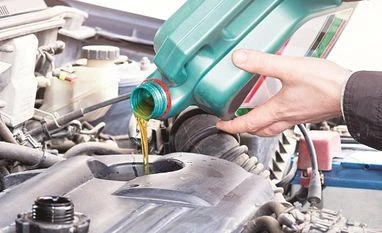 "GP Petroleums looks to ride the auto wave")












 Connect with us on WhatsApp