Right in the beginning of Little Women, one of the best recent films to catch up on besides Jojo Rabbit, Josephine “Jo” March, played by Saoirse Ronan, presents a short story to a newspaper editor. Jo tells him the story is a friend’s work, but the ink on her fingers betrays her. The editor proceeds to cross out page after page, telling her how people “want to be amused” and “not preached at. Morals don’t sell.” So Jo is surprised when he decides to publish it. Overjoyed, she runs down crowded streets like a free, wild, mad creature. Such unladylike behaviour is unacceptable in Jo’s circle, but it is rebellions such as this that made her character a favourite for generations together.
Director Greta Gerwig’s Little Women is a period drama set mostly in Massachusetts during the American Civil War. Based on Louisa May Alcott’s beloved novel of the same name, it follows the lives of the four March sisters, Meg (Emma Watson), Amy (Florence Pugh), Beth (Eliza Scanlen) and Jo.
It’s tough to hold your audience’s attention when your subject matter has been mined many times over. But Gerwig, the force behind notable works such as Lady Bird and Frances Ha, has made the film unmissable, one that is destined to become a classic too.
While some credit must go to the sparkling cast, which includes Meryl Streep (Aunt March), Laura Dern (Marmee) and Timothee Chalamet as boy-favourite Laurie, Gerwig’s remarkable talent ensures that that while the story is rooted in its period, it still projects a modern outlook. The director’s insight into character means that even the least liked of all the March sisters from Alcott’s book, Amy, gets the chance to be seen in a less harsh light.
The story is as much about family as it is about good parenting. It also serves as a reminder that the past is never “simpler”. Living in a time of civil strife, no electricity, and scarlet fever can’t have been easy. But agreeably, a house full of siblings talking and arguing about things big and small, which is a significant part of the movie, feels nostalgic.
What makes the film relatable is that it’s easy to see contemporary lives reflected in characters written over 150 years ago. In one scene, the usually irrepressible Jo tells her mother, “Women have minds and they have souls as well as just hearts. They’ve got ambition and they’ve got talent as well as just beauty. I am so sick of people saying that love is just all a woman is fit for. I’m so sick of it! But—I am so lonely.”
Perhaps one of the best compliments to Gerwig’s loyal interpretation of the film’s source material is to equate it with one of television’s poignant moments. In the popular sitcom FRIENDS, Joey, a lovable character who isn’t the sharpest tool in the shed, is reading Little Women. At one point of time he’s so petrified of the events narrated in the book that he proceeds to put it in the freezer, as if that could somehow stop the march of time. Gerwig’s version of that same event, even though flitting between timelines, leaves one reaching for tissues. Like Joey, one wishes the story could just be frozen in time till we are better prepared to receive it. If Little Women records something, it is that life moves on against all odds.
One would imagine that much to the chagrin of the fictional editor who shot down Jo’s story because of its moral underpinnings, the ageless Little Women is chock-full of subtle lessons. One of these is how everyone’s dreams are different, and that this doesn’t make one dream less important than another. If one March sister chooses not to have a family of her own (like Alcott in real life), another sister’s best version of life is to have exactly that.
The story’s protagonist Jo, a master of tales involving pirates and what not, remains unconvinced for much of the movie about whether a story about the lives of four siblings would really interest audiences (yes, she’s writing Little Women). But much like her readers in fiction, audiences around the globe have come to love the story. Regardless of one’s familiarity with the story, or lack of it, this one’s unmissable.

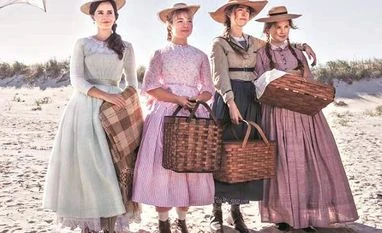 "Little Women, in its latest film avatar, is destined to become a classic")











