Private equity exits through IPO set for record with NSE offering

NSE has proposed IPO to raise Rs 10,000 crore this year
NSE
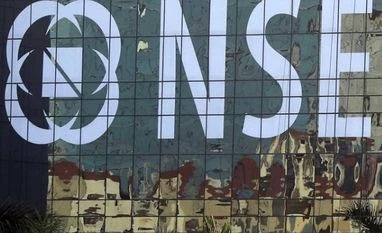
Buildings are reflected on the glass windows of the NSE (National Stock Exchange) building in Mumbai (Photo: Reuters)
Abhineet Kumar Mumbai
Last Updated : Jan 03 2017 | 1:05 AM IST
While 2016 saw the highest ever private equity (PE) exit through initial public offerings (IPOs), the record is set to be short-lived. The National Stock Exchange’s (NSE) proposed IPO to raise Rs 10,000 crore this year is expected to see the largest ever PE exit, of around Rs 5,000 crore. The issue, an offer-for-sale, will also see exits from other financial investors who have been waiting for an exit opportunity. 

This is more than the record Rs 4,252 crore worth of shares sold by PE investors in 11 IPOs last year. The year saw a total Rs 26,494 crore being raised in 26 IPOs. 

“Despite record PE exits through IPOs last year, two large IPOs did not see private equity monetising,” says Subhrajit Roy, executive director and head of equity capital market at Kotak Investment Bank. ICICI Prudential Life Insurance did not see its PE investors such as Fairfax monetising during its Rs 6,000-crore issue. 

PE
Similarly, PNB Housing Finance did not see investors such as Carlyle monetising during its Rs 3,000 crore issue. “This trend is likely to change, with PEs exiting in large issues this year,” says Roy. 

According to the draft filed by NSE with the Securities and Exchange Board of India (Sebi), the exchange plans to raise Rs 10,000 crore by offering 20-25 per cent stake through offer for sale. It comes to selling 111.41 million shares, held by 27 shareholders, a majority of them PE investors. This would come out to a valuation for the exchange between Rs 40,000 and Rs 50,000 crore depending on how much stake it sells for Rs 10,000 crore. 

Taking an average valuation of Rs 45,000 crore, its share price comes to Rs 898. With this, largest shareholder Tiger Global would be getting Rs 1,333 crore by selling 14.85 million shares that it has offered for sale in the IPO. Similarly, Temasek arm Aranda Investments would be getting Rs 890 and so will SAIF Partners by selling 9.9 million shares each.

While General Atlantic’s Gagil FDI will get Rs 777.5 crore for its 8.6 million shares, Goldman Sachs Strategic Investments will get Rs 605 crore for its 6.75 million shares.  Norwest Venture Partners is expected to get Rs 700 crore and Morgan Stanley’s MS Strategic Rs 400 crore.

This will clearly take it well over the Rs 5,000 crore PE exit through the IPO. “Given the size of NSE IPO and the fact that it is completely offer for sale, it is set to provide biggest ever PE exit,” says Pranav Haldea, managing director, Prime Database Group, which tracks IPOs, explaining how large-size issuances usually skew the numbers. The record for the highest amount raised through an IPO is for 2010 (Rs 37,535) crore as the year saw the largest ever IPO by Coal India for Rs 15,000 crore. 

Even without the NSE IPO, the PE exits in the year could be expected to be similar to last year. There are already documents filed for 22 IPOs this year for raising about Rs 21,000 crore. Of this, 14 IPOs that plan to raise Rs 17,500 crore. 

If we exclude NSE, then there would be documents filed for 13 IPOs worth Rs 7,500 crore where PEs plan an exit. However, how much of this Rs 7,500 crore would be for PE exit is not clear, as several of these IPOs include fresh issuance of share besides the offer-for-sale. 

As IPO execution time has come down to an average of six months now, new documents filed till May could be easily expected to have their IPO in the year. 

“Secondary market is giving superior return and liquidity than the private markets today,” says Ajay Saraf, executive director, ICICI Securities. “In private markets, the financial investors are not willing to pay same multiples. So, the trend for PE firms to exit through IPOs is expected to continue this year,” he says.

One subscription. Two world-class reads.

Already subscribed? Log in

Subscribe to read the full story →
*Subscribe to Business Standard digital and get complimentary access to The New York Times

Smart Quarterly

₹900

3 Months

₹300/Month

SAVE 25%

Smart Essential

₹2,700

1 Year

₹225/Month

SAVE 46%
*Complimentary New York Times access for the 2nd year will be given after 12 months

Super Saver

₹3,900

2 Years

₹162/Month

Subscribe

Renews automatically, cancel anytime

Here’s what’s included in our digital subscription plans

Exclusive premium stories online

  • Over 30 premium stories daily, handpicked by our editors

Complimentary Access to The New York Times

  • News, Games, Cooking, Audio, Wirecutter & The Athletic

Business Standard Epaper

  • Digital replica of our daily newspaper — with options to read, save, and share

Curated Newsletters

  • Insights on markets, finance, politics, tech, and more delivered to your inbox

Market Analysis & Investment Insights

  • In-depth market analysis & insights with access to The Smart Investor

Archives

  • Repository of articles and publications dating back to 1997

Ad-free Reading

  • Uninterrupted reading experience with no advertisements

Seamless Access Across All Devices

  • Access Business Standard across devices — mobile, tablet, or PC, via web or app

Next Story



