Home / Economy / News / Statsguru: Six charts show India may see another bumper crop year
Statsguru: Six charts show India may see another bumper crop year
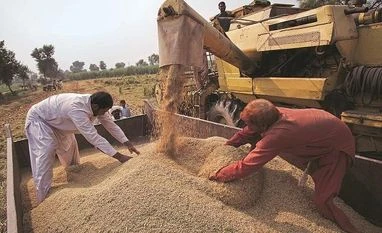
Wheat procurements may fall this year as exports and the private market have become more lucrative
premium
The wheat procurement had increased 50 per cent last year, as per Food Corporation of India (FCI) data, but rice and paddy procurement was down 16 per cent each
3 min read Last Updated : May 02 2022 | 6:10 AM IST
The Indian Meteorological Department has announced that monsoon rainfall this year would likely be 99 per cent of the long-period average.
As India expects another year of normal monsoon, it is likely to breach the foodgrain production record. For the last three years, rainfall has been either normal or above normal (chart 1). This and a spurt in prices have helped increase grain and pulses production.
As per data, foodgrain and pulses production was at a decadal high in 2021-22. While foodgrain production had increased to 316.1 million tonnes, pulses production touched 27 million tonnes in 2021-22 (chart 2).
The government has set a target of 328 million tonnes for foodgrain output in 2022-23. Procurements by the government, however, declined in 2021-22. The wheat procurement had increased 50 per cent last year, as per Food Corporation of India (FCI) data, but rice and paddy procurement was down 16 per cent each (chart 3).
Wheat procurements may fall this year as exports and the private market have become more lucrative. The government procures rice and wheat at a minimum support price. But even if the government procurement comes down, India has enough buffer stock. The total foodgrain stock, which includes rice, wheat, unmilled paddy and coarse grains, was higher than last year.
Even though rice and wheat stock were lower, the central pool of unmilled paddy was higher in April 2022 than previous year. The government had 51.3 million metric tonnes (mmt) of rice and wheat and another 33.9 mmt of unmilled paddy in the central pool in April 2022. Last year, it had 56.4 mmt of rice and wheat, and 31.1 mmt of unmilled paddy. FCI and other state agencies had a storage capacity of just 81.8 mmt (chart 4).
Exports of agricultural commodities have increased during the pandemic. In 2020-21, agri exports had increased 22.6 per cent compared to the previous year. In 2021-22, these further increased by 6.8 per cent (chart 5).
The import of agricultural commodities had also increased. India imported Rs 2.1 trillion worth of agricultural commodities in 2021-22, compared to Rs 1.5 trillion from 2020-21 (chart 6). Exports may rise further this year as Indian wheat producers take advantage of higher prices because of the Russia-Ukraine conflict.
StatsGuru is a weekly feature. Every Monday, Business Standard guides you through the numbers you need to know to make sense of the headlines




