ICC World CUP 1975 ICC Cricket World Cup 1975, the first edition of the tournament, was also the first major limited-overs international cricket tournament. Held from June 7 to 27 in England, the tournament had eight participating teams, including the six test-playing nations of the time — Australia, England, India, New Zealand, Pakistan and West Indies. The two associate teams were Sri Lanka and East Africa. The ODIs in those days had 60 overs to bowl for either team in a match. The teams were divided into two groups of four each, with each team playing the other teams in its group once in the league stage. The top two from each group qualified for the semi-finals.
India in 1975 cricket world cup In the 1975 world cup, the Srinivasaraghavan Venkataraghavan-led Indian national cricket team was placed in group A, along with England, East Africa and New Zealand. India’s first world cup match is remembered for a bizzare display of batting by the legendary Sunil Gavaskar. After England scored 334/4 in 60 overs, Gavaskar batted through full 60 overs and remained unbeaten at 36, even as India managed to score only 132 for 3 and losing the match by 202 runs. With 37 runs off 59 balls, Gundappa Viswanath was the top-scorer for India.
1975 world cup final England, New Zealand, West Indies and Australia were the teams that qualified for the semi-finals, making this the only World Cup in which no team from the Indian subcontinent made it to the semis. Australia defeated England and West Indies beat New Zealand in the semis. In the 1975 world cup final, West Indies, led by Clive Llyod, scored 291-8 in 60 overs, with skipper scoring 102 off 85 balls, and defeated Ian Chappell’s Australia by 17 runs at Lord’s cricket ground in London on June 21.
| ICC World Cup 1975 final details |
| Toss | Australia , elected to field first |
| Australia playing 11 | reg Chappell, Ian Chappell (c), Rod Marsh (wk), Doug Walters, Ross Edwards, Dennis Lillee, Gary Gilmour, Max Walker, Jeff Thomson, Rick McCosker, Alan Turner |
| West Indies playing 11 | Keith Boyce, Roy Fredericks, Vanburn Holder, Bernard Julien, Alvin Kallicharran, Rohan Kanhai, Clive Lloyd (c), Deryck Murray (wk), Sir Viv Richards, Andy Roberts, Gordon Greenidge |
| Player of the match | Clive Lloyd |
| Umpires | Dickie Bird , Tom Spencer |
ICC World Cup 1979 ICC World Cup 1979, the second edition of the cricket world cup, was again hosted by England (from June 9 to 23) and won by West Indies. The format remained unchanged, with eight teams participating. These were England, India, Australia, Pakistan, West Indies, New Zealand, Sri Lanka and Canada. The eight teams were divided into two groups and top two teams from each group made it to the semi-finals. There was no team from Africa in the 1979 world cup, as East Africa failed to qualify for the tournament.
India in 1979 world cup Venkataraghavan’s Indian team were placed in Group B this time, along with West Indies, New Zealand and Sri Lanka. India had a dismal performance in 1975 world cup, as they lost all their matches of the league stage and were beaten even by the minnow Sri Lanka.
1979 world cup final After the league games, Pakistan, England, New Zealand and West Indies made it to the semi-finals. England defeated New Zealand in a very close fight by 9 runs, while West Indies beat Pakistan by 43 runs in the second semifinal. In the 1979 cricket world cup final, Clive Llyod’s West Indies scored 286 for 9, with Vivan Richards scoring a magnificent 138 runs off 157 balls. In reply, Mike Brearley-led England managed to score only 194. West Indies won their second world cup in a row.
| ICC World Cup 1979 final details |
| Toss | England , elected to field first |
| England playing 11 | Geoff Boycott, Bob Taylor (wk), Chris Old, Mike Hendrick, Graham Gooch, Phil Edmonds, Mike Brearley (c), Derek Randall, Sir Ian Botham, David Gower, Wayne Larkins |
| West Indies playing 11 | Alvin Kallicharran, Clive Lloyd (c), Deryck Murray (wk), Sir Viv Richards, Andy Roberts, Gordon Greenidge, Michael Holding, Collis King, Colin Croft, Joel Garner, Desmond Haynes |
| Player of the match | Sir Vivian Richards |
| Umpires | Barrie Meyer, Dickie Bird |
ICC World Cup 1983 ICC World Cup 1983 was again hosted by England (from June 9 to 25). The format of the 1983 World Cup had eight teams divided into two groups of four each. During the league stage, a team played every other in its group twice. The top two teams from each group then advanced to the semifinals. Zimbabwe made its first appearance at a world cup, as Canada failed to qualify. The other seven teams were the same as those in 1975 world cup. The 1983 World Cup was full with some dramatic cricket, with underdogs like India and Zimbabwe upsetting biggies West Indies and Australia, respectively.
India in 1983 World Cup Led by Kapil Dev, the Indian cricket team was placed in Group B, along with West Indies, Australia and Zimbabwe. India finished second in their group, with 16 points, while West Indies topped. India saw some brilliant batting performance, with Dev going on to score 175 against Zimbabwe in the most crucial knock for India’s qualification in semis.
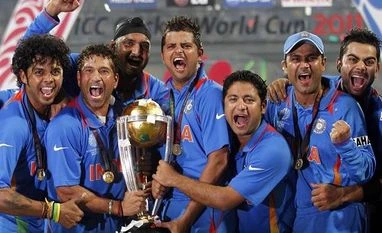
1983 World Cup final England, India, Pakistan and West Indies made it to the 1983 world cup semifinal. In the first semi-final India (217-4) defeated England (213-10) on June 22 at Old Trafford in Manchester. West Indies (188-2) crushed Pakistan in the second semifinal, chasing the target of 185 in just 48.4 overs. Underdogs India made it to the finals and defeated the mighty West Indians at Lords Cricket Ground in London by 43 runs. In the 1983 world cup finals, India managed to score only 183 runs but with a brilliant bowling effort bundled out West Indies for 140. And thus began the Indian cricket team’s new journey in the cricketing world.
| ICC World Cup 1983 final details |
| Toss | West Indies , elected to field first |
| India playing 11 | Sunil Gavaskar, Madan Lal, Mohinder Amarnath, Syed Kirmani (wk), Kapil Dev (c), Yashpal Sharma, Kirti Azad, Roger Binny, Sandeep Patil, Kris Srikkanth, Balwinder Sandhu |
| West Indies playing 11 | Clive Lloyd (c), Sir Viv Richards, Andy Roberts, Gordon Greenidge, Michael Holding, Joel Garner, Faoud Bacchus, Desmond Haynes, Larry Gomes, Malcolm Marshall, Jeff Dujon (wk) |
| Player of the match | Mohinder Amarnath |
| Umpires | Barrie Meyer, Dickie Bird |
ICC cricket World Cup 1987 The fourth edition of ICC cricket World Cup was hosted jointly by India and Pakistan from October 8 to November 8. From 1987 World Cup the number overs in each innings of a match was reduced from 60 to 50; the format of the game remained otherwise unchanged from 1983. All the eight teams that qualified in 1987 were the same as 1983.
India in cricket world cup 1987 The Indian cricket team, again led by Kapil Dev, was placed in Group A, along with Australia, New Zealand and Zimbabwe. India qualified for the semis, finishing at the top in the group with 20 points, having won five of its six matches at the group stage.
1987 world cup final India, Pakistan, England and Australia made it to the semifinals. Australia (267-6) defeated Pakistan (249) in the first semifinal, while England (254-6) beat India (219) in the second semifinal. In the 1983 world cup final, Allan Border’s Australia (253-5) defeated Mike Gatting’s England (246-8) to lift the world cup.
| ICC World Cup 1987 final details |
| Toss | Australia won the toss and opt to bat |
| Australia playing 11 | Allan Border (c), Dean Jones, David Boon, Craig McDermott, Simon ODonnell, Bruce Reid, Steve Waugh, Geoff Marsh, Greg Dyer (wk), Mike Veletta, Tim May |
| England playing 11 | Graham Gooch, Mike Gatting (c), John Emburey, Bill Athey, Paul Downton (wk), Allan Lamb, Eddie Hemmings, Neil Foster, Tim Robinson, Gladstone Small, Phil DeFreitas |
| Player of the match | David Boon |
| Umpires | Mahboob Shah, Ram Gupta |
ICC World Cup 1992 ICC World Cup 1992, the fifth edition of the cricket world cup, was jointly hosted by Australia and New Zealand from February 22 to March 25. For the first time, coloured clothing, white balls, black sightscreens and matches under flood lights were played in ICC cricket World Cup 1992. In late 1991, South Africa were re-admitted to the International Cricket Council after 21 years of exclusion over apartheid and became the ninth team in the tournament. The other eight were Australia, West Indies, India, Pakistan, England, Sri Lanka and associate member Zimbabwe. The format was changed from previous tournaments and now each team had to play with the other 8 once each; the top two teams on the points qualified for the semis.
India in 1992 world cup The Indian national cricket team, now led by Mohammad Azharuddin, made a dismal performance, finishing seventh on the points table, with two wins and five losses
1992 cricket world cup final New Zealand, England, Pakistan and South Africa qualified for the semi-finals. In the first semis, Pakistan (264-9) defeated New Zealand (262-7) while England (252-6) beat South Africa (232-6) in a rain-affected match. In the 1992 World Cup final, Imran Khan’s Pakistan defeated Graham Gooch’s England by 22 runs to lift the trophy.
| ICC World Cup 1992 final details |
| Toss | Pakistan won the toss and opt to bat |
| Pakistan playing 11 | Inzamam-ul-Haq, Imran Khan (c), Javed Miandad, Saleem Malik, Wasim Akram, Ramiz Raja, Ijaz Ahmed, Aaqib Javed, Mushtaq Ahmed, Moin Khan (wk), Aamer Sohail |
| England playing 11 | Graham Gooch (c), Sir Ian Botham, Allan Lamb, Derek Pringle, Phil DeFreitas, Neil Fairbrother, Alec Stewart (wk), Chris Lewis, Graeme Hick, Richard Illingworth, Dermot Reeve |
| Player of the match | Wasim Akram |
| Umpires | Steve Bucknor, Brian Aldridge |
ICC World Cup 1996 The ICC World Cup 1996 was jointly hosted by India, Pakistan and Sri Lanka from February 14 to March 17. In 1996, the number of participating countries increased to 12, with nine full members — Australia, England, India, New Zealand, Pakistan, Sri Lanka, South Africa, West Indies and Zimbabwe — and Kenya, Netherlands and United Arab Emirates as three associate countries. The 12 teams were divided into two groups, with 6 teams in each. The top 4 teams from both groups qualified to the Quarter finals.
India in 1996 world cup Mohammad Azharuddin’s India cricket team was placed in group A, where it finished third with six points, winning 3 of 5 matches. In the quarterfinals, India defeated Pakistan by 39 runs and made it to the semifinals.
1996 world cup final India, Sri Lanka, West Indies and Australia won their respective quarterfinal fixtures and made it to the semis. Sri Lanka (251-8) crushed India (120-8) in the first semifinal and stormed into finals, while Australia (207-8) defeated West Indies (202) in the second semifinal. In the 1996 World Cup final, Arjuna Ranatunga's Sri Lanka (245-3) defeated Australia (241-7) by 7 wickets to win their maiden ICC World Cup title.
| ICC World Cup 1996 final details |
| Toss | Sri Lanka won the toss and opt to bowl |
| Australia playing 11 | Ricky Ponting, Glenn McGrath, Shane Warne, Steve Waugh, Ian Healy (wk), Mark Waugh, Mark Taylor (c), Paul Reiffel, Damien Fleming, Michael Bevan, Stuart Law |
| Sri Lanka playing 11 | Sanath Jayasuriya, Chaminda Vaas, Muttiah Muralitharan, Arjuna Ranatunga (c), Aravinda de Silva, Asanka Gurusinha, Roshan Mahanama, Hashan Tillakaratne, Romesh Kaluwitharana (wk), Pramodya Wickramasinghe, Kumar Dharmasena |
| Player of the match | Aravinda de Silva |
| Umpires | Steve Bucknor, David Shepherd |
ICC World Cup 1999 ICC World Cup 1999, the seventh edition of the cricket world cup, was hosted primarily by England, while some games were also played in Scotland, Wales and the Netherlands. The tournament featured 12 teams — Australia, England, India, New Zealand, Pakistan, Sri Lanka, South Africa, West Indies, Zimbabwe, Bangladesh, Kenya and Scotland. At the group stage, the teams were divided into two groups of six each. A team played the other five in its group once each. The top three teams from each group advanced to the Super Sixes, a new concept introduced in the 1999 World Cup. Each team carried forward the points from the games against the other qualifiers from its group and then played each of the qualifiers from the other group. The top four teams in the Super Sixes advanced to the semi-finals.
India in 1999 world cup The Azharuddin-led India cricket team finished the league stage ranked second on the points table in its group, but failed to carry forward any points in super sixes. In the super sixes round, India defeated Pakistan but failed to win the remaining 5 matches and finished last.
1999 world cup final After the Super Sixes round, Pakistan, Australia, South Africa and New Zealand made it to the semi-finals. In the first semis, Pakistan (242-1) defeated New Zealand (241-7) while in the second semifinal Australia (213) was tied with South Africa (213) in what is regarded as a greatest cricketing contest in the history of World Cups. Australia advanced to the final as it had defeated the Proteas previously in the tournament. In the 1999 cricket world cup final, Australia (133-2) outclassed Pakistan (133) to win the title.
| ICC World Cup 1999 final details |
| Toss | Pakistan won the toss and opt to bat |
| Australia playing 11 | Adam Gilchrist (wk), Ricky Ponting, Glenn McGrath, Shane Warne, Darren Lehmann, Steve Waugh (c), Tom Moody, Mark Waugh, Paul Reiffel, Damien Fleming, Michael Bevan |
| Pakistan playing 11 | Shoaib Akhtar, Inzamam-ul-Haq, Abdul Razzaq, Shahid Afridi, Azhar Mahmood, Wasim Akram (c), Ijaz Ahmed, Saeed Anwar, Moin Khan (wk), Saqlain Mushtaq, Wajahatullah Wasti |
| Player of the match | Shane Warne |
| Umpires | Steve Bucknor, David Shepherd |
ICC World Cup 2003 ICC world Cup 2003 was hosted jointly by Zimbabwe, Kenya and South Africa from February 9 to March 23. This was the first world cup being played in Africa. The tournament featured 14 teams — 10 full member nations and four associate members. ICC cricket world cup 2003 followed the same format that had been introduced in the 1999 Cricket World Cup, with the teams divided into two groups, and the top three in each qualifying for the Super Sixes stage.
India in 2003 cricket world cup The Indian cricket team, now led by Sourav Ganguly, was placed in group A. It finished second in the group with five wins and one loss. In the super sixes round, India finished second, with a win in all three matches.
2003 cricket world cup final After the super sixes round, India, Kenya, Australia and Sri Lanka advanced to the semifinal. In the first semifinals, India (270-4) defeated Kenya (179-10), while Australia beat Sri Lanka in the second. India had to suffer a heartbreak in the final against mighty Australia, which went on pile a record 359. When put to bat, India was able to score only 234-10.
| ICC World Cup 2003 final details |
| Toss | India won the toss and opt to bowl |
| Australia playing 11 | Adam Gilchrist (wk), Ricky Ponting (c), Andrew Symonds, Glenn McGrath, Brett Lee, Damien Martyn, Brad Hogg, Matthew Hayden, Darren Lehmann, Michael Bevan, Andy Bichel |
| India playing 11 | Sachin Tendulkar, Virender Sehwag, Rahul Dravid (wk), Sourav Ganguly (c), Yuvraj Singh, Mohammad Kaif, Zaheer Khan, Harbhajan Singh, Dinesh Mongia, Ashish Nehra, Javagal Srinath |
| Player of the match | Ricky Ponting |
| Umpires | Steve Bucknor, David Shepherd |
ICC World Cup 2007 ICC World Cup 2007, the ninth edition of the cricket world cup, was hosted by Caribbean Islands from March 13 to April 28. The 16 competing teams were initially divided into four groups, with the two best-performing teams from each group moving on to a "Super 8" stage.
India in 2007 world cup Rahul Dravid’s Indian cricket team had an awful world cup in 2007. It failed to beat Bangladesh and Sri Lanka at the group stage and was knocked out of the tournament early.
2007 world cup finals After the completion of the super 8 stage, Australia, Sri Lanka, New Zealand and South Africa advanced to the semis. In the first semifinal, Sri Lanka (289-5) defeated New Zealand (208), while in the second Australia (153-3) demolished South Africa (149) by 7 wickets. In the 2007 world cup final, Australia (281-4) defeated Sri Lanka (215-8) by 53 runs (D/L method) in a rain-affected match to lift the trophy.

 "ICC Cricket World Cup 2019: Things to know about past winners and losers")









