Was Russia 2018 the greatest of all Fifa World Cups?

Russia 2018, it was universally decided, had not just been a good World Cup, and not just a great World Cup. It had, in fact, been the best World Cup
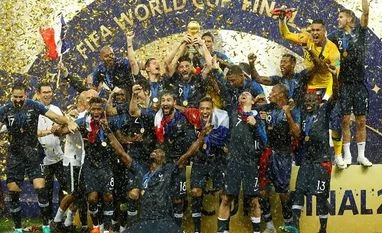
Fifa World Cup 2018
World champions France. Photo: Reuters
Rory Smith | NYT Moscow
Last Updated : Jul 16 2018 | 1:49 AM IST
Some time around France’s virtuoso victory against Argentina and Belgium’s breathtaking comeback against Japan, the planet seemed to come to a decision. Russia 2018, it was universally decided, had not just been a good World Cup, and not just a great World Cup. It had, in fact, been the best World Cup.
 
That assessment may not last, of course: once we have all had a chance to reflect, it may not quite live up to the standards of the 1982 tournament, most people’s market leader whenever this conversation arises.
 
Regardless of its exact place in the hierarchy, the effusive discussion itself will be of considerable relief to FIFA, which hitched its fortunes to President Vladimir V. Putin of Russia, for better or for worse. When international soccer is being outflanked in so many ways by the club game, when it can appear to be such an afterthought, when the next edition, in 2022, will be occur mostly during December and the one after that, in 2026, will expand to 48 teams from 32, these five weeks needed to be a success.

Have they gone well enough to carry FIFA and the World Cup through the next eight years of upheaval without suffering considerable damage? Certainly, this has been not just an enjoyable tournament, but a significant one, one whose broader consequences may echo for a few years yet. In more ways than one, Russia 2018 really was a game-changer.

The Rise of Collectivism
 
If there is little doubt this has been an outstanding tournament, it seems fair to say there has been no outstanding team. Either France or Croatia would be a more than worthy winner, of course, but one has played a notch below its potential brilliance and the other right at the very edge of its capabilities. Neither would be considered, by most, a team for the ages in the mold of Spain’s 2010 vintage.
 
Nor has it been a World Cup dominated by individuals: Kylian Mbappé has shone the brightest, and Luka Modric the longest, but in a sport increasingly in thrall to stars, almost all of those teams that had been constructed in the service of the great and the good failed to ignite.

Mohamed Salah and Robert Lewandowski went home in the group stage, and Lionel Messi, Cristiano Ronaldo and Andres Iniesta soon after. Neymar made it to the quarterfinals, but won few friends along the way. His addiction to melodrama was a discordant note at a World Cup that has seen thankfully little controversy.
 
Instead, it has been a tournament for collectives: for Uruguay’s resilient, defiant defence; for England’s ingenious, coordinated set pieces; for Belgium’s lethal, perfectly orchestrated counterattacks. Russia’s work rate brought the host country within a penalty shootout of the semifinals; Japan and Mexico, with its brave, breakneck style, might have made the quarters.
The days when the World Cup represented the pinnacle of the sport, the highest form of soccer, are long gone. Now it is best seen as a snapshot of where the game is. This year — one of shocks and surprises and the great being brought low — the picture is pretty clear.

The gap between the very best teams, the traditional giants, and everyone else is shrinking, and shrinking fast, reduced almost to nothingness by the spread of knowledge, the sophistication of coaching and, crucially, by the end of the tiki-taka era.
Increasingly, the style international teams hope to emulate — and have the most success in doing so — is not that of Barcelona, and that glorious Spain team of eight years ago, but of Atlético Madrid or, occasionally, Borussia Dortmund: willing to sit and wait, or happy to press opponents into mistakes.
 
The reasons for this are obvious: lesser teams cannot beat greater ones by playing them at their own game. In a straight fight, the more technically accomplished side, the one with the brightest stars, almost always wins. By playing on the counterpunch, the playing field is leveled. Suddenly, unheralded teams have a chance in a way that would be unimaginable if Spanish-style 
possession was the dominant ideology.
 
The teams that have had the most success here — in particular France and Croatia, but England and Belgium, too — of course have done so because they have the best of both worlds: players of remarkable talent who are prepared to place it entirely at the service of their team.  Those days are over.

©2018 The New York Times News Service

One subscription. Two world-class reads.

Already subscribed? Log in

Subscribe to read the full story →
*Subscribe to Business Standard digital and get complimentary access to The New York Times

Smart Quarterly

₹900

3 Months

₹300/Month

SAVE 25%

Smart Essential

₹2,700

1 Year

₹225/Month

SAVE 46%
*Complimentary New York Times access for the 2nd year will be given after 12 months

Super Saver

₹3,900

2 Years

₹162/Month

Subscribe

Renews automatically, cancel anytime

Here’s what’s included in our digital subscription plans

Exclusive premium stories online

  • Over 30 premium stories daily, handpicked by our editors

Complimentary Access to The New York Times

  • News, Games, Cooking, Audio, Wirecutter & The Athletic

Business Standard Epaper

  • Digital replica of our daily newspaper — with options to read, save, and share

Curated Newsletters

  • Insights on markets, finance, politics, tech, and more delivered to your inbox

Market Analysis & Investment Insights

  • In-depth market analysis & insights with access to The Smart Investor

Archives

  • Repository of articles and publications dating back to 1997

Ad-free Reading

  • Uninterrupted reading experience with no advertisements

Seamless Access Across All Devices

  • Access Business Standard across devices — mobile, tablet, or PC, via web or app

Next Story



