
Apple to scan iPhones for images of child abuse, researchers raise concern
Some security researchers believe the system could be misused by governments looking to surveil their citizens
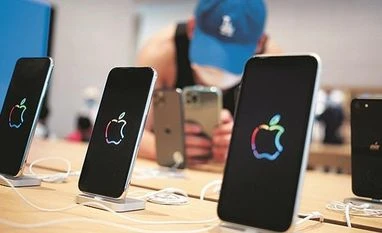 "Apple to scan iPhones for images of child abuse, researchers raise concern")
WebinarsNew
Deep DiveNew
Explore Business Standard
Some security researchers believe the system could be misused by governments looking to surveil their citizens
Apple unveiled plans to scan US iPhones for images of child abuse, drawing applause from child protection groups but raising concern among some security researchers that the system could be misused by governments looking to surveil their citizens.
Apple said its messaging app will use on-device machine learning to warn about sensitive content without making private communications readable by the company. The tool Apple calls neuralMatch will detect known images of child sexual abuse without decrypting people's messages. If it finds a match, the image will be reviewed by a human who can notify law enforcement if necessary.
But researchers say the tool could be put to other purposes such as government surveillance of dissidents or protesters.
Matthew Green of Johns Hopkins, a top cryptography researcher, was concerned that it could be used to frame innocent people by sending them harmless but malicious images designed designed to appear as matches for child porn, fooling Apple's algorithm and alerting law enforcement -- essentially framing people.
This is a thing that you can do, said Green. Researchers have been able to do this pretty easily.
Tech companies including Microsoft, Google, Facebook and others have for years been sharing hash lists" of known images of child sexual abuse. Apple has also been scanning user files stored in its iCloud service, which is not as securely encrypted as its messages, for such images.
The company has been under pressure from governments and law enforcement to allow for surveillance of encrypted data. Coming up with the security measures required Apple to perform a delicate balancing act between cracking down on the exploitation of children while keeping its high-profile commitment to protecting the privacy of its users.
Apple believes it pulled off that feat with technology that it developed in consultation with several prominent cryptographers, including Stanford University professor Dan Boneh, whose work in the field has won a Turing Award, often called technology's version of the Nobel Prize.
Apple was one of the first major companies to embrace end-to-end encryption, in which messages are scrambled so that only their senders and recipients can read them. Law enforcement, however, has long pressured for access to that information in order to investigate crimes such as terrorism or child sexual exploitation.
Apple's expanded protection for children is a game changer," John Clark, the president and CEO of the National Centre for Missing and Exploited Children, said in a statement. "With so many people using Apple products, these new safety measures have lifesaving potential for children who are being enticed online and whose horrific images are being circulated in child sexual abuse material.
Julia Cordua, the CEO of Thorn, said that Apple's technology balances the need for privacy with digital safety for children."
Thorn, a nonprofit founded by Demi Moore and Ashton Kutcher, uses technology to help protect children from sexual abuse by identifying victims and working with tech platforms.
(Only the headline and picture of this report may have been reworked by the Business Standard staff; the rest of the content is auto-generated from a syndicated feed.)
First Published: Aug 06 2021 | 10:58 AM IST


