A twisted road to justice

Anthropologist Deepa Das Acevedo's book explores the complex interplay of tradition, law, and societal norms in the fight over women's entry to Kerala's Sabarimala temple
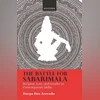
Book
Arundhuti Dasgupta
5 min read Last Updated : May 21 2024 | 8:58 PM IST
The Battle for Sabarimala: Religion, Law and Gender in Contemporary India
Author: Deepa Das Acevedo
Publisher: Oxford University Press
Pages: 241
Price:  Rs 1,595


Twenty years and counting, the protracted battle to allow women entry into the Sabarimala temple in Kerala is no closer to a solution than it was at the start. It has turned into one of those disputes in which no intervention is too big to fail. Even a Supreme Court judgment declaring the ban on women (in the age group 10-50 years) unconstitutional has not moved the needle.

Also Read


The irony is lost on none; women are being denied the right to enter a temple in Kerala, a state that has counted more women than men in every census since 1901 and, whose female literacy rates (94 per cent) are the toast of the nation. The state has also been always seen as a progressive and liberal role model for religious freedom and social development. How does such a state accept and support openly discriminatory attitudes towards women?

Deepa Das Acevedo, author of the book and legal anthropologist by training, writes that she was drawn to the incongruity of a fight of this nature, in a state such as Kerala. The case struck a chord for the “remarkable ways in which it blends the peculiar with the familiar,” and led her to write the book that brings together the numerous and diverse views and ideas that have shaped the story of women’s entry into Sabarimala temple.

Ms Acevedo casts an academician’s eye on the fight, which is refreshing and a far cry from the cacophonous public posturing that has passed for debate, for years now. Readers can step away from the intransigent binaries that the issue has been cast into and get a glimpse of the complexities involved.

The battle for temple entry goes back a long way but things came to a head in 2006 when the Indian Young Lawyers Association (IYLA) filed a public interest litigation petition before the Supreme Court, challenging the Sabarimala Temple’s prohibition of women from the temple premises. The petition yielded a judgment that called such a practice unconstitutional. But not even the might of the highest court in the country has helped enforce the judgment that has since been mired in review petitions and agitations.

The book examines how the political reality of the state, and the country, intersect with the religious and cultural imperatives of the temple. For instance, the Travancore Devaswom Board (TDB), whose writ runs large over Sabarimala, no matter which political party rules Kerala, has had an oversized role in the entire battle. The TDB’s word has proven to be stronger than that of the courts and the political establishment.

The TDB denies women entry into the temple because their presence, they say, would defile the home of Ayyappa, who is a celibate god. When two women entered the temple, after the Supreme Court order upheld the right to equal access to a place of worship, the Board had its priests carry out elaborate cleansing rituals to restore the purity of Sabarimala.

Bias and bigotry have often been disguised as tradition, but perhaps never as blatantly. The TDB’s power, Ms Acevedo writes, “derives from the special orthopraxy of Keralite tantris (temple rule makers and priests), who are always Nambudiris” and who are “not just your garden-variety Brahmin.” They are feudal elites who were always seen as first among equals.

Social structures are strengthened by a legend that says that the Nambudiri family’s custodianship of Ayyappa and the Sabarimala temple was granted by Parasuram, the warrior-sage incarnation of Vishnu. An elaborate legend that talks about how an ancestor parted the oceans at the behest of Parasurama and was therefore appointed as Ayyappa ’s guardian sanctions the supreme power of TDB over the temple and the annual pilgrimage to Sabarimala.

It is important to note that origin myths that valorise ancestors and justify the supremacy of clans via an ancient act of courage are common across all ancient cultures. The Nordic sagas have several such legends, as do stories about Marduk and his priests in Mesopotamian mythology. These stories are more about the need to establish identity and mark one tribe out from another; they are not badges of lifelong racial superiority.

Mythology and legend exist in the realm of subtleties and interpretations. To read it as divine endorsement of a people or treat it as the word of law, leaches it of all substance.

The book lays bare the many different legends that have influenced the battle and also tracks the legal, political and social issues that have tied up the Sabarimala case in a million gnarly knots. It unpacks the idea of exclusion, of gender and secularism around the worship of Ayyappa and wades deep into notions of power, equality and faith. It is an important book, but if only it had been simply written and had fewer digressions (into other cases and minor points about the law) it could have had a wider reach.

The writer is a Mumbai-based journalist and co-founder of The Mythology Project

One subscription. Two world-class reads.

Already subscribed? Log in

Subscribe to read the full story →
*Subscribe to Business Standard digital and get complimentary access to The New York Times

Smart Quarterly

₹900

3 Months

₹300/Month

SAVE 25%

Smart Essential

₹2,700

1 Year

₹225/Month

SAVE 46%
*Complimentary New York Times access for the 2nd year will be given after 12 months

Super Saver

₹3,900

2 Years

₹162/Month

Subscribe

Renews automatically, cancel anytime

Here’s what’s included in our digital subscription plans

Exclusive premium stories online

  • Over 30 premium stories daily, handpicked by our editors

Complimentary Access to The New York Times

  • News, Games, Cooking, Audio, Wirecutter & The Athletic

Business Standard Epaper

  • Digital replica of our daily newspaper — with options to read, save, and share

Curated Newsletters

  • Insights on markets, finance, politics, tech, and more delivered to your inbox

Market Analysis & Investment Insights

  • In-depth market analysis & insights with access to The Smart Investor

Archives

  • Repository of articles and publications dating back to 1997

Ad-free Reading

  • Uninterrupted reading experience with no advertisements

Seamless Access Across All Devices

  • Access Business Standard across devices — mobile, tablet, or PC, via web or app

Topics :BS ReadsBOOK REVIEW

Next Story



