Breaking the Engagement: US-China ties shift as power gap narrows

This book attempts to track contours of relationship against this backdrop. But the author cautions that it is principally a study of US foreign policy & the American side of the US-China relationship

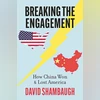
Breaking the Engagement: How China Won & Lost America
Gunjan Singh
5 min read Last Updated : Dec 02 2025 | 11:05 PM IST

Don't want to miss the best from Business Standard?

Breaking the Engagement: How China Won & Lost America
by  David Shambaugh
Published by Oxford University Press
417  pages ₹6,715
 
The current trade war between the United States and China under the second Trump presidency has sent the bilateral and global order into a whirlwind. The complexity of this relationship can be gauged from the fact that even though Donald Trump is pushing for increased tariffs and barriers, he still promotes the idea of the G2. The ebbs and flow in this relationship is not limited to the bilateral; it has major regional and geo-political repercussions. As David Shambaugh writes in Breaking the Engagement: How China Won & Lost America , the US-China relationship has witnessed, “... cycles of engagement-estrangement-reengagement”. While “neither side is blameless” the “narrowing of the power gap has definitely affected this dynamics”. According to the author, “engagement” is finally over. 
This book attempts to track the contours of the relationship against this backdrop. But the author cautions that it is “principally a study of US foreign policy and the American side of the US-China relationship”. Drawing on a wide array of sources from the US government and private sector as well as “never before examined” Chinese language sources, the book offers a nuanced and detailed analysis of one of the most consequential relationships of our times. 
The title correctly suggests that though Beijing gained a lot from this relationship, it has “lost” the US in the process. Engagement has been the key driver of US-China relations since President Richard Nixon’s seminal visit to China in 1972 and formal diplomatic relations, which were established in 1979. For almost four decades, the two sides have interacted at multiple levels. At the peak of the engagement, the US and China were talking at multiple platforms, engaging at multiple levels, including non-governmental organisations, universities and think-tanks alike.  This was principally because as the author argues, “The desire to ‘change China’ is deeply rooted in American DNA, it has not changed in 250 years, and it is not going to change”. No doubt this was one of the hopes embedded in the move to bring China into the World Trade Organisation. But the fact is for the Chinese Communist Party (CCP) “the United States [has been] an active threat to its political stability”. Apart from the multiple challenges this  relationship faces, Dr Shambaugh says that “the differing political systems are really the core issue in US-China relations”. 
One major voice in favour of continuing trade and engagement is that this trade alone supports around one million jobs in the US and the nation is China’s largest trading partner. American companies such as Apple have invested billions in China, not only creating jobs but also building capabilities. This has worked because, as Dr Shambaugh writes, “It is also true and important to recognise that, until very recent years, China has always been the weaker party and thus it needed the United States for its modernisation and security.”
 
But given the fact that China is known to weaponise trade, the author argues that, “... one should not trade with a potential adversary.” But the impulse to do so has come from the business community.  “Despite encountering difficulties in recent years, the business community continues to be the primary advocate of US engagement with China. No other constituency comes close,” he writes. 
The rise and eventual deterioration of the engagement has been explained in detail through successive US presidencies and the significant speeches, articles and policy changes that have had long-lasting impact on this bilateral relationship. Dr Shambaugh rightly points out that one of the major challenges to the engagement has come from Xi Jinping’s presidency and his hyper-nationalism. Beijing’s overall economic and military power has risen, making it the second-most important country on almost all the global parameters and thus, “China has a newfound confidence and hubris”. He describes the relationship between the US and China as one of indefinite comprehensive competitive rivalry”.  
Making the point that the US continues to be the sole superpower, though its position is in relative decline, Dr Shambaugh writes that for the US, “China is a geostrategic challenge, a military adversary, an economic and technological competitor, and an ideological rival.” At the same time, he says, global competition requires “prioritisation”, because the US does not possess the capacity or the resources to do everything everywhere all at once. Thus, he argues, it is crucial to focus on the allies and the goodwill that the US claims around the world in contrast to the fact that the authoritarian structure of the Chinese political system has managed to alienate a large part of the world. The differences in the political system can be a significant advantage to Washington, Shambaugh argues. However, he constantly points to the need to go back to the policies and methods employed by Washington during the Cold War vis-à-vis the Soviet Union and even argues that, “To understand China, you need to understand the Soviet Union first”.
 
By setting out a road map to navigating this relationship, the book offers an understanding of what we can expect from this “indefinite comprehensive competitive rivalry”.
The reviewer is associate professor, OP Jindal Global University

One subscription. Two world-class reads.

Already subscribed? Log in

Subscribe to read the full story →
*Subscribe to Business Standard digital and get complimentary access to The New York Times

Smart Quarterly

₹900

3 Months

₹300/Month

SAVE 25%

Smart Essential

₹2,700

1 Year

₹225/Month

SAVE 46%
*Complimentary New York Times access for the 2nd year will be given after 12 months

Super Saver

₹3,900

2 Years

₹162/Month

Subscribe

Renews automatically, cancel anytime

Here’s what’s included in our digital subscription plans

Exclusive premium stories online

  • Over 30 premium stories daily, handpicked by our editors

Complimentary Access to The New York Times

  • News, Games, Cooking, Audio, Wirecutter & The Athletic

Business Standard Epaper

  • Digital replica of our daily newspaper — with options to read, save, and share

Curated Newsletters

  • Insights on markets, finance, politics, tech, and more delivered to your inbox

Market Analysis & Investment Insights

  • In-depth market analysis & insights with access to The Smart Investor

Archives

  • Repository of articles and publications dating back to 1997

Ad-free Reading

  • Uninterrupted reading experience with no advertisements

Seamless Access Across All Devices

  • Access Business Standard across devices — mobile, tablet, or PC, via web or app

Topics :Book ReviewsbooksUS China

Next Story