Catharsis against western media

Through a critical examination of media narratives, U Upadhyay's book attempts to deconstruct the cultural significations of western media on Indian ideas, leaders, and histories
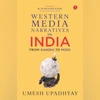
Book
Tanvir Aeijaz
5 min read Last Updated : May 29 2024 | 10:59 PM IST
Western Media Narratives on India: From Gandhi to Modi
Author: U Upadhyay
Publisher: Rupa
Pages: 164
Price: Rs 495


The idea that people cannot represent themselves but need representation is at the root of colonising the “other”. The western style of narration — what Denys Hay calls the “idea of Europe” — posits the western-white-world as superior to the culture and politics of the rest of the world. The English philosopher J S Mill, one of the West’s foremost liberal-cultural heroes, clarified that the views in his books On Liberty and Representative Government were meant not for India (he worked in the India Office for years) because he considered Indians civilisationally inferior. For the West, India’s otherness is an ontological category to be explored. For India, this western exploration needs to be critically assessed, perhaps from the lens of Orientalism. In Western Media Narratives on India author Umesh  Upadhyay makes an effort in this direction.

Mr Upadhyay attempts to deconstruct the cultural significations of western media on Indian ideas, leaders and histories and the consequent development of nuanced configurations of power dynamics. His core argument is that the western media is ideologically and politically driven to maintain the hegemony of the western white world. The book suggests that modern media in the West since its inception trains journalists to colonise minds and institutions of the non-western world.

In the colonial era, explorer-reporters from the West, the author says, worked largely to fulfil the imperial power’s evangelical (also proselytising) and explorative agendas. They considered India a “dark” land, much in need of “enlightenment” and “progress” in the western sense, and spread Hinduphobia, as is seen in the writings of American religious scholar Stephen Prothero that “actual Hinduism is not about mystical union with God but about public prostitution, idol worship, anti-social ascetics, child brides and the caste system”.

At the international level, the emergence of global news agencies, such as Associated Press, Reuters, Agence France-Presse and United Press International, virtually led to the cartelisation of news in order to secure control of information and news flow across the globe. These agencies, the author contends, are part of the market-driven western ecosystem sustaining the international power equilibrium.

On perceptions built by the western media on India, the author believes that all Indian leaders, from Mahatma Gandhi to Narendra Modi, including Patel, Ambedkar, Nehru, Indira and Vajpayee, were targeted and maligned by the “foreign media”. Ambedkar once wrote to Patel and Nehru that “The press [read English press] has never been kind to me. It has always done its best to twist facts and phrases, take them out of their context, and pervert the sense of anything I have said.”

After independence, India’s leaders seemed to be at the receiving end of the information war. Western news agencies contrived to create a dominant anti-Indian narrative, usually getting support from debates in rarefied academic circles, NGOs, and international agencies. Mr Upadhyay reminds us of President Nixon and National Security Advisor Kissinger’s invective against Indira Gandhi. The western media, instead of condemning the abuse, focused on Kissinger’s apology.

The author focuses on two events to substantiate his argument that western media patronises India to secure its global left-liberal agenda. One is the response to Indian space explorations, particularly Mangalyaan and Chandrayaan, and the second is the Covid-19 crisis. The author believes that the western world is threatened by the low-cost-high-output model of Indian space research missions. Isro is, therefore, critiqued by western media not only because it gives western agencies in the global satellite launch market tough competition but the criticisms reinforce the “poor India” perception. During Covid-19, the author feels that The  Guardian, Telegraph, Washington Post, New York Times, Wall Street Journal, Time  and BBC News unabashedly targeted the Modi government and lacked factual and logical consistencies in their attack. He avers that the western media narrative built around India-shaming includes exaggerated numbers of Indian deaths, amplified economic disparity laced with communalised overtones, distorted linkage between the child labour and pandemic, and invisibilised the missing stories of courage and sacrifice of Indians during the pandemic. In the concluding chapter, Mr Upadhyay laments that the western media narrative on India needlessly bolsters the colonisation of the Indian mind, a new form of cultural imperialism.

Critically speaking, the book appears to be a rhetorical catharsis against the western media. We know that the western media, or for that matter any media, is not a homogeneous category. To accuse all of them of conspiring against India —  especially given the competitive environment in which they operate — amounts to missing the wood for the trees. It is true that globalised media networks impact the formulation of foreign and domestic policies, but it is also true that the media today is constantly under public scrutiny for its veracity and ethics. The mainstream media is under tremendous pressure to distinguish itself from deep fakes and strives to rescue itself from the crisis of credibility at any cost. Being a journalist himself, the author falls prey to what may be termed “sensationalised watchdogism”. If Orientalism is the trope of the book, though loosely connected, then the author needs to engage with the mutual ties engendered by the influences of ideas, institutions and initiatives between the West and India. The book, nevertheless, makes for interesting reading for those imbued with ideas of hyper-nationalism and populism.

The reviewer teaches public policy and politics at Ramjas College, University of Delhi, and is hony vice-chairman at the Centre for Multilevel Federalism, New Delhi

One subscription. Two world-class reads.

Already subscribed? Log in

Subscribe to read the full story →
*Subscribe to Business Standard digital and get complimentary access to The New York Times

Smart Quarterly

₹900

3 Months

₹300/Month

SAVE 25%

Smart Essential

₹2,700

1 Year

₹225/Month

SAVE 46%
*Complimentary New York Times access for the 2nd year will be given after 12 months

Super Saver

₹3,900

2 Years

₹162/Month

Subscribe

Renews automatically, cancel anytime

Here’s what’s included in our digital subscription plans

Exclusive premium stories online

  • Over 30 premium stories daily, handpicked by our editors

Complimentary Access to The New York Times

  • News, Games, Cooking, Audio, Wirecutter & The Athletic

Business Standard Epaper

  • Digital replica of our daily newspaper — with options to read, save, and share

Curated Newsletters

  • Insights on markets, finance, politics, tech, and more delivered to your inbox

Market Analysis & Investment Insights

  • In-depth market analysis & insights with access to The Smart Investor

Archives

  • Repository of articles and publications dating back to 1997

Ad-free Reading

  • Uninterrupted reading experience with no advertisements

Seamless Access Across All Devices

  • Access Business Standard across devices — mobile, tablet, or PC, via web or app

Topics :BS ReadsBOOK REVIEW

Next Story



