Foreign policy in Amrit Kaal: 75 key events, limited fresh insight

Harsh Pant and Anant Singh Mann draw on 75 years of history to chart India's foreign policy course for the next 25
book
Gunjan Singh
5 min read Last Updated : Apr 24 2025 | 12:00 AM IST
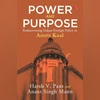
POWER AND PURPOSE: Rediscovering Indian Foreign Policy in Amrit Kaal
Authors: Harsh V Pant and Anant Singh Mann
Publisher: Rupa
Pages: 228
Price: ₹595
  Prime Minister Narendra Modi had outlined the idea of Amrit Kaal on Independence Day in 2021. In 2024, he explained the concept in a speech at the Vibrant Gujarat Summit: “In the recent past, India completed 75 years of Independence. Now, India is working on its goal for the next 25 years. We have the goal of making it a developed country by the time it celebrates 100 years of Independence. Therefore, this 25-year period is India’s Amrit Kaal.”
 
Against this backdrop, Harsh Pant and Anant Singh Mann have attempted to project a foreign policy direction for the next 25 years based on the past 75 years. The notion of rediscovery in the subtitle is interesting.
 
The authors have shortlisted 75 key developments and events that have played a crucial role in shaping Indian foreign policy, beginning immediately after Independence till  India’s G20 presidency. The authors must be commended for summarising and organising the Indian government’s key foreign policy actions in one place.
 
One of the major themes running through most of the discussion is the Indian stance and commitment towards the Non-Aligned Movement (NAM). The authors argue, “The end of the Cold War had also brought an end to India’s Third World project and made the ideas of non-alignment irrelevant.” It is hard to ignore, however, the idea that discussions on strategic autonomy or the concept of interest-based foreign policy are based on the major tenets of NAM. The term non-alignment may need to be reoriented in a unipolar world but the form tends to be the same.
 
The second major discernible theme is the evolution of India’s neighbourhood policy. The book has an in-depth discussion on the Look East Policy and how it evolved into the Act East Policy. Discussing India’s neighbourhood policy against the backdrop of the Indo-Sri Lankan accord, the authors assert that “India’s foreign policy had transitioned, with its growing confidence in projecting its own power to its wider neighbourhood and presenting itself to the international audience as a trustworthy and stabilising factor within the region.” They conclude, “The Modi government’s regional outlook, under the ‘Neighbourhood First’ approach, has sought to promote regional stability and prosperity, recognising the importance of a secure and cooperative neighbourhood for India’s overall development and security.” Given key developments in the past few years, primarily the Belt and Road Initiative and the inroads made by Beijing in the region, the security of the neighbourhood is directly linked to India’s regional position.
 
As expected, Pakistan and China are major points of discussion. Every war and almost every bilateral treaty and accord has been discussed. With respect to China, the book states, “Currently, both India and China are pushing different narratives in their effort to resolve the border crisis. Beijing is pushing the narrative that the situation at the LAC [Line of Actual Control] is normalising and is generally stable. However, India argues that China’s normalising narrative is an attempt to concretise the latter’s new gains at the LAC.”
 
On Pakistan, the book asserts: “New Delhi has now declared that it has made irrelevant Pakistan’s game of using cross-border terrorism to bring India to the table. It has clearly maintained that for any dialogue to begin, Pakistan-sponsored terrorism has to stop.” They underscore the fact that the central aspect of India’s policies towards both countries continue to be based in its territorial and domestic security. There is also detailed discussion on groupings such as Brics, Bimstec, the Quad and Sagar.
 
Another major theme is the Indo-US civil nuclear deal and how it was a defining moment in India’s global positioning and its relationship with Washington DC. The authors argue, “The agreement … implicitly recognised India’s status as a nuclear-weapon state, and ended years of nuclear isolation. …It is a recognition of the enhanced role of India in the strategic calculus of the US in Asia, especially to counter China, patrol the Indian Ocean and counter terrorism and provide disaster relief.” Though the authors assert that India is leaning closer to the United States today, the book underscores India’s closeness with Russia and points out that this has been highlighted vis-à-vis India’s stance on the Russia-Ukraine conflict. The fine diplomatic balance managed by New Delhi is because of its historical friendship with Moscow and reiterates India’s strategic autonomy.
 
A nuanced reading of the text, however, suggests that apart from the initial years, Indian foreign policy has paid little or no heed to countries in Africa, Latin America, West Asia, Central Asia, and the Pacific Islands. Even after 75 years, Indian foreign policy has been dictated by its security and geopolitical concerns and is dominated by China, Pakistan, Russia and the United States. Also, the book does not discuss important developments with respect to the Indian space programme and has a clear focus on the nuclear aspect, reinforcing the idea that deterrence, even today, is closely linked to nuclear weapons and threat of a nuclear conflict.
 
The book can be regarded as a good source of information, but lacks any major analysis and offers a limited scope of discussion. It also tends to be repetitive because the developments have been discussed chronologically rather than thematically or regionally. The result is that the book ends up being a compilation of events without moving the needle of debate.
 
The reviewer is associate professor, OP Jindal Global University
 

One subscription. Two world-class reads.

Already subscribed? Log in

Subscribe to read the full story →
*Subscribe to Business Standard digital and get complimentary access to The New York Times

Smart Quarterly

₹900

3 Months

₹300/Month

SAVE 25%

Smart Essential

₹2,700

1 Year

₹225/Month

SAVE 46%
*Complimentary New York Times access for the 2nd year will be given after 12 months

Super Saver

₹3,900

2 Years

₹162/Month

Subscribe

Renews automatically, cancel anytime

Here’s what’s included in our digital subscription plans

Exclusive premium stories online

  • Over 30 premium stories daily, handpicked by our editors

Complimentary Access to The New York Times

  • News, Games, Cooking, Audio, Wirecutter & The Athletic

Business Standard Epaper

  • Digital replica of our daily newspaper — with options to read, save, and share

Curated Newsletters

  • Insights on markets, finance, politics, tech, and more delivered to your inbox

Market Analysis & Investment Insights

  • In-depth market analysis & insights with access to The Smart Investor

Archives

  • Repository of articles and publications dating back to 1997

Ad-free Reading

  • Uninterrupted reading experience with no advertisements

Seamless Access Across All Devices

  • Access Business Standard across devices — mobile, tablet, or PC, via web or app

Topics :Book ReviewsBook

Next Story



