Indian policing and the legacy of violence: A call for urgent reform

Has the dehumanisation of the police worsened their violence? Deana Heath and Jinee Lokaneeta explore this through political and sociological lenses, calling for urgent reform

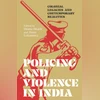
Policing and Violence in India: Colonial Legacies and Contemporary Realities
Neha Bhatt
5 min read Last Updated : Apr 21 2025 | 9:13 PM IST

Don't want to miss the best from Business Standard?

Policing and Violence in India: Colonial Legacies and Contemporary Realities
Editors: Deana Heath and Jinee Lokaneeta
Publisher: Speaking Tiger
Pages: 368
Price: ₹799
  You will recall the horrific custodial deaths of Jayaraj and his son Bennicks in Tamil Nadu in June 2020, following their arrest for allegedly violating Covid-19 restrictions. You might also remember the death of Faizan in February 2020 while in custody after the protests against the Citizenship Amendment Act (CAA) — an incident the High Court last year termed a “gross violation of human rights” and a hate crime. These are hardly exceptions. It’s well documented that such police torture is usually reserved for suspects from marginalised communities, lower castes, and religious minorities.
 
A freshly released study, the “Status of Policing in India Report 2025: Police Torture and (Un)Accountability”, reveals that 30 per cent of police personnel surveyed said third-degree methods of torture were justified in serious criminal cases, while 22 per cent believed killing “dangerous criminals” is preferable to giving them a legal trial.
 
The routineness of such brutality, which provokes little political outrage, provides adequate ground for Policing and Violence in India: Colonial Legacies and Contemporary Realities, edited by academics Deana Heath and Jinee Lokaneeta. Drawing on new research, it features essays and reflections by historians, lawyers, academics, activists, and researchers along with insightful interviews. It applies deeply studied historical, legal, political and sociological lenses to draw the link between policing and violence, and calls for urgent intervention, accountability and reform.
 
To be sure, issues such as custodial violence, militarised policing, and encounter killings have routinely been brought into the public discourse by various actors. The Supreme Court has issued several guidelines for reform, but as the book notes, little has changed. A few weeks ago, an internationally acclaimed film Santosh, directed by British Indian Sandhya Suri, that premiered at Cannes last year and explores police torture, was blocked by Indian censors for its “negative portrayal of the police force,” despite the fact that police violence is frequently depicted, even sensationalised, in Indian films and web shows. Police brutality may have become normalised, but our response to it remains ambivalent.
 
The book pulls our focus back to it. Over four exhaustive sections, it traces police violence from colonial to post-colonial times and the force’s role in upholding socio-cultural, economic and political hierarchies till today. The legal infrastructure, law and bureaucracy work to facilitate this violence and further marginalise and criminalise certain groups, the book argues. It also throws light on how embedded the police has become in the fabric of conflict zones, from fielding a fraught identity and deep distrust in counterinsurgency operations in Kashmir, controversial “encounters” in Uttar Pradesh, the war against Adivasis in Chhattisgarh, to the everyday reality of violence in the Northeast. Although new penal codes were introduced last year, the book finds that they largely replicate their colonial predecessors, potentially granting the police even greater powers to arrest and detain suspects for extended periods.
 
Some chapters are more academic than others. In the section “Custodial Violence, Law and the Courts”, the chapter “Martial Law and Policing in India” by historian Bhavani Raman draws out the mechanism of policing resistance against the state via martial laws and special powers such as Armed Forces (Special Powers) Act. It tracks how martial law has evolved from its use in wartime to serve as a tool of colonial policing, often “blurring the boundaries between war and rebellion”. Another chapter, “Hate Crimes as the New ‘Legitimate’,” examines events such as the anti-CAA protests and police action at Aligarh Muslim University and Jamia Millia Islamia, highlighting how judicial systems have been co-opted to legitimise discrimination. Lawyer Vrinda Grover, writing in “Further Thoughts”, contextualises these chapters by layering them with reflections from her legal practice.
 
The book also offers nuanced perspectives on how lines are often blurred. “Policing and Intimacy: Narratives from Terrorism Trials in Delhi” by Mayur Suresh is an engaging insider account of conducting ethnographic research in Delhi’s Tis Hazari criminal courts, with glimpses of his interactions and observations with one police officer and his murky practices. More intriguingly, he puts forth the concept of “custodial intimacy", revealing the tricky nature of relationships between police officers and terror-accused, as it swings between “acts of care” and “acts of violence,” leaving uncertainty in the air.
 
The final section comprises interviews and reflections by critics of police violence. The overwhelming sense is that the police force has become more politicised and designed to protect not the common people but whoever is in power. Former Director General of Police (Law and Order) in Haryana, Vikash Narain Rai, talks about his experience sensitising the police force — an experiment that failed because it “did not suit the political establishment”. He makes excellent points about the growing divide between policing practices and constitutional and democratic values and how funds to reform should go towards modernisation and not “massive militarisation”.
 
Also compelling is an interview with Abdul Wahid Shaikh, who was wrongly incarcerated for nine years and tortured for the 2006 train blasts in Mumbai. He speaks about systemic issues he observed, including the nexus between courts, medical professionals and police officers to conceal and perpetuate custodial torture through falsified reports, while drawing parallels with policing methods used against minorities in Israel and the US.
 
However, it’s vital to acknowledge the tremendous pressure under which the police operate, with long hours, low pay and limited resources. Anthropologist Beatrice Jauregui offers a critical view: The dehumanisation of the police has worsened their acts of violence. Meaningful police reforms require political will.
 
  The reviewer is a journalist and author. She can be reached @nehabhatt70 on X
 

One subscription. Two world-class reads.

Already subscribed? Log in

Subscribe to read the full story →
*Subscribe to Business Standard digital and get complimentary access to The New York Times

Smart Quarterly

₹900

3 Months

₹300/Month

SAVE 25%

Smart Essential

₹2,700

1 Year

₹225/Month

SAVE 46%
*Complimentary New York Times access for the 2nd year will be given after 12 months

Super Saver

₹3,900

2 Years

₹162/Month

Subscribe

Renews automatically, cancel anytime

Here’s what’s included in our digital subscription plans

Exclusive premium stories online

  • Over 30 premium stories daily, handpicked by our editors

Complimentary Access to The New York Times

  • News, Games, Cooking, Audio, Wirecutter & The Athletic

Business Standard Epaper

  • Digital replica of our daily newspaper — with options to read, save, and share

Curated Newsletters

  • Insights on markets, finance, politics, tech, and more delivered to your inbox

Market Analysis & Investment Insights

  • In-depth market analysis & insights with access to The Smart Investor

Archives

  • Repository of articles and publications dating back to 1997

Ad-free Reading

  • Uninterrupted reading experience with no advertisements

Seamless Access Across All Devices

  • Access Business Standard across devices — mobile, tablet, or PC, via web or app

Topics :BOOK REVIEWbooksregulatory policyBook readingIndian Police Service

Next Story