Home / Book / From broom to bust: New book traces AAP's rise, drift, and undoing
From broom to bust: New book traces AAP's rise, drift, and undoing
In just 13 years, Delhi's own party soared and stumbled. Sayantan Ghosh's book examines what it must do to rise again as it grapples with existential questions
premium
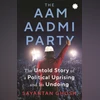
The Aam Aadmi Party: The Untold Story of a Political Uprising and its Undoing
5 min read Last Updated : Sep 03 2025 | 10:18 PM IST
Don't want to miss the best from Business Standard?
The Aam Aadmi Party: The Untold Story of a Political Uprising and its Undoing
By Sayantan Ghosh
Published by Juggernaut
352 pages ₹499
The Aam Aadmi Party (AAP) is an unfolding story in our contemporary political history. Whether the party, launched in 2012 by Arvind Kejriwal and his associates with robust ground support, survives the political upheaval of time or fades away as a euphoric episode in India’s colourful political canvas is the question that not just political observers but AAP members are looking to answer.
The Aam Aadmi Party: The Untold Story of a Political Uprising and its Undoing, by Sayantan Ghosh, comes at this crucial juncture in 2025. Delhi’s own party, the only one so far, soared to the heights in 13 years, wiping out all opposition to make a three-term chief minister and then went down to the Bharatiya Janata Party earlier this year. With Mr Kejriwal himself defeated at the hustings, the party sitting in opposition in Delhi and having installed a common man chief minister, Bhagwant Mann, in Punjab, this book comes up with well-researched insight needed to address the AAP’s existential questions.
To look at where the AAP is headed, it is important to study the party’s building bricks. While it was born out of activism — against corruption and failed delivery systems — it was a lack of ideology that seems to have discredited it. The writer’s perspective has perfect clarity on this basic trend.
Mr Ghosh’s detailed account has documented the journey from its India Against Corruption (IAC) days, to government formation, from winning over Delhi’s cosmopolitan middle class and the underprivileged, to delivering on education, health and social empowerment of women that caught the fancy of voters and the political class. The writer’s ability to unravel every question with journalistic skill and analyse it with academic depth makes this book a readable experience for students of politics. Having covered AAP as a journalist, worked at the Delhi secretariat during Mr Kejriwal’s tenure, and then moved on to academics seems to have helped Mr Ghosh maintain his objectivity.
The ambiguity on the role of the Rashtriya Swayamsevak Sangh (RSS) in the IAC movement and with setting up of AAP has been addressed in detail. Yes, the RSS played an important part. Mr Kejriwal himself kept the communication alive. The RSS factor was behind many of the civil society activists falling out with Mr Kejriwal and quitting the party. The IAC’s initial and extensive collaboration with RSS-linked organisations such as Vivekananda International Foundation to Sangh ideologues like K Govindacharya, played an active part in mobilising the masses in Delhi for the anti-corruption agitation against the Manmohan Singh government back in 2011, though they were not present in the decision-making forum of the IAC, says Mr Ghosh. He writes that “AAP members, despite knowing the reality, have always been tight-lipped about the involvement of the RSS… more importantly the closeness of Kejriwal and the Sangh.” Elaborating on how Mr Kejriwal and his party designed the AAP’s focus on improving delivery systems, the targeted “welfare oriented governance model” for the underprivileged and the middle class, transcending beyond caste factors, the book brings out the essence of the success of the party of activists. The book also delves deep into the reason for its fall, with the forsaking of ideals and its transformation into a single-leader party. The fall of the party “serves as a stark reminder of why honesty, fairness and transparency struggle to survive in Indian politics. The story of AAP’s transformation — from movement of idealists to party driven by the ambitions of a single leader — is a cautionary tale for all who seek to bring about political change,” Mr Ghosh sums up.
Assessing how the Kejriwal government failed to stand by its citizens or core voters, Mr Ghosh tells you why Muslim voters moved out. The “soft Hindutva” stand grew to high-pitched Hindutva, to counter the BJP’s Hindutva plank. The party line shifted from its hallmarks of honesty and transparency, moving from centrist to a right-of-centre position. That saw Mr Kejriwal become a silent bystander to the Shaheen Bagh protests against the Citizens Amendment Act and to the East Delhi riots. Finally, he moved on to reciting the Hanuman Chalisa and bringing up the Rohingya “threat” during his poll campaign.
Mr Ghosh maps Mr Kejriwal’s national ambitions and acceptability outside of Delhi, the equations with other parties (being an off-and-on entrant to the INDIA opposition bloc) and its image as the BJP’s B-Team for making forays into the Congress vote bank in most states into which AAP has ventured.
This is an ideal handbook for those planning to set up new political outfits and, more importantly, for AAP members, including Mr Kejriwal, who are looking at fixing the holes, if the party has to rise like a Phoenix from its present crisis.
The reviewer is a senior journalist who has been covering national politics for over 30 years




