The Red Bull story: Book reveals private man behind the successful brand

The creator of the Red Bull empire had a strong aversion to media attention, and even his death would not change that
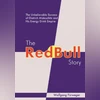
The Red Bull Story: The Unbelievable Success of Dietrich Mateschitz and his Energy Drink Empire
Prosenjit Datta
5 min read Last Updated : Sep 02 2025 | 11:21 PM IST
The Red Bull Story: The Unbelievable Success of Dietrich Mateschitz and his Energy Drink Empire
By Wolfgang Furweger
Published by Kallisti Publishing
223  pages  ₹399 
On Saturday, October 22, 2022, an email was sent out to the 15,500 Red Bull employees in 175 countries. It informed them that Dietrich Mateschitz had died. The mail was signed by Dietrich’s family, relatives, friends, and closest associates. 
This was the public acknowle- dgement the founder and driving force behind the Red Bull empire was dead. The only issue, as Wolfgang Furweger points out, was that some outsiders, who kept close track of Red Bull and its founder, had heard strong rumours in end-August that Mateschitz had passed away from cancer. However, the Red Bull management kept a studied silence, refusing to give out any information. Probably only a few people closest to him know when Mateschitz actually died. Officially, the date was October 22 — even if he had died earlier. 
The friends and associates of Mateschitz were probably maintaining what he himself practised. The creator of the Red Bull empire had a strong aversion to media attention, and his death would not change that. The Red Bull story by Mr Furweger is not a new book. It was first published as hard cover in 2008 in German, and then updated a few times before a paperback was released in 2012. It was a bestseller in Germany and Austria, and was translated into many languages. The English translation was by Anthony Raymond and the current edition (in English) was released this year, after updating it with a chapter (written in December 2024), which deals with Mateschitz’s death and the succession. 
Mateschitz was on his way to a high-profile corporate career — he had become the marketing director of international markets of Unilever’s subsidiary Blendax —when he quit to start his entrepreneurial career. Despite creating one of the most high-profile brands in marketing history, and a huge empire spanning energy drinks, sports, leisure and media, and always being in the limelight, he managed to keep large parts of his life very private. He gave many interviews — but the information he gave out was always only what he wanted to make public. He took great pains to ensure that any media that had critical stories about him or Red Bull were blackballed. Mr Furweger, too, would be shunned by Red Bull once the first edition of this book was published in 2008. The most popular energy drink on earth was not developed by Mateschitz, however. He was on a business trip to Thailand to meet Unilever’s Thai Franchise Partner T C Pharmaceutical Industries when he came across a tonic drink that the company made. The drink was named Krating Daeng, which means “Red Bull” in Thai. It was immensely popular with truck drivers and rice farmers. 
Mateschitz met the owners — Chaleo Yoovidhya and his son Chalerm — and acquired the rights to distribute Krating Daeing outside of Asia. He would translate the name of the drink to English and formed a partnership with the Yoovidhya family to create Red Bull Trading GmbH. It was a trading and marketing company, not a production one. The first few years saw many hurdles. Mateschitz’s efforts to get a licence for distribution in Germany ran into red tape. Germany did not have a category called energy drinks and therefore it was difficult to acquire any licence there. He shifted to Austria and obtained a licence there. (Mateschitz is Austrian though he had chosen to live in Germany at that time). Initially, there was some resistance among retailers until bars were convinced that Red Bull was excellent for mixing cocktails. That would see the energy drink gain popularity rapidly. 
Mateschitz tapped a former college-mate — Johannes “Hansl” Kastner — who had founded an advertising agency. Kastner would be responsible for the famous tagline – “Red Bull Gives You Wings…”. While Mateschitz was a brilliant marketer and brand thinker, he also had some luck. The evolution of the European Union and its regulations allowed him to get the licence to market in all the EU countries. The US would also be conquered. Early in Red Bull’s life, he found companies whom he trusted explicitly. There were no formal agreements signed but they took over this entire distribution and production. Another handshake agreement would be with a can manufacturer. 
But the energy drink was only the beginning. He would create a sports empire that would include football, F1 racing, and hockey and athletics. Then he would get into media and other businesses. He became a billionaire, surrounded by beautiful women at all times but never married. He did have fairly long relations from time to time. He was the most eligible bachelor in Europe till his death. Although he never married, he had a son from one of his relationships. 
The son would be acknowledged and even take the name of his father. 
Mark Mateschitz would eventually join Red Bull. 
Surprisingly, after Mateschitz’s death, Mark did not take over. A completely new board was formed. Mark would step back — to prevent conflict of interest between a shareholder and management. Red Bull continues to grow from strength to strength.  Though an enjoyable book, the translation is perhaps responsible for a somewhat stilted narrative. Eventually, the book reads more as a great research dossier — not a racy unauthorised biography. 
The author is former editor of Business Today and Businessworld, and founder of Prosaic View, an editorial consultancy

One subscription. Two world-class reads.

Already subscribed? Log in

Subscribe to read the full story →
*Subscribe to Business Standard digital and get complimentary access to The New York Times

Smart Quarterly

₹900

3 Months

₹300/Month

SAVE 25%

Smart Essential

₹2,700

1 Year

₹225/Month

SAVE 46%
*Complimentary New York Times access for the 2nd year will be given after 12 months

Super Saver

₹3,900

2 Years

₹162/Month

Subscribe

Renews automatically, cancel anytime

Here’s what’s included in our digital subscription plans

Exclusive premium stories online

  • Over 30 premium stories daily, handpicked by our editors

Complimentary Access to The New York Times

  • News, Games, Cooking, Audio, Wirecutter & The Athletic

Business Standard Epaper

  • Digital replica of our daily newspaper — with options to read, save, and share

Curated Newsletters

  • Insights on markets, finance, politics, tech, and more delivered to your inbox

Market Analysis & Investment Insights

  • In-depth market analysis & insights with access to The Smart Investor

Archives

  • Repository of articles and publications dating back to 1997

Ad-free Reading

  • Uninterrupted reading experience with no advertisements

Seamless Access Across All Devices

  • Access Business Standard across devices — mobile, tablet, or PC, via web or app

Topics :Energy drinksMarketingBOOK REVIEWBook readingBS Reads

Next Story



