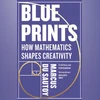
Book: Mathematics Shapes Creativity
Author: Marcus Du Sautoy
Published by: HarperCollins
Price: ₹336 pages Marcus Du Sautoy is a working mathematician who holds the Simonyi Chair for the Public Understanding of Science at Oxford University. He is the writer of several acclaimed books, including The Music of the Primes, which is a superb explanation of the Riemann Hypothesis.
Dr Du Sautoy is also a classical musician who plays trumpet and violin in orchestras. He learnt Sanskrit in order to grasp the theory behind the rhythms and melodies of Indian classical music, and the metres and syllabic count of epic poetry. He has also written (and performed) plays with mathematical themes.
The wide-ranging interests enable this polymath to easily segue into the subject of this book, which is all about the mathematical underpinnings of creativity in art, music, literature and architecture. The author’s breadth of interest and expertise helps him to explain how intimately the wellsprings of creativity are connected to mathematics, even where the creative artists themselves may not be explicitly aware of the connections.
The writing is sprightly and the width of research is impressive. There are references scattered through this book that will lead the engaged reader down into a wonderland of rabbit holes. The dramatis personae — the creative souls whose work is analysed and picked apart in some detail — are listed in order of appearance.
It’s a very eclectic list. The musicians’ list, for example, includes Olivier Messiaen, Radiohead, Philip Glass, Bjork, Sarngadeva, two members of the Bach family, Mozart and David Bowie, among others. The book cuts similar wide swathes through arts, literature and architecture. There are likely to be many names there in that list of dramatis personae that even the most erudite of readers has never encountered and a dive into their hitherto unfamiliar works is a fun way to expand mental horizons.
The chapters are organised according to mathematical themes, rather than being segmented by the arts. Each chapter is labelled a “Blueprint” and works across all creative fields that exploit the characteristics of this specific blueprint are examined. The Blueprints include prime numbers, circles, Fibonacci numbers (including “tribonacci” numbers), golden ratios, fractals, the platonic solids, symmetry, hyperbolic geometry, and randomness.
The maths isn’t densely presented. This is another area where Dr Du Sautoy shines. He has the ability to expound on sometimes complicated mathematical subjects without losing the lay reader in thickets of explanation. He also has a knack for coming up with common-or-garden examples that make the abstruse familiar. For example, the “A-series” of paper sizes was designed with one specific mathematical property in mind: When folded in half across the longer side, the new paper size retains the same ratio of length of sides as the original. If the short side is 1 unit and the longer side is A units, the ratio is A:1. When we fold the paper along A, the ratio of half A to 1, or 1: A/2 must be the same as A:1 and on the next fold, the ratio 0.5:A/2 must again be the same. This involves working with the square root of 2, which is an irrational number that cannot be exactly calculated. Tuning a piano (where the ratio of frequency of two consecutive notes must be the same) also involves working with the square root of 2, and it’s a significant practical issue.
The use of mathematics in working out musical rhythms, or in the setting of poetic metres and syllable counts may be understood intuitively by creative artistes who know nothing about the numbers. But the methods are laid out in rigorous detail by Pingala in his manual, Chandasastra, which analyses verse, and Sarngadeva in Sangita Ratnakara. Dr Du Sautoy, with his knowledge of Eastern and Western classical music and Sanskrit easily navigates the similarities and differences in treatments. In passing, I would love to actually read a full-length book where Dr Du Sautoy focuses on global schools of classical music.
When it comes to Fibonacci numbers, the exposition on their use in art and architecture is brilliant. “Fibs” are sequences created by adding the last two numbers to generate the next as in 1,1,2,3,5,8,13 and so on. As the sequence extends, the golden ratio 1.61 appears in the ratio between each number and its successor. Fibs arise naturally in hundreds of phenomena — most famously so in the birth rates and population growth of rabbits (where Fibonacci first mentioned them) and in the number of petals on a flower.
Incidentally, as Dr Du Sautoy mentions, there is a movement to get this sequence renamed to honour the Jain monk Hemachandra because he described them long before Fibonacci. Similar points could be made about the Taylor Series and Pascal’s Triangle, which both pop up in Indian and Chinese maths centuries before Taylor and Pascal discovered them.
One of the few diagrams in the book (I wish there were more) explains the way Le Corbusier used Fibs in designing one of his most famous buildings. Another diagram looks at the Charbagh design template for layouts, which so often features in architecture. This has fractal elements, just like a snowflake and, of course, artists like Jackson Pollock exploited fractal properties long before mathematicians figured them out. Perhaps the most famous fractal would be the Eye of Sauron from The Lord of the Rings and the Marvel Universe has also used them extensively.
This is a book that leaves you unsatisfied in the best possible way because it teases the reader with so many themes hanging in the air, all worthy of further exploration. It’s like a musical composition that fades out with an incomplete chord and leaves you wanting more.