Perfumed peregrinations

Delving into the intricate world of fragrances, Divrina Dhingra weaves a sensory tapestry that connects personal memories with the aromatic landscape of India
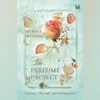
Book
Saurabh Sharma
5 min read Last Updated : Dec 12 2023 | 10:12 PM IST
The Perfume Project: Journeys Through Indian Fragrance
Author: Divrina Dhingra
Publisher: Westland
Pages: 167
Price: Rs 599

In the jingle-jangle of the everyday, we often miss the fragrances that surround us. A typical day in an Indian household, for instance, begins with an array of such aromas, many of which take us down memory lane.

This happenstance has a name: A Proustian moment, from Marcel Proust’s famous sentence from In Search of Lost Time:  “It was the soupçon of cake in tea that sent his mind reeling.” Colleen Walsh notes this in an article titled “What the Nose Knows”. It’s attached to “a sensory experience that triggers a rush of memories often long past, or even seemingly forgotten.”

One such Proustian incident in Manhattan helped evoke New Delhi-based writer and journalist Divrina Dhingra’s childhood memories. She notes it in the introduction to her book, The Perfume Project: Journeys Through Indian Fragrance.

Interestingly, the author never vibed with Manhattan. Despite the city being “endlessly engaging,” it remained unfamiliar to her. Ms Dhingra, who’s trained in the art of perfumery, notes that her aversion to Manhattan “had largely to do with smell, or rather, the vacuum left by the lack of it.” 

Scientifically, smell and memory are interrelated. “Odours take a direct route to the limbic system,” Ms Walsh notes. Therefore, it’s natural that Ms Dhingra was transported to many different worlds by the smell of a blend of asphalt, coffee, and other things she experienced in Manhattan.

The Perfume Project isn’t limited to exploring the personal. Ms Dhingra documents her journeys into various parts of the country — and the world —to explore the industrial processes that extract six Indian fragrances: Rose, Jasmine, Sandalwood, Saffron, Oud, and Vetiver. The book begins with Kannauj in Uttar Pradesh. The region has “acquired a somewhat mythical stature,” as it “invariably invites parallels to Grasse, a small town in the south of France where perfumery developed” in the 19th century, Ms Dhingra writes.

Besides layering the story with personal anecdotes, Ms Dhingra skilfully blends empirical knowledge with traditional practices. A perfume, she explains, has a “top, heart and base note.” The classification is based on aspects like relative volatility. She juxtaposes these technical terms with citations from ancient texts such as De Odoribus. This text attributes “the concept of fragrance to divine origin.”

Barring a few whose trade is closely related to religion, the industrial processes of perfume manufacture are far from divine. This capital-intensive work is linked with intergenerational wealth — as multiple stories Ms Dhingra documents show—and reliance on a network of actors that help create and capture market(s) for this sophisticated consumer product. One figure will suffice to underline the commercial value of perfumes. “Pure rose oil is a prized material, laborious to produce and, consequently, extremely expensive, clearing over Rs 10 lakh per kilogram,” Ms Dhingra writes.

In Kannauj, Ms Dhingra also learns the process of manufacturing mitti itr.  The formula, as is the case with most itrs, is minimal, “but the unique making practice of it is so much a part of Kannauj that it has survived time unchanged”. The finest mitti itr is made not just from any old baked earth, but from kulhars, the terracotta tea cups used at small tea stalls everywhere — or at least wherever they have not yet been supplanted by plastic or styrofoam, she writes.

Each chapter brims with insightful information and, in some cases, shocking revelations. Koose Munisamy Veerappan poaching 10,000 tonnes of sandalwood is a case in point.

Ms Dhingra displays a writerly ability to create a sensory, visual experience while describing places she visited for her research, even as she puts them into historical perspectives. Here’s what she writes about Madurai, which she visited for the chapter Jasmine: “None of what I saw of the city seemed too far removed from descriptions of Madurai during the first millennium. The Pandyan capital was one of region’s most celebrated cities even then, and Tamil texts like the Maduraikanchi and  Silappadikaram note how Madurai stirred awake in the early hours to the sounds of hymns being chanted, how the streets were always busy […].”

In Saffron, she captures both what it feels like to be in a highly militarised zone (Kashmir) and how climate change has  impacted the production of saffron. Such engagement with a landscape elevates Ms Dhingra’s prose. However, it’s the personal element that is likely to draw the reader in. For example, she notes why “saffron is the smell of comfort” for her. It’s related to a delectable delicacy, phirni, that her grandmother used to make. Or the chapter titled Sandalwood, in which she informs readers how for quite some time “the smell of sandalwood smoke had been an unwelcome one” for her, because it always reminded her of her dog.

“Grief turns out to be a place none of us know until we reach it,” Joan Didion once wrote. Place this sentence next to one by Ms Dhingra: “Sometimes, I think about all the places that fragrance takes me to.”

Considering them together, I wondered whether I dislike summers and the smell of asphalt because they always remind me of my father’s death. Advertently or inadvertently, this sensation leads me to conclude, that one associates deep-seated feelings with a “smellscape”— a tapestry of the resilience of the manual labourers, the tyranny of the masters, the histories of places, and the remembrances of the pasts that Ms Dhingra manages to wonderfully encapsulate in her perfumed prose. 

One subscription. Two world-class reads.

Already subscribed? Log in

Subscribe to read the full story →
*Subscribe to Business Standard digital and get complimentary access to The New York Times

Smart Quarterly

₹900

3 Months

₹300/Month

SAVE 25%

Smart Essential

₹2,700

1 Year

₹225/Month

SAVE 46%
*Complimentary New York Times access for the 2nd year will be given after 12 months

Super Saver

₹3,900

2 Years

₹162/Month

Subscribe

Renews automatically, cancel anytime

Here’s what’s included in our digital subscription plans

Exclusive premium stories online

  • Over 30 premium stories daily, handpicked by our editors

Complimentary Access to The New York Times

  • News, Games, Cooking, Audio, Wirecutter & The Athletic

Business Standard Epaper

  • Digital replica of our daily newspaper — with options to read, save, and share

Curated Newsletters

  • Insights on markets, finance, politics, tech, and more delivered to your inbox

Market Analysis & Investment Insights

  • In-depth market analysis & insights with access to The Smart Investor

Archives

  • Repository of articles and publications dating back to 1997

Ad-free Reading

  • Uninterrupted reading experience with no advertisements

Seamless Access Across All Devices

  • Access Business Standard across devices — mobile, tablet, or PC, via web or app

Topics :BS ReadsBOOK REVIEW

Next Story



