Knife: Meditations After an Attempted Murder
Publisher: Penguin Random House
I began my review of Victory City thus: “Rejoice, for Salman Rushdie, … is back, at the peak of his form” (Business Standard, February 25, 2023). I must use the same exhortation to cheer at the start of this review of his latest book, this time a memoir, with an even greater emphasis, for we very nearly lost Rushdie shortly after he turned in the Victory City manuscript. A young man with a knife attacked him on the stage at the Chautauqua Institution in Chautauqua, New York on August 12, 2022. That encounter lasted 27 second. Rushdie suffered grievous wounds on his chest, arms, face, and left eye. Miraculously, he survived and spent several months in recovery. His attacker was arrested and is awaiting trial.
Knife is Rushdie’s graphic account of the attack and his recovery interlaced with the love story of Rushdie and his current wife, Rachel Eliza Griffith, an American poet/photographer, whose love for him, he says, urged him “Live. Live.” It covers his meditations on life, arts, violence, religion and, above all, love.
Rushdie’s writing shows no ill effect of the grave trauma he suffered. His mastery of words is undiminished, his eye for detail is as keen as ever. But Rushdie the conjuror of thoroughly enthralling stories of medieval Indian empires (Victory City ) or self-righteous dictators and born-again politicians (Shame) or growing up in post-Partition India (Midnight’s Children ) is somewhat less engrossing as a narrator of his own life, whether in the third person (Joseph Anton) or in the first person as in this book.
Knife is divided into two almost equal parts, evocatively titled “The angel of death” and “The angel of life”. The second part includes an extended imagined Rushdie conversation with the assassin. He refuses to recognise him by name, much like the former Prime Minister of New Zealand Jacinta Ardern in 2019 denied the perpetrator of the Christchurch mosque massacre his identity. Rushdie calls him the A, short for Ass, short for Assassin, or Assailant (his justifiable bitterness shows when he says “What I call him in the privacy of my home is my business”).
The first section talks of the attack and its aftermath, Rushdie’s recovery, first in the trauma centre at Hamot outside the neighbouring city of Erie, Pennsylvania, and later at the New York University Langone Hospital Rusk Centre for Rehabilitation. Rushdie recalls in vivid, graphic detail all his injuries and treatments. Most readers might find this an act of bravery, confronting boldly all that caused him near-fatal pain. But I feel that Rushdie the narrator got carried away by the flow. Even a small fraction of what is described would have more than sufficed to know the gravity of his condition, but we get every detail, no matter how small. His left eye was gone, the optic nerve being severed, his left arm was splintered , there were deep cuts on his face and chest, the list goes on. Many quotations from this section are floating about, but for this reviewer, they are gory and perhaps even needed. This is my personal reaction; having experienced at close quarters the miasma of lingering death in hospitals, or possibly because of it.
After spending three months thus, Rushdie and Griffiths gradually attempt a return to normalcy — going home, staying in bed as long as they wanted, enjoying occasional visits, and eventually, venturing out to eat and participate in events. “Every day of life was now gravy…Eliza and I decided that we would not think long term. We would be grateful for each day.”
In September 2023, they even visit Chautauqua and stand outside the local jail where the attacker is held. That leads to over 30 pages of imagined conversations between Rushdie and the A. Rushdie questions his assailants about his past, his Islamic convictions, his family and even his date-life. Most of the imagined answers are short, rude and repetitive.
This is the least satisfactory part of the book. Rushdie, in effect, sets up a straw man, an uneducated, radicalised, humourless, lonesome boor, and fells him with great satisfaction. Rushdie talks of Samuel Becket being attacked by a pimp with a knife in Paris in 1938, and Becket confronting his attacker in court about the reason, only to get the answer, I don’t know. Despite Rushdie’s disclaimer, this is the likely reason for his imagined confrontation with the A.
Rushdie says at the beginning of the book “I no longer feel the urge to defend The Satanic Verses or myself,” but the imagined conversations show that this is not quite true. There are also far too many other instances cited in the book that show Rushdie has neither forgotten nor forgiven the critiques and those who made them. This would be perfectly justifiable, but then Rushdie could possibly not claim to the contrary.
The best part of the book is the very last one, where Rushdie talks of many current happenings in the world . We are immersed in the full flow of his defence of freedom of expression everywhere including in India, his plea for tolerance and keeping religion an entirely private affair. In evidence, of course, is Rushdie’s well-known penchant for name-dropping, citations showing off his scholarship and standing and his unmistakable references to his own epicureanism. The high-hatted, monocled figure of the dandy Eustace Tilly that graces The New Yorker’s cover on its anniversary immediately comes to our mind.
Rushdie juxtaposes the cruelty and hatred prevailing against love and optimism he has personally experienced in this phase of his life in the last two chapters, “Second Chance?” and “Closure”. They need to be read in full. A final quote summarises his view: “This, now, is the ugliness of the world. How should we confront it?...We must work to overturn the false narratives of the tyrants, the populists, and fools by telling better stories than they do, stories within which people want to live.”
Rushdie, the master story-teller, says “Language is my knife.” He concluded Victory City saying (he repeats it in Knife ), “Words are the only victors.”

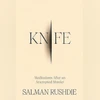 "Rushdie at the cutting edge")












 Connect with us on WhatsApp