The Great Indian Brain Rot: Love, Lies & Algorithms in Digital India
India today is awash in content yet increasingly starved of sustained thought. An endless churn of reels, hot takes, memes, and algorithmically amplified outrage now structures public discourse, privileging immediacy over reflection and visibility over meaning. The Great Indian Brain Rot by Anurag Minus Verma enters this landscape not as a nostalgic lament for lost attention spans, but as a diagnosis of how thinking itself is being reorganised under platform capitalism. As Mr Verma notes, “The internet is neither good nor evil. It is simply a mirror to society and culture.” But this mirror is neither neutral nor passive. It is engineered by markets and metrics that convert expression into output, attention into currency, and influence into measurable value. What emerges is not merely a degraded media ecosystem, but a political economy of cognition—one that reshapes how culture is produced, how politics is mediated, and how the self learns to speak, feel, and exist online.
What distinguishes The Great Indian Brain Rot from familiar critiques of digital culture is its refusal to pathologise either technology or its users. Mr Verma writes against the grain of moral panic, approaching the internet not as a corrupting force but as a social infrastructure — one through which aspiration, precarity, visibility and desire are unevenly distributed and intensely felt. Moving between essays, anecdotes, and close observation, he reads online behaviour as socially produced rather than cognitively degraded. This empathetic mode allows the book to foreground process over judgement. Instead of condemning digital life as evidence of cultural decline, Mr Verma asks how people come to inhabit platforms structured by competition, performance, and constant evaluation. The result is a critique that resists easy blame and instead traces the conditions under which contemporary subjectivities are made legible, rewarded, or rendered disposable online.
A central insight of the book lies in its sustained attention to influence as a social and economic form. In Mr Verma’s account, the influencer ceases to be a person and instead becomes a format — repeatable, optimisable, and endlessly scalable. What circulates is no longer subjectivity but a calibrated performance, shaped by algorithms that reward consistency, recognisability and output. Influence, in this formulation, functions as a commodity: Accumulated through visibility, measured through engagement, and convertible into economic and symbolic value. The internet thus reorganises social relations by transforming presence into productivity and expression into labour. In doing so, it reveals the extent to which contemporary capitalism has absorbed attention, affect, and personality into its circuits of accumulation.
Once influence is rendered measurable, it becomes governable. Mr Verma is attentive to how metrics, likes, views do not merely record popularity but actively shape behaviour. Individuals are reduced to dashboards of engagement, their social worth increasingly legible through numbers. Within this system, controversy operates less as disruption than as resource. Outrage and scandal are folded into the same circuits of accumulation, generating visibility that can be readily monetised. The creator, as Mr Verma suggests, becomes increasingly indistinguishable from the machine that evaluates them: Compelled to respond, optimise and remain legible to algorithms that reward attention regardless of its content.
Mr Verma’s use of the assembly line as a metaphor for digital production is particularly generative. It allows us to see how content creation is organised less as expression than as output, calibrated to the demands of algorithmic circulation. This points to a process of digital dehumanisation, where individuals are apprehended primarily through metrics and performance indicators rather than social meaning. When creators produce in order to feed the algorithm, they risk becoming, as Mr Verma notes, “indistinguishable from the machine.” What is at stake here is not creativity alone, but the reorganisation of participation itself: Visibility is granted on the condition of regularity, recognisability, and scale, aligning cultural production with the logics of contemporary capitalism. Controversy in this ecosystem does not function as a breakdown of norms but as a mode of accumulation.
Political positions, moral stances, and even personal crises are rapidly converted into content, stripped of context and recirculated for engagement. In such a system, dissent risks becoming performative rather than disruptive, its value measured less by consequence than by traction. What emerges is a public sphere organised around metrics rather than deliberation, where the line between political speech and market logic grows increasingly thin.
What The Great Indian Brain Rot ultimately offers is not a critique of digital excess but an anatomy of the conditions that organise contemporary life online. Mr Verma shows how the internet has become a dense social terrain where markets, politics, and everyday interaction blur into one another, producing forms of participation that appear open and voluntary while remaining tightly governed by visibility, circulation, and metricised value. The book’s strength lies in its refusal to moralise or prescribe. In doing so, it invites readers to reckon with a question that extends beyond the screen: What kinds of selves, publics, and possibilities are being shaped when attention itself becomes the dominant currency of social life?

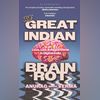 "The Great Indian Brain Rot: How platform capitalism is reshaping thinking")












 Connect with us on WhatsApp