Published by Navayana Books
What should we do with caste? Annihilate it, says Anand Teltumbde echoing B R Ambedkar, not count it, because if we start on that exercise we will be doing it till kingdom come. The net effect of a caste census, he argues, will be no better than the decennial census, launched in 1871 and formalised in 1881, (and the ones that followed) which only strengthened caste, transforming social affiliations into rigid and state-recognised categories, enabling a “segmental control of society”.
In April 2025, the Cabinet Committee on Political Affairs approved the enumeration of caste in the decennial census to be carried out in 2026-27. For most observers of Indian politics, this was equivalent to an exclamation mark: Because prior to this both Prime Minister Narendra Modi personally and the Bharatiya Janata Party (BJP) had been vocal in their opposition to a caste census. In the 2024 election campaign, Mr Modi had denounced the push to count the Indian people according to their caste, pronouncing that for him there were only four big castes: Women, youth, farmers, and the poor. The complete story of how that change of heart came about is yet to be told: Maybe it was the political pressure of the caste survey undertaken by Bihar (where an election was due — and the BJP was and continues to be a partner in power) and Karnataka.
Whatever the reasons, the author argues that caste census will become a means of division and will act to reinforce, not annihilate, caste. He says when India gained independence, power merely passed from one set of rulers to another — from the British to the native elites. They retained the same state apparatus, the same administrative processes, even the same personnel. They framed a new Constitution that in essence, continued the colonial one. They proclaimed India a republic, a welfare state, a pro-people democracy — but nothing of substance changed beyond the rhetoric. Not much more should be expected from the current caste census either.
In support of his arguments, he cites scholarship spanning history, sociology, anthropology and political economy. Anthropologist Nicholas Dirks said caste must be understood not merely as a religious institution but as a political and social formation rooted in local contexts. Brahminism was not the sole point of origin of caste. If it had been, revolts like the emergence of Buddhism and Jainism would have upended caste: They did not. The advent of Islam and the Sufi and Bhakti movements challenged priestly mediation, and had the ring of credibility as many Sufi and Bhakti thought leaders came from the same discriminated background. But Mr Teltumbde argues the sects that arose from these movements over time absorbed the same social hierarchies. And while he does not agree that the British “invented” caste, he believes “the colonial state transformed India into textualized, measurable and governable entity”. The British-ordered census hardened fluid social relationships. This one will do the same.
The Congress’s rejection of the recommendations of the Kaka Kalelkar Commission report and later, the V P Singh government’s adoption of the Mandal Commission report, the rise of the Other Backward Classes (OBCs) and the effect this had on the politics of BJP are also dissected with authority and in detail. The author says reservation as a matter of right has lost its salience. He suggests that universalising “the foundations of capacity building while retaining existing reservation schemes as a pragmatic step open for future review” is a better way forward.
However, the sections on enumeration and why the exercise itself will change nothing are the backbone of the book. The author argues that if equality is the aim, the caste census will never deliver it. “On the contrary, it risks unleashing caste turbulence, as history shows, which will likely outweigh potential gains many times over”. His argument is “if caste census data is used merely to juggle quotas, placate castes and reinforce numerical formulas, it could reproduce the very inequalities it promises to correct”.
Not all scholars agree. The basic argument is: If we don’t even know how many are discriminated against, how can we possibly correct the discrimination? Besides, caste cannot be seen as the burden only of India's lower castes — Dalits and Adivasis – but a fuller, more inclusive picture where everyone must answer the question of their caste.
But Mr Teltumbde is wary of this logic. Data is subject to interpretation. If upper castes simply refuse to be counted and economically weaker sections (EWS) become an acceptable category for reservations for upper castes including Brahmins according to the 103rd constitutional amendment (2019), then does enumeration and data even mean anything in terms of justice?

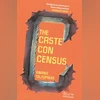 "The Caste Con Census: This book maps caste and other social fractures")












 Connect with us on WhatsApp