The Serpent’s Tale: Kundalini, Yoga, and the History of an Experience
Edited by Sravana Borkataky-Varma and Anya Foxen
Published by Columbia University Press, NY
The story of Kundalini Yoga’s remarkable rise from an obscure tradition to a global phenomenon reads like a pioneer’s tale. First mentioned in the Indian tantra traditions, Kundalini was once seen as the preserve of an exclusive club of practitioners, but today, with millions of followers worldwide and a hugely valuable spiritual industry that has mushroomed around the experience, its success story is one for the marketing textbooks.
In its original avatar, Kundalini was a mind-and-body experience that could be achieved under the trained guidance of an expert. It was conceived as a transformative process for the learners and the guru. Today, the term has acquired a near-generic status and means anything from eastern exotica to spiritual bliss. The book examines the idea of Kundalini as it emerged in the East, where it originated, and as it developed and morphed in the West, where it began life as a micro narrative of the yoga practice.
In India Kundalini was a “vidya” under the Tantra traditions. Sravana Borkataky-Varma, who is a practitioner of Shakta Tantra and has co-authored the book with Anya Foxen, writes, “To be perfectly honest, this was rather perplexing (the association of Kundalini and Yoga in the West) as the tradition of which I am a practitioner seldom used the term Kundalini and there are zero ‘Kundalini Yoga’ practices.”
However, a history of Kundalini and its marketing success is impossible without setting it within the context of yoga and its chart-busting global popularity. Nor can it be told without accounting for the huge influence of spiritual gurus from India across the world. For instance, one of the most influential gurus of Kundalini Yoga is Yogi Bhajan who is described in the book as “the single name that is associated with the practice of Kundalini in the marketplace of popular spirituality”.
The book looks at the textual sources and examines the gurus and the institutional frameworks that have come up around Kundalini Yoga.
It also decodes the language and imagery that have developed around Kundalini, and throughout there is a careful attempt to focus an academic lens into what is largely a practitioner’s universe.
Not surprisingly, therefore, this is a complex read. It will take readers some time to assimilate the seemingly contradictory positions and experiences that the book tackles. But one way to find order within the chaos would be to do as the authors say: Know what the book is not about. It is not about sex, it is not about the one true Kundalini, and it is not about one yogi’s journey of realisation.
Authors Borkataky-Varma and Anya Foxen clarify that the word Kundalini means many things to many people. To some extent, this is only natural, given the antiquity and nature of the experience. However, this is further complicated by the fact that the term has become a default category for multiple (and opposite) sensory experiences.
Interestingly, the obscurity of the ideas around Kundalini have not come in the way of its marketing success. Along with yoga, under whose shadow it first embarked into the world, it is among the most successful exports from India. A lot of credit for this, of course, goes to the preachers and purveyors of spirituality, who managed to create sturdy and scalable organisational infrastructure around a wispy idea. But the rise and spread of Kundalini was aided by the imagery and symbolism associated with the practice.
For instance, the serpent and the fire are the two most common symbols associated with Kundalini. Both come with a tonne of mythological baggage. The serpent is associated with creation and destruction. In the early foundational myths of India, it is a symbol of power and holds both immortality and mortality within its slippery frame. Similarly fire, which is both a creative and a destructive force.
As Romanian scholar of religion and mythology Mircea Eliade says, we humans carry within ourselves a bundle of prehistoric humanity. And one of the ways in which we can access this prehistoric humanity is through the world of mythology. The power of Kundalini lies within the potent symbolism that has been generated around the practice.
Writing about an experience that does not present itself uniformly or universally and is layered with symbols, stories and conflicting ideas is not easy. And it definitely is not a task for the faint-hearted and, maybe just for that alone, the writers deserve credit.
The reviewer is a Mumbai-based journalist and co-founder of The Mythology Project, a centre for the study of mythology, legends, and folklore

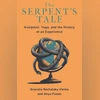 "The Serpent's Tale: A book on Kundalini Yoga's texts and institutions")











