THINK LIKE THE MINIMALIST: Master the Art and Science of Crafting Thought Provoking Design
Author: Chirag Gander & Sahil Vaidya
In the award-winning TV series Mad Men, there is a scene in which the creative director of the ad agency Sterling Cooper, Don Draper, points to a page of the New York Times. The page contains a full-page ad for the car brand Volkswagen. “Guys, this is the future of advertising,” Draper says. The ad to which he was referring had the pithy headline “Think Small”. The car is shown in a tiny size in the corner of the ad. A large part of the ad is blank space. The ad contains a few lines of copy that explains the logic behind “Think Small”.
Advertising in the late 1950s and 1960s was full of big visuals and a lot of copy. Car ads were packed with claims extolling their great looks, excellence, turbo-drive and so on. And then comes an ad for Volkswagen that doesn’t shout, it whispers. Don Draper was impressed at the bold stance taken by the ad agency Doyle Dane Bernback (DDB) and the client Volkswagen.
In fact, there are some funny stories about what a typical brand team could have done with that ad: Make the car size bigger; add adjectives such as “smart”, “efficient”, “great looks” to the headline; add a woman and a man… and you have a run-of-the-mill ad.
Instead of falling for the established tropes, the agency decided to do something different. The Volkswagen ad and the other campaigns that DDB churned out during its glory days unleashed a new term in advertising: Subtle persuasion. To sell, you don’t need to shout. Howard Gossage, a legendary copywriter, said, “Nobody reads ads. People read what interests them. Sometimes it is an ad.” DDB’s advertising brought the reader into the body copy by its magical combination of art and copy. In fact, DDB was the first agency to make art directors and copywriters sit together and work together on campaigns.
What makes for persuasion?
I remember discussing this with a creative director who was helping our agency improve its creative oomph. I remember him saying, “We should remove every extraneous element from the ad. Keep removing stuff till you hit a limit that you can’t remove anymore. If the ad still works, go ahead. You don’t have to stuff every ad with a great amount of copy and visuals.”
I was reminded of the “Think Small” ad and the discussion with the creative director as I finished reading Think Like The Minimalist – Master the Art and Science of Crafting Thought Provoking Design by Chirag Gander and Sahil Vaidya. Both authors are Indian Institute of Technology, Bombay (IITB) graduates. They started dabbling in design as students and jumped into it full time after they graduated (they still wonder how they managed to graduate). Their agency, The Minimalist, is ten years old and has an enviable roster of clients spanning the globe. They have helped numerous startup founders navigate the marketing-communication (mar-comm) ecosystem. At one time, it was the go-to-agency for all the IITB startup founders.
The tools of minimalism are explained in a few chapters with many vivid examples. Perception shift is simply a method of representation that creates multiple perceptions from the same object. Combining various elements, you can arrive at the Eureka moment. Another tool is to look at the negative space. The object is the positive space; all around it is the negative space. Can something be done with the negative space? The famous “Think Small” ad used negative space to draw attention to the small car. Can that space be used to hide or show something different? Then comes the technique of using typography; which typeface to use, what can be changed, what can be added/deleted. The next step is the use of humour; wordplay, double meanings, sarcasm, exaggeration, or pop culture references can all tickle the funny bone.
The book contains numerous practical exercises for the reader to apply minimalist thinking. For those who want to know whether these theories have any use in commercial organisations and brands, the last chapter contains several short case studies. I wish they had presented more of these to bring alive the application of their minimalist formula.
That said, I am happy the founders of a young ad-design agency have taken the time out to share their design and advertising principles in such a practical manner. I do hope this encourages other folks in the design and mar-com space to share their stories.

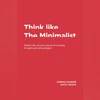 "'Think Like The Minimalist': A practical guide for creative minds")












 Connect with us on WhatsApp