Home / Book / Voice of the people: Book explains why speeches matter in a democracy
Voice of the people: Book explains why speeches matter in a democracy
Ms Gupta's selection captures not the speeches alone but the parry and thrust that goes on between the treasury and Opposition benches. CPI (M) leader, late Sitaram Yechury never disrupted parliament
premium
Voice of the people: Greatspeechesfrom India’s Parliament
5 min read Last Updated : Nov 17 2025 | 11:53 PM IST
Don't want to miss the best from Business Standard?
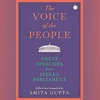
Voice of the people: Greatspeechesfrom India’s Parliament
Edited by Smita Gupta
Published by Juggernaut
544 pages ₹999
A disclaimer: Smita Gupta has been a respected colleague, always thorough, thoughtful and incisive in her critique of society and politics. She brings to bear the same qualities to this anthology of parliamentary oratory.
Ms Gupta covered Parliament for over three decades. Anyone who has reported from the press gallery even for a day knows how challenging it is, not just to summarise some truly brilliant speeches that are frequently made in the two Houses but also to sit through interminable, boring and often repetitive discourses (although, it must be said, lately this has become easier because disruption and adjournment for the day have become commonplace)! So, Ms Gupta deserves applause because she has painstakingly ploughed through decades of parliamentary speeches, determined which ones should be included and which dropped, and organised them in a way that brings history alive.
The anthology has 12 sections — covering social spheres (from gender to politics), contemporary issues (economic liberalisation, the India-US nuclear deal), and concerns that continue to be debated in the country (civic space, religious fault lines). Every speech is prefaced with a short foreword that places the speech and the speaker in their historical and political context.
In her introduction Ms Gupta explains the dilemmas and issues she faced in selecting the speeches. In the Indian Parliament, speeches can be made in any Indian language, though the most common is Hindi. In some cases, translations were available, but in many just a summary. So she could not, she says, include Atal Bihari Vajpayee’s speech after the creation of Bangladesh, for instance, because only a summary of the original Hindi version was available. Some speeches have been included, it appears, for the trenchant wit the speakers displayed, like Piloo Mody’s on the Maintenance of Internal Security Bill (“We are not living in the reign of bloody Elizabeth I. We are living in the reign of Indira Gandhi, the last, I hope.”). Others, like P Chidambaram’s critique of the Citizenship (Amendment) Act 2019, are included for their clarity and the ease with which they reveal the politics of the legislation. In the same section, you hear the raw fear and anxiety in the voice of Sikkim Member of Parliament (MP) Hishey Lachungpa who wonders if this is one step towards the dilution of Article 371 (F) that ensures the special status of the state that joined India only in 1975.
India’s journey towards a liberalised economy is signposted by budget speeches: Finance Ministers John Matthai (Budget for 1950-51), Manmohan Singh (Budget for 1991-92), P Chidambaram (Budget for 1997-98) and Yashwant Sinha (Budget for 2000-01). While these stand out for the policy intervention they represented rather than their oratorial brilliance, there are other equally interesting speeches such as Lalu Prasad’s railway budget speech (2006-07), showing an administrator face of the former Bihar chief minister the state never saw, that could have found mention in the volume.
Ms Gupta’s selection captures not the speeches alone but the parry and thrust that goes on between the treasury and Opposition benches. CPI (M) leader, the late Sitaram Yechury never disrupted parliament. Yet his pointed interventions while Finance Minister Arun Jaitley attempted to defend the Aadhaar (Targeted delivery of financial and other subsidies, benefits and services) Bill 2016 as a money Bill are enlivening. The following speech by Congress MP Jairam Ramesh explains why the Aadhaar is not and should not be a money Bill because it was designed only as proof of identity and highlights issues around privacy. The speeches reveal layers of thinking and cogitation about India’s programme of unique identity and direct benefit transfer. A similar tension is reflected in the speech by then Prime Minister V P Singh on the acceptance of the Mandal Commission report and leader of opposition Rajiv Gandhi’s interventions.
The volume has many stars and one is Omar Abdullah’s “I am a Muslim, and I am an Indian” speech made in defence of the Indo-US Civil Nuclear Agreement when he was a Union minister in the United Progressive Alliance (UPA) government. He says: “Sir, the enemies of Indian Muslims are not the Americans, and the enemies of the Indian Muslims are not ‘deals’ like this. The enemies of Indian Muslims are the same enemies that all the poor people of India face, namely, poverty and hunger, unemployment, lack of development and the absence of a voice. It is that we are against, namely, the effort being made to crush our voice”. The speeches on gender – Sati, the women’s reservation bill and others – address both perception and reality.
Parliamentary speeches bring history alive, especially its nuances. Ms Gupta’s book is much more than just a curation: it captures the evolution of India as a democratic republic. All Indians must read this book to understand what we were as a republic, what we have become and where the threats to freedom lie.