Tested: Pat Cummins interviews 11 people to explore pressure beyond cricket

He grinds, he hits, he absorbs, he refuses to crack. Australia would eventually clinch an unlikely victory.
a
a
Amritesh Mukherjee
5 min read Last Updated : Nov 07 2025 | 10:41 PM IST
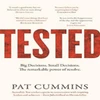
Tested: The Remarkable Power of Resolve by Pat Cummins
Published by HarperCollins India
288 pages ₹499
 
Edgbaston, 2023. Australia needs 74 runs with three wickets in hand. Pat Cummins walks to the crease as number nine, the tail exposed, England circling. What follows is a demonstration of resolve. 
He grinds, he hits, he absorbs, he refuses to crack. Australia would eventually clinch an unlikely victory. 

Also Read

Months later, in another improbable scenario, he would face over 10 overs of relentless bowling to shield Glenn Maxwell’s miraculous double century against Afghanistan. Again, that same quality: Resolve. This is the consistent thread Cummins follows in Tested — an exploration of that which separates the successful from others. 
“Resolve,” he writes, “is the drive to keep going, the wisdom to know where to focus your energies, and the fortitude to fight against the obstacles that you find along the way. It’s not necessarily relentlessness, ruthlessness or bloody-mindedness; it’s a steady hand, a deft touch and the ability to keep your head when everyone around you is losing theirs. Resolve is physical, emotional and moral courage born of a knowledge of yourself.” 
Australian cricket doesn’t lack for captaincy legends. Steve Waugh ground opponents into submission with precision, patience, ruthlessness and cold calculations. Ricky Ponting led from the front, all instinct and fire, his bat doing the talking.  Michael Clarke brought innovation and discipline in equal measure, made professionalism a religion. Tim Paine restored something lost: Integrity, calm, a team the public could believe in again. And then came Cummins, the first pace bowler to captain Australia in over six decades. He synthesised them all — Waugh’s steel, Ponting’s combativeness, Clarke’s tactical mind, Paine's empathy — without becoming any single one of them. In less than five years, he’s claimed a World Cup, a World Test Championship, and the Ashes. Not bad for someone supposedly still learning the role. 
There’s a temptation, when you’ve achieved what Cummins has, to explain how you did it — to package success into steps, to teach through your story. Tested, however, turns outward. Cummins interviews 11 people, barely any of them cricketers, but all of them acquainted with pressure in forms he may never face. He positions himself as a fellow traveller, someone still figuring out what resolve means and how it manifests. Each chapter becomes a conversation between their experiences and his, between their breaking points and his own. 
Julia Gillard knows something about pressure. 
Australia’s first woman prime minister, she led through a storm of scrutiny and misogyny that never let up. Every decision questioned, every word weaponized. And then, in an instant, it ended. A leadership spill, a vote, and suddenly she was outside the circle she'd fought so hard to enter. When Cummins speaks with her, there isn’t any bitterness. “Anyone obsessing about a slight or injustice – perceived or real – is choosing to be potentially right instead of potentially happy,” he sums up
her philosophy. 
Dennis Lillee was one of Cummins’ early mentors, a cricketing great from an era when fitness standards were lax and talent substituted for preparation. Yet Lillee was relentless about discipline, about showing up prepared, about constantly evolving even when no one else did. “That’s the thing about change,” Cummins writes. “If you don't make any change, you stay really stale. But there's also no guarantee that a change is going to work, and it's in that unknown where all the scepticism and push-back comes in.” 
Nedd Brockmann runs ultramarathons — distances that break bodies, through heat and isolation, with no crowd to carry him forward. What drives someone through that? Showing up, especially when it would be easier not to. Showing up for the person you claimed you’d be. Cummins sees himself in that stubbornness. “A heightened sense of competitiveness can get a bad rep sometimes, but I tell you, when you’re in the last few overs of a fruitless and overheated spell, in a Test that not many people are watching back home, or if you’re out running on the seemingly endless Nullarbor with only your weeping blisters to keep you company, it can be a hell of a drug.” 
Elizabeth Day’s work centres on failure as something universal, inevitable, necessary, and worth examining. She’s spoken openly about miscarriages, about relationships that didn’t survive. It’s a radical act in a culture that worships success and pathologises setbacks. “I often wish that there was more of an allowance for respectful failure in public discourse,” Cummins reflects. “But it’s risky if you get it wrong, unintentionally causing offence, judged as too flippant. It takes bravery and a bit of latitude to fail.” 
Each conversation in the book adds a new layer. John Bertrand, champion sailor and former president of Swimming Australia, who knows what it means to captain under impossible pressure; Richard Scolyer, oncologist confronting his own mortality with the same rigour he once applied to saving others; John Moriarty, Aboriginal footballer-turned-artist and advocate, who’s spent a lifetime fighting for recognition; Shaun Christie-David, CEO of a hospitality group who built an empire on giving back to the society; Ronnie Screwvala, Indian entrepreneur and philanthropist whose ventures span industries and continents; Rob Sitch, filmmaker and comedian who shares parenting lessons; and Becky Cummins, Pat’s wife, whose absence from accolades has enabled his accumulation of them. 
Together, they form a study of resolve as a spectrum rather than a singular trait, expressed differently across lives but recognisable in each. They remind us that resolve is never finished, never mastered. It's something you keep searching for, in yourself and in others, long after the crowd has gone home.
The reviewer is a journalist, writer, and editor. Instagram/X: aroomofwords

One subscription. Two world-class reads.

Already subscribed? Log in

Subscribe to read the full story →
*Subscribe to Business Standard digital and get complimentary access to The New York Times

Smart Quarterly

₹900

3 Months

₹300/Month

SAVE 25%

Smart Essential

₹2,700

1 Year

₹225/Month

SAVE 46%
*Complimentary New York Times access for the 2nd year will be given after 12 months

Super Saver

₹3,900

2 Years

₹162/Month

Subscribe

Renews automatically, cancel anytime

Here’s what’s included in our digital subscription plans

Exclusive premium stories online

  • Over 30 premium stories daily, handpicked by our editors

Complimentary Access to The New York Times

  • News, Games, Cooking, Audio, Wirecutter & The Athletic

Business Standard Epaper

  • Digital replica of our daily newspaper — with options to read, save, and share

Curated Newsletters

  • Insights on markets, finance, politics, tech, and more delivered to your inbox

Market Analysis & Investment Insights

  • In-depth market analysis & insights with access to The Smart Investor

Archives

  • Repository of articles and publications dating back to 1997

Ad-free Reading

  • Uninterrupted reading experience with no advertisements

Seamless Access Across All Devices

  • Access Business Standard across devices — mobile, tablet, or PC, via web or app

Topics :Pat CumminsAustriaAustralia cricket team

Next Story



