CRISIL SME TRACKER: Budget 2018's focus on MSMEs to spur job creation

The MSME sector employs over 111 million people and contributes nearly 31 per cent of India's GDP
Dark clouds over India's growth engines
Business Standard
Last Updated : Feb 05 2018 | 11:32 PM IST
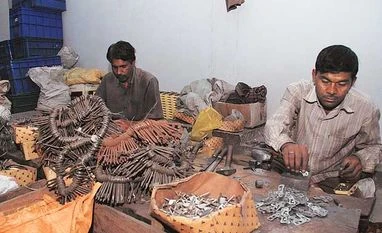
The government has in Budget 2018-19 rightly focused on micro, small and medium enterprises (MSMEs) as the preferred route for rapid job creation and self-employment. The MSME sector employs over 111 million people and contributes nearly 31 per cent of India’s GDP.

Sharpening the focus on the promotion of self-employment, the government has increased funding for the Prime Minister’s Employment Generation Programme to Rs 18.01 billion in the financial year 2018-19, from Rs 11.95 billion (revised) in fiscal 2017-18.

Similarly, the target for the flagship Pradhan Mantri Mudra Yojana — which extends loans of up to Rs 1 million to micro-entrepreneurs — has been increased to Rs 3 trillion from Rs 2.44 trillion.

In the formal sector, the government proposes to contribute 12 per cent of the wages of new employees in the Employee Provident Fund across sectors for three years. Further, to increase the investible surplus in the hands of MSMEs in the formal sector, the reduced corporate tax slab of 25 per cent has been extended to companies with a turnover of up to Rs 2.5 billion, from Rs 500 million announced in last year’s Budget.

T Raj Sekhar, Director-SME Ratings, CRISIL Limited says, “The government has announced a lot of tax-friendly measures and hiked customs duties on various products where MSMEs have a strong presence. These will directly benefit labour-intensive industries such as food processing, footwear and leather goods and textiles.”

There are signs of economic revival, given strong global growth, and an easing in the domestic headwinds from demonetisation and implementation of GST.

CRISIL, therefore, expects the MSME-specific Budget proposals to help in immediate improvement in job creation and self-employment in the near term. The increased budgetary outlays for the National Manufacturing Competitiveness Programme, entrepreneurship and skill development, and infrastructure development, if sustained over a period of time, will help address the structural constraints to employment creation in the long term, too.

One subscription. Two world-class reads.

Already subscribed? Log in

Subscribe to read the full story →
*Subscribe to Business Standard digital and get complimentary access to The New York Times

Smart Quarterly

₹900

3 Months

₹300/Month

SAVE 25%

Smart Essential

₹2,700

1 Year

₹225/Month

SAVE 46%
*Complimentary New York Times access for the 2nd year will be given after 12 months

Super Saver

₹3,900

2 Years

₹162/Month

Subscribe

Renews automatically, cancel anytime

Here’s what’s included in our digital subscription plans

Exclusive premium stories online

  • Over 30 premium stories daily, handpicked by our editors

Complimentary Access to The New York Times

  • News, Games, Cooking, Audio, Wirecutter & The Athletic

Business Standard Epaper

  • Digital replica of our daily newspaper — with options to read, save, and share

Curated Newsletters

  • Insights on markets, finance, politics, tech, and more delivered to your inbox

Market Analysis & Investment Insights

  • In-depth market analysis & insights with access to The Smart Investor

Archives

  • Repository of articles and publications dating back to 1997

Ad-free Reading

  • Uninterrupted reading experience with no advertisements

Seamless Access Across All Devices

  • Access Business Standard across devices — mobile, tablet, or PC, via web or app

Next Story



