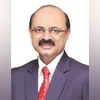
The government’s guarantee mechanism for startups is likely to improve lending to the sector in the coming years, says UCO Bank Managing Director and Chief Executive Officer (MD&CEO) Ashwani Kumar. In a telephonic interview with Harsh Kumar, he also discusses the expansion plans of the bank. Edited excerpts:
How is your bank addressing inoperative accounts under Pradhan Mantri Jan Dhan Yojana (PMJDY)?
We are conducting a saturation drive for inoperative PMJDY accounts, meeting customers one-on-one to encourage them to operate their accounts. The main issue we face is that some customers have multiple accounts across different banks, and are receiving DBT (Direct Benefit Transfer) benefits elsewhere. We have opened various options to make the accounts operative. Even for closures, we take customers’ consent first.
How are you dealing with minimum balance requirements in savings accounts?
Our earnings from minimum balance penalties were around ₹70-75 crore. However, on the decision of removal of it, we will first present this matter to the board, and based on the board’s decision, we will take necessary steps regarding the future of minimum balance requirements.
How do you view the government possibly increasing the cap on foreign direct investment (FDI) in public sector banks (PSBs)?
Any capital coming into the banking sector is welcome. It will also bring additional investments into India. I don’t see any negative impact from this. I believe it will not affect PSBs’ commitment to financial inclusion, as serving the last mile and the most underprivileged is ingrained in the ethos of PSBs.
Your vehicle loan segment has picked up. What led to this growth?
We have taken several steps. First, we have tied up significantly with companies like Maruti Suzuki and a couple of Direct Selling Agents (DSAs). Second, we have strengthened our retail hubs across India, which has improved the turnaround time (TAT) for sanctioning loans. Additionally, we revamped the product to make it more competitive in the market. Our base for vehicle loans was quite low — around ₹3,164 crore in June 2024. This has now increased to ₹5,282 crore in June 2025, reflecting a year-on-year (Y-o-Y) growth of 66.94 per cent.
Why have PSBs been hesitant in giving loans to startups?
One of the major challenges we faced with startups was the lack of adequate credit guarantee cover. It was difficult to assess the viability of startups, especially if they were loss-making or not operational. As a result, many customers were not eligible for loans. However, with the availability of guarantee covers for startups now, the scenario is improving. We have also created dedicated startup desks under our MSME (micro, small, and medium enterprise) cells. Profitability in this sector takes time, so government guarantee cover is very important. Banks deal with public money, so we must ensure the proposals are bankable. Earlier, there were issues, but with the guarantee mechanism in place, we expect startup lending to improve in coming years.
What is your current exposure in co-lending?
Our exposure in co-lending is around ₹2,000 crore. We are currently in a wait-and-watch mode for the final guidelines from the Reserve Bank of India (RBI) on co- lending. Once the guidelines are clear, we expect momentum to pick up. At present, we have seven tieups with non-banking financial companies (NBFCs).
How is your corporate lending portfolio performing?
Our growth in the corporate lending segment is around 14-15 per cent. The main areas of traction are data centres, textiles, electric vehicles, and iron & steel sectors. We are not focusing on very large loans. Instead, we are sticking to mid-sized corporate loans. For 2025-26 (FY26), we expect growth in this segment to be around 12-14 per cent.
What is your expansion plan for this year?
We are planning to open 150 new branches this year. We have already finalised the locations with the help of our premises committee. By December 2025 to January 2026, most of these branches will be operational.
As of June 30, we had a network of 3,305 domestic branches, two overseas branches (one each in Hong Kong and Singapore), and one representative office in Iran. Of the total branches, 2,033 (about 61 per cent) are in rural and semi-urban areas.