Bajaj Auto gets DVA certificate for all 15 electric vehicle models

Most companies still have DVA certificates pending or under review by MHI
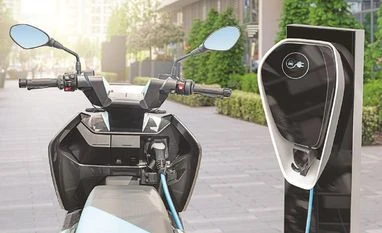
electric vehicle
Surajeet Das Gupta New Delhi
4 min read Last Updated : Aug 23 2024 | 12:27 AM IST
Bajaj Auto has become the first automotive (auto) original equipment manufacturer (OEM) to receive a domestic value addition (DVA) certificate for all 15 electric vehicle models it submitted for clearance from the Ministry of Heavy Industries (MHI).

As of August 21, 2024, MHI has approved 50 out of 74 models submitted by six companies, including Tata Motors, Mahindra & Mahindra (M&M), Ola Electric, TVS Motor Company, Eicher Motors, and Bajaj Auto. The remaining applications are still under review.

The DVA certificate is crucial for receiving incentives under the production-linked incentive (PLI) scheme, which requires companies to achieve 50 per cent or more localisation on each vehicle basis to claim the benefits. This will be the first financial year ( FY 25) when auto OEMS under the five year auto PLI will get reimbursement of their incentives from the government if they meet targets and conditions.  

However, a point of concern is that while 20 companies are eligible for the PLI scheme for auto OEMs (including electric two-wheelers, three-wheelers, four-wheelers, and non-auto OEMs), 14 of them have not applied for a DVA certificate, suggesting they may not have any qualifying products in their portfolio.

Notable absentees include Suzuki Motors, Ashok Leyland, Ford India, Hyundai Motor India, Kia India, PCA Automobiles India, and Pinnacle Mobility Solutions.

In the two-wheeler segment, Hero MotoCorp, which sells Vida electric scooters, and Piaggio Vehicles have also not submitted any applications. Among non-auto OEMs, five out of six eligible companies (excluding Ola) have yet to apply.

Bajaj, however, has received DVA clearance for 10 electric scooters under the Chetak Blue range and variants, along with five electric three-wheelers. Ola has had four of its five vehicles approved, including the Ola S1 Pro, Ola S1 Air, and two variants of the Ola S1 X at 3 kilowatt-hour (kWh) and 4 kWh. TVS has secured approval for two out of five applications: the TVS iQube S and the TVS iQube SmartXonnect. Eicher has one application still pending.

Among carmakers, Tata Motors has received clearance for 15 of the 27 vehicles for which it applied, including the electric Tata Tiago, Tata Tigor, Tata Ace, and their variants, as well as the Tata Starbus and Tata Ultra Urban electric buses. M&M has received approval for 16 of the 23 models it submitted, all of which are electric three-wheelers.

The PLI scheme is critical for auto OEMs, as its incentives could more than offset the sharp reduction in subsidies for two-wheelers (capped at Rs 10,000 per vehicle) and the withdrawal of subsidies for passenger cars under the Electric Mobility Promotion Scheme, which ends in September. This scheme will be replaced by the Faster Adoption and Manufacturing of (Hybrid &) Electric Vehicles in India (FAME-III).

The government has allocated Rs 29,938 crore under the PLI auto and auto component scheme and expects investments of Rs 45,016 crore from approved companies, with the scheme’s first year starting this financial year (2024-25).


THE DVA EQUATION


·         Most companies, except Bajaj Auto, still have DVA certificates pending or under review by MHI

·         Only six of the 20 companies eligible for the PLI scheme have applied for DVA for at least one model

·         In the PLI scheme for champion two- or three-wheeler OEMs, two out of four companies have applied for DVA

·         In the PLI scheme for champion OEMs (excluding two- and three-wheelers), three out of 10 eligible companies have applied for DVA

·         In the PLI scheme for non-auto OEMs, only one company, Ola, out of six has applied for DVA

·         Companies like Ather Energy are not eligible for the PLI scheme


One subscription. Two world-class reads.

Already subscribed? Log in

Subscribe to read the full story →
*Subscribe to Business Standard digital and get complimentary access to The New York Times

Smart Quarterly

₹900

3 Months

₹300/Month

SAVE 25%

Smart Essential

₹2,700

1 Year

₹225/Month

SAVE 46%
*Complimentary New York Times access for the 2nd year will be given after 12 months

Super Saver

₹3,900

2 Years

₹162/Month

Subscribe

Renews automatically, cancel anytime

Here’s what’s included in our digital subscription plans

Exclusive premium stories online

  • Over 30 premium stories daily, handpicked by our editors

Complimentary Access to The New York Times

  • News, Games, Cooking, Audio, Wirecutter & The Athletic

Business Standard Epaper

  • Digital replica of our daily newspaper — with options to read, save, and share

Curated Newsletters

  • Insights on markets, finance, politics, tech, and more delivered to your inbox

Market Analysis & Investment Insights

  • In-depth market analysis & insights with access to The Smart Investor

Archives

  • Repository of articles and publications dating back to 1997

Ad-free Reading

  • Uninterrupted reading experience with no advertisements

Seamless Access Across All Devices

  • Access Business Standard across devices — mobile, tablet, or PC, via web or app

Topics :Bajaj Autoautomobile manufacturer

Next Story



