IndiGo taps premium as economy fare slips and business class zooms

This trend underscores that Air India and Vistara, both Tata Group airlines and the only carriers in India with business class offerings, are capitalizing on the opportunity to charge premium prices

IndiGo, IndiGo Airlines, IndiGo aircraft
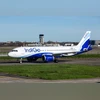
IndiGo (Photo: Bloomberg)
Deepak Patel New Delhi
4 min read Last Updated : May 24 2024 | 11:51 PM IST
The average economy class fare on India’s most frequented domestic routes has seen a sharp decline over the past year, while that of business class has surged, according to recent data. This trend has prompted IndiGo to announce the introduction of business class on its “busiest and business routes” by December.

According to aviation analytics firm Cirium, the average economy class fare earned by Indian carriers on the country’s seven high-frequency routes fell by up to 47.5 per cent year-on-year (Y-o-Y) in February. In contrast, business class fares witnessed a dramatic increase of up to 59.3 per cent during the same period.

This underscores that Air India and Vistara, both part of the Tata group and the only Indian carriers currently offering business class, are capitalising on the opportunity to charge premium prices.

However, the entry of IndiGo into the business class market is likely to disrupt this profitable landscape. Known for its competitive pricing and the lowest unit costs in the country, IndiGo’s move is expected to spark intense competition in the premium sector, potentially undermining the pricing power currently enjoyed by its rivals, according to aviation industry insiders.


Air India, Vistara, and IndiGo did not respond to Business Standard's queries on this matter.

Sanjay Kumar, former chief strategy and revenue officer at IndiGo, on Friday said that there is a market opportunity and that the two Tata-run airlines need competition in the business class segment. “It is important that IndiGo provides that competition to full-service airlines. Today, IndiGo’s flight network is the best network,” he said.

IndiGo has deployed a strategic approach to counter some of the gains made by its competitors without fully filling up “the other cabin (economy class)” in the marketplace, said Kumar, now president and CEO of InterGlobe Technology Quotient, while speaking at a webinar -- The Future Dynamics of Airline Pricing in India -- organised by CAPA India.

Cirium’s data highlights an intriguing dynamic on the Delhi-Mumbai route, India's busiest domestic route. Airlines recorded an average economy class fare of $90 in February, a decrease of 29.7 per cent Y-o-Y. However, business class fares on this route rose to an average of $303, an uptick of 12.6 per cent Y-o-Y. These fare figures exclude taxes and fees.

On the Kolkata-Chennai route, the average economy class fare fell by 45.1 per cent Y-o-Y to $78 in February. Conversely, airlines saw a surge in the average business class fare, which jumped by 59.3 per cent Y-o-Y to $317 in February.

“As far as the premium product (of IndiGo) is concerned, there is an opportunity in the market. Vistara as a brand is going off the market, and going to Air India. That leaves a void. Depending on the product, service model, strategy, and what you are doing on these heavy frequency routes, the dual pricing or dual strategy might work. It has to be communicated properly (to customers),” said Kapil Kaul, CEO and director, CAPA India.

IndiGo's plans to introduce a business class offering were foreshadowed last month when it placed an order with European aircraft manufacturer Airbus for 30 A350-900 widebody aircraft. These aircraft, with their larger fuel tanks, are suitable for long-haul routes, such as those connecting India to North America and Europe. Widebody planes are typically operated in a multiple-class configuration.

However, the delivery of the A350-900 widebody jets is not expected to begin until 2027 and beyond. In contrast, IndiGo is set to receive its first batch of the A321XLR aircraft -- narrowbody planes with a longer range than the A321neo -- as early as next year. As a result, the airline’s initial business class is likely to be on an A320neo or A321neo aircraft. Currently, about 27 per cent of IndiGo’s total passenger carrying capacity operates on its international routes.

One subscription. Two world-class reads.

Already subscribed? Log in

Subscribe to read the full story →
*Subscribe to Business Standard digital and get complimentary access to The New York Times

Smart Quarterly

₹900

3 Months

₹300/Month

SAVE 25%

Smart Essential

₹2,700

1 Year

₹225/Month

SAVE 46%
*Complimentary New York Times access for the 2nd year will be given after 12 months

Super Saver

₹3,900

2 Years

₹162/Month

Subscribe

Renews automatically, cancel anytime

Here’s what’s included in our digital subscription plans

Exclusive premium stories online

  • Over 30 premium stories daily, handpicked by our editors

Complimentary Access to The New York Times

  • News, Games, Cooking, Audio, Wirecutter & The Athletic

Business Standard Epaper

  • Digital replica of our daily newspaper — with options to read, save, and share

Curated Newsletters

  • Insights on markets, finance, politics, tech, and more delivered to your inbox

Market Analysis & Investment Insights

  • In-depth market analysis & insights with access to The Smart Investor

Archives

  • Repository of articles and publications dating back to 1997

Ad-free Reading

  • Uninterrupted reading experience with no advertisements

Seamless Access Across All Devices

  • Access Business Standard across devices — mobile, tablet, or PC, via web or app

Topics :IndiGo AirlinesIndian companies

Next Story