Vineet Nayyar, who died a few days ago, had a distinguished career in the civil service and in the public sector, during a stint at the World Bank, and finally in the private sector. More often than not, he had to deal with crises or controversy-ridden situations, in all of which he delivered while keeping his nose clean. He was known to friends as a warm person with a sharp mind, a generous heart and ready wit.
Two episodes in his life are worth recalling. Back in the 1990s, when Enron was pushing its gas-based power project at Dabhol in Maharashtra, there were many levers being pulled to facilitate the clearance of a controversial project promoted by a controversial company. Then came the explosive news that the World Bank had decided that it would not finance the project, provoking some acerbic reactions from Enron’s Rebecca Mark. What did not come out in the public eye was that the World Bank executive who had pulled the plug was Vineet, who didn’t like what he saw about the project and recommended that the Bank not fund it. His boss at the Bank warned him that his stance on the project would do his career no good, but Vineet stuck to his guns. That kept the Bank clear of the subsequent mess.
An earlier controversy, dating back to the 1980s, concerned a project to lay India’s first long-distance gas pipeline from Hazira on the Gujarat coast all the way to Jagdishpur in eastern Uttar Pradesh, 1,750 km away, where the gas it carried would be the feedstock for a fertiliser factory. Once again, there was controversy because Snamprogretti, represented in India by the then influential Ottavio Quattrocchi (of Bofors fame) was pushing that the contract go to his company. Because the officials concerned stood firm in the face of political pressure, the project went to a French rival.
Vineet (in his 40s then) was in charge of the project as the chairman of the newly-formed Gas Authority of India, which would implement the project. And it was a matter of subsequent pride for him that the project was completed within budget, on schedule (in 1986-87), and that the 36-inch pipeline with compressor stations, gas turbines for power generation and other facilities en route, has functioned without a glitch in the decades since. Whenever anyone commented on the difficulties of implementing projects in the public sector milieu, Vineet would cite his experience with the HBJ pipeline.
Vineet’s role in these episodes has not emerged in the public eye because he was not one to project himself. That’s partly because he viewed men and matters with a wry humour that showed in witty comments directed at needless ceremony and the purveyors of corporate guff. But his record in the private sector, as vice-chairman at HCL Technologies and later executive vice-chairman at Tech Mahindra (which bought and salvaged the collapsing Satyam Computers), was stellar.
When yet another collapsing firm, the Infrastructure Leasing and Financial Services (ILFS), was headed for bankruptcy and its assets needed salvaging, it was Vineet (now in his 80s) who was asked to do the job by a government-appointed board chaired by Uday Kotak. As things turned out, ILFS salvaged a higher percentage of creditor money than any other bankrupt financial firm.
Vineet lived simply, and disapproved of corporate excess. When he came into substantial wealth because of stock options at the private firms where he worked, he used the money to set up quality schools (not all of which worked out well because Covid changed the dynamics for a well-appointed residential school in Lonavla). He also took care of the education needs of personal staff like drivers.
Vineet’s father was a civil engineer whose government job took the family to a succession of small towns in North India, where Vineet got his education. In his 20s, Vineet’s adventurous spirit took him on his Lambretta scooter on an audacious overland trip from India to Europe; the scooter got damaged en route and stolen in London! Both he and his younger brother Deepak joined the civil service (Deepak took a revolving door between the government and academia). Reva, Vineet’s feisty wife, and Rohini, Deepak’s late wife, were also civil servants.
The writer is former editor and chairman of Business Standard

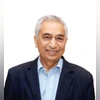 "Vineet Nayyar: A tribute")


 Connect with us on WhatsApp