Aerosol propellant market to reach $8.16 bn by 2020
Personal care & homecare products, environment regulations, increase in the disposable income, etc are driving the aerosol propellant market, according to MarketsandMarkets' report
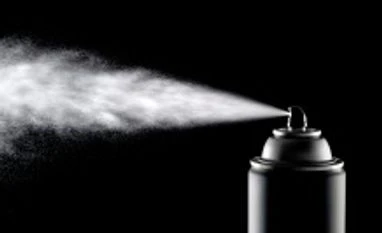
<a href="http://www.shutterstock.com/pic-101207041/stock-photo-an-aerosol-can-of-spray-dispensing-its-content-against-a-backlit-black-background.html?src=_FOm7NjBK8UO84qaj5fboQ-1-4" target="_blank">Aerosol can</a> image via Shutterstock.
The global aerosol propellant market, valued at $ 5.70 billion in 2014, is expected to reach $ 8.16 billion by 2020, at a CAGR of 6.17 percent from 2015 to 2020, according to MarketsandMarkets’ new report.
An aerosol propellant is a gas under pressure in a can or a container, which is used to spray out the contents present inside when the pressure is released. The most preferred propellants are liquefied gases, and naturally occurring hydrocarbons, such as propane and butane. Other types of aerosol propellants include dimethyl ether (DME), hydrofluorocarbon (HFC), and hydrofluoro-olefin (HFO).
The usage of propellants has now been closely monitored by government and environmental agencies as propellants, such as CFC, HCFC, and HFC, harm the ozone layer. Aerosol propellants must meet strict VOC (volatile organic compound) regulations as outlined by the Environmental Protection Agency (EPA), Food and Drug Administration (FDA), Department of Transportation (DOT), and other government agencies.
Aerosol propellants are majorly consumed in the manufacturing of personal care products, such as deodorants, antiperspirants, hair mousse, hair sprays, and many other products. They are also used in household products, such as insecticides, textile/fabric care, air fresheners, and others. In medical application, aerosol propellants play an important role. They are used in the manufacturing of metered dose inhalers (MDI).
The global aerosol propellant market is driven by growth in the usage of aerosol propellants in personal care and homecare products, use of eco-friendly aerosol propellants in industrial and technical products, increase in the disposable income of consumers, and technological advancements in the field of aerosols.
The market is experiencing strong growth and is mainly driven by regions, such as Asia-Pacific, North America, and Europe. However, Europe, which held the largest share in the global aerosol propellant market in 2014, is expected to continue to lead the market during 2015-2020 owing to the presence of many established players in the region, such as Royal Dutch Shell Plc (Netherlands), Arkema Group (France), Akzo Nobel NV (Netherlands), and others.
In terms of types, the hydrofluoro-olefin segment is expected to grow at the highest CAGR between 2015 and 2020. Under the Montreal Protocol, major countries agreed to phase down the use of HFC and replace it with low global warming potential (GWP) aerosol products, such as HFO. From January 2017, the use of HFC will be banned for applications, such as personal care, household, automotive, industrial, and technical products due to its high GWP. HFC (HFC-152a) will be used only for medical and other specific applications, with the permission of government agencies.

 "Aerosol propellant market to reach $8.16 bn by 2020")

