National IPR policy to boost economic growth: Ram Vilas Paswan
Enforcement of IP rights in India will become increasingly important to prospective overseas investors, according to the Ministry
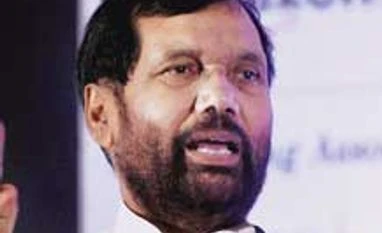
BS B2B Bureau New Delhi The national intellectual property rights (IPR) policy, which is in the offing, will give the much-needed push to the pursuit of economic growth and fulfillment of the country’s socio-cultural developmental agenda, according to Ram Vilas Paswan, Minister of Consumer Affairs, Food and Public Distribution.
He was speaking at the conference on ‘Illicit trade: Threat to national security and economy’, organised by FICCI’s Committee Against Smuggling & Counterfeiting Activities Destroying Economy (FICCI CASCADE).
Paswan said, “India’s role as a global economic powerhouse is increasingly linked to its ability to ensure that intellectual property rights are protected with strong IPR rules, and strong enforcement of the laws and regulations. As India continues to take its place as a major economic power globally, its views on IP rights and enforcement domestically will become increasingly important to its international trading partners and to prospective business investors.”
The conference was organised to facilitate a dialogue between the stakeholders on the alarming magnitude of unfair trade practices such as counterfeiting and smuggling and spread awareness about its adverse socio-economic impact.
According to Paswan, the value of ‘India made’ intellectual property is increasing, given the key role played by technology, invention and innovation in India’s current economic development. However, counterfeits and fakes are posing to be a key threat to India’s growth strategy, he cautioned.
“The Ministry of Consumer Affairs has taken several steps in the interest of consumers and its protection against exploitation. The consumers have to be aware, not only of the commercial aspects of sale and purchase of goods, but also of the health and security aspects. We have, over the years, initiated several mechanisms to ensure consumer safety and check unfair trade practices. We must empower consumers to seek discontinuance of certain unfair trade practices, defects or deficiencies in services, and to stop services or withdraw hazardous goods from the market,” said Paswan.

 "National IPR policy to boost economic growth: Ram Vilas Paswan")


 Connect with us on WhatsApp