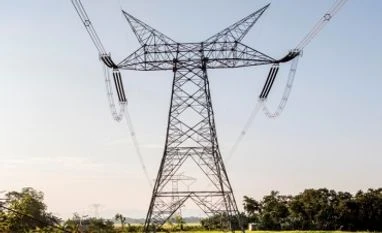
ABB has been award contract worth Rs 4,350 crore by the Power Grid Corporation of India Limited (PGCIL) for a power transmission link project, which aims to provide reliable electricity to more than 80 million people. The total project value is worth more than Rs 5,700 crore and the balance will be executed by ABB’s consortium partner Bharat Heavy Electricals Ltd (BHEL). The order was booked in the fourth quarter of 2016. This mega project is expected to be completed in 2019.
The Raigarh-Pugalur 800 kilovolt (kV) ultrahigh-voltage direct current (UHVDC) system will connect Raigarh in Central India to Pugalur in Tamil Nadu.
The 1,830 km link will be among the longest in the world. With a capacity of 6,000 megawatts - the equivalent of more than six large power plants - it will be enough to meet the electricity needs of over 80 million people in India. The two-way link will integrate thermal and wind energy for transmission of power to high consumption centres located thousands of kilometers away, supporting electricity demands in the south, when wind strength is low, and transmitting clean energy to the north, when there is excess wind power.
“ABB is honoured to partner with Power Grid Corp for this smart long distance transmission project. Delivering reliable electricity to India’s energy demand centres is a top priority for the Indian government to support the country’s impressive growth momentum. ABB is strongly committed to India for more than a century and with this new long distance transmission link, we are delivering the benefits from the energy revolution to the country building on the strength of our strong local manufacturing footprint. With our state-of-the-art UHVDC technology, we enable the balancing of renewable and conventional electricity supply over long distances in a smart and reliable way,” stated Ulrich Spiesshofer, CEO, ABB.
Sanjeev Sharma, CEO and managing director, ABB India, added, “This project will be a milestone in the efficient transmission of power on high voltage direct current lines between central and south India and integration of renewable energy in a smart grid. It is a great example of the Make in India initiative where design, engineering, manufacturing of major components and project execution is done locally.”