Air pollution: A four-point plan to help tackle the ever-growing menace
As a first step, the state, through the FCI or a new agency created for this purpose, should buy all the rice crop waste of North India at a remunerative price
Ajay Shankar The air pollution crisis this year has been much worse. Clearly, it is time to think afresh and consider some out of the box radical ideas. This four-point plan would work but needs a change in mindset with the state assuming greater direct responsibility.
First, the state, through the Food Corporation of India (FCI) or a new agency created for this purpose, should buy all the rice crop waste of North India at a remunerative price so that the farmer makes some money by taking out the waste and selling it rather than burning it. This will work immediately. Everything else has not worked on the scale needed to prevent the annual health crisis. Only a state agency can buy all the waste and handle it, just as the FCI buys all the rice.
What to do with the huge quantity of rice husks after buying it? Get it converted to pellets through private processors at fixed remunerative rates at which they get a reasonable profit. This technology is simple, and the conversion plants cost little. But only a government agency with the assistance of the state governments can provide public lands at a nominal rent for these pellet making plants. One remunerative conversion rate applicable to all would give the speed needed. Conceptually, this is similar to the fixed price procurement from farmers. Or a war like effort by the state, not attempted in a long while. Farmers’ incomes would grow, and dispersed jobs would be created.
These pellets can be sent to thermal power plants for being blended with the coal they use- there is a power ministry notification mandating a 5 per cent, going up to 7 per cent, blending of these pellets. As the cost of fuel is a passthrough in the price of electricity from a thermal plant, the whole cycle does not need any government subsidy. Only working capital which carries normal interest rates is needed. The scale of the operation is so gigantic that only the government can do it. If planning and preparation begins now and timely implementation takes place then next year there may be no spike in air pollution with the burning of the rice crop residue.
Second, air pollution from transport can now be brought down to international levels with the coordinated decisions in the NCR. Only electric vehicles (EVs) should get registration as new commercial taxis, three wheelers and buses for running within the NCR from the next financial year. This decision may be announced now and adequate fast charging infrastructure may be created at dispersed locations. The existing fleet of such commercial vehicles may be given two years to move out of the NCR or get phased out. This would not impose any hardship on those impacted. Private vehicle owners need not be troubled and there would be no backlash from them. The municipal bodies also need to phase out their old polluting garbage collection vehicles and water tankers. They can afford this. Only a specific mandate is needed.
Third, there is considerable small and micro level industrial activity that takes place in slums, unauthorised colonies and in non-conforming areas. This ground reality has to be recognised. The sooner they start using clean gas instead of coal and oil, usually highly polluting used dirty oil, the better for air quality. The pragmatic approach would be to have a drive to extend the supply of clean gas to these units without going into the question of their legitimacy. A different paradigm for supply of unsubsidised gas to meet full demand of such industrial units needs to be put in place. This transformation is imperative but does not usually get attention.
Finally, chemicals in industrial waste evaporate. These are the most hazardous and often the carcinogenic component usually in the PM 2.5 range. Addressing this is more challenging. The easy first step is for the municipal bodies to end the smouldering fire and smoke coming out of the municipal landfills. This will cost money, and technology may have to be inducted from overseas. The sustainable medium-term solution would be to have a listing of the chemicals carrying wastes and then buy them at a remunerative price from the kabari supply chain, giving the individuals handling these gloves and other protective gear. These wastes can then be processed scientifically so that no air pollution takes place. This will require patient systematic effort and induction of the state-of-the-art waste management and recycling and reprocessing plants. This would require state-of –the-art technical knowledge and focused leadership.
This four point plan places a heavier burden on the state which needs to act on a war footing.
The author is former secretary, DIPP, Government of India, and distinguished fellow, ISID (Institute for Studies in Industrial Development)
Disclaimer: These are personal views of the writer. They do not necessarily reflect the opinion of www.business-standard.com or the Business Standard newspaper

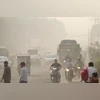 "Air pollution: A four-point plan to help tackle the ever-growing menace")


 Connect with us on WhatsApp