From packaged foods to personal care products, palm oil is an irreplaceable ingredient that makes modern life possible. Hence, as a country that is the world’s biggest importer of crude edible palm oil and accounts for 38 per cent of global palm oil consumption, achieving self-sufficiency in palm oil production is not only essential for reducing the considerable foreign exchange burden but also for enhancing sustainability in palm oil consumption. It is through the launch of the National Mission on Edible Oil - Oil Palm (NMEO-OP) in 2021 that India kickstarted its crucial journey towards self-reliance in edible oils.
With its comprehensive framework, NMEO-OP aims to enhance domestic production while securing farmers’ livelihoods. The mission outlines a farmer-centric pathway to increase palm oil production sustainably through tools and incentives that make oil palm cultivation a viable and profitable endeavour for farmers, the industry, and the nation.
Sowing the seeds of farmers’ prosperity
The well-structured guidelines of NMEO-OP have made oil palm cultivation particularly attractive for India’s small-scale farmers, with a special focus on subsidies, sustainability, and livelihood security.
Farmers are encouraged to utilise degraded and wasteland for oil palm cultivation, optimising land use to transform barren plots into sources of consistent income. While oil palm cultivation is synonymous with deforestation in other parts of the world, the Indian model ensures that domestic palm oil production is environmentally friendly and can be sustained in the long term.
The NMEO-OP offers significant financial support for the installation of drip irrigation systems under the Pradhan Mantri Krishi Sinchayee Yojana (PMKSY). Since a consistent water supply is essential to boost the productivity of fresh fruit bunches (FFBs), efficient water management is crucial for ensuring optimal hydration and maximising productivity. With the actual cost per hectare reaching Rs 60,000, integrating PMKSY with NMEO-OP can help cover a significant portion of the expense, thereby reducing the financial burden on farmers during the early stages of cultivation.
While the initial four-year gestation period of oil palms can make adoption seem daunting to farmers, even this period can be profitable through intercropping practices. Growing short-duration crops alongside oil palms can help farmers earn additional income while the trees mature. The NMEO-OP has outlined subsidies for farm management and intercropping, considerably reducing the financial burden on farmers during the initial years.
To encourage farmers to adopt palm cultivation, the NMEO-OP provides free indigenous and imported planting materials. These subsidies facilitate access to high-yield, disease-resistant varieties, reducing input costs and shortening gestation periods. However, since farmers' livelihoods depend heavily on yield performance, it is crucial to implement rigorous quality checks on imported seeds to ensure no compromises are made. Timely yields are essential for sustaining farmers' confidence and long-term success in palm farming.
The Northeast region has significant potential for oil palm cultivation due to its high rainfall. However, investment in rainwater harvesting is essential to ensure an adequate water supply during the dry months, particularly from November to March. Additionally, with farmers facing unique challenges in the region, the NMEO-OP offers targeted support. This includes assistance for land clearance, bio-fencing, half-moon terraces, and integrated farming systems to help make cultivation economically feasible. Provisions are also made to pay farmers for their FFBs produced at 12.3 per cent of the CPO price, with the Government of India covering an additional 2 per cent as a special payment. Such tailored incentives, which prioritise the farmer, are crucial to ensure the continued growth of domestic palm oil production.
Increasing acreage for palm farming requires treating farmers as key stakeholders. Information, education, and communication (IEC) strategies, along with ongoing capacity-building initiatives, are helping to effectively raise awareness among farmers about palm farming. Under the NMEO-OP, state-led training and awareness programmes have been geared towards educating farmers about the benefits of oil palm cultivation, available subsidies, and best practices. These efforts help bridge knowledge gaps, enabling a smoother transition to oil palm farming while promoting sustainable agricultural methods.
Addressing emerging challenges
While the NMEO-OP has created a robust pathway for increasing palm oil production, the journey so far has not been free of challenges.
Lack of awareness about NMEO-OP’s features and uneven implementation across states have contributed to slower adoption by farmers. Despite NMEO-OP’s provision for subsidies for high-quality seedlings, global headwinds such as the Russia-Ukraine war and Indonesia’s ban on crude palm oil exports meant that only 6-7 million sprouts were imported into India against a demand of 25 million in 2022.
While the supply thankfully eased last year, this adversely affected newly adopted states and allotted districts under NMEO-OP, where demand could not be met. This situation was further exacerbated by huge interstate transportation charges and delays in the disbursement of incentives to farmers and companies. In 2023, when FFB prices of oil palms went down, farmers in states like Andhra Pradesh and Telangana were hit particularly hard as they were not covered under provisions of the NMEO-OP, which would have given them a consistent income despite market fluctuations.
Paving the path forward
Such on-ground challenges have revealed critical steps that India must take to efficiently scale up crude palm oil production.
Firstly, there is an urgent need to align policy and implementation between state and central governments to allow the benefits of NMEO-OP to effectively reach farmers. Uniform adoption of NMEO-OP across states is essential to address implementation gaps, allowing India’s palm oil sector to thrive. To attract investments, states must avoid frequent changes in business policy and plan with a view to the long-term growth of domestic palm oil production. Additionally, ensuring timely disbursement of subsidies and providing adequate support for irrigation will ease issues faced by farmers who have already adopted oil palm farming.
Secondly, investing in better infrastructure, especially for the Northeastern states, will increase the viability of domestic production and make it cost-effective. Increased collaboration between state and central governments, along with industry partners, can help solve state-specific challenges while improving outcomes for the sector at large.
Thirdly, enhancing public-private partnerships to ensure NMEO-OP stays on track and achieves its targets is vital. Industry partners must work in tandem with government agencies to promote precision farming, mechanisation of harvesting, and improving seed genetics, which will benefit both farmers and the nation. Through monthly review meetings convened by the central government, key stakeholders can gather to measure progress and address common challenges. This will help protect farmers' interests, align policy with implementation, and achieve the vision of India’s mission to become a leading producer of sustainable palm oil.
That said, the recent revision of import duties on edible oils, including palm oil, under the mission’s framework has renewed momentum for India’s palm oil sector. Hence, for our country’s mission to achieve Atmanirbharta in palm oil production, the time is ripe to start a new chapter.
Sougata Niyogi is CEO - Oil Palm Plantation at Godrej Agrovet Limited
Disclaimer: These are personal views of the writer. They do not necessarily reflect the opinion of www.business-standard.com or the Business Standard newspaper

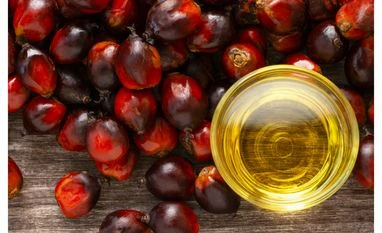 "India's push for self-reliance in palm oil gets a boost with NMEO-OP")


