Why is India in a rush to seal an FTA with the Russia-led Eurasian bloc?

An ambitious pact with Moscow's bloc could cut tariffs, boost exports from Armenia to Kyrgyzstan, and ease India's dependence on oil imports
oil imports, Russian oil, oil sector
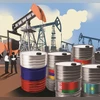
A trade deal with the EAEU has been under discussion for several years. The earlier plan was shelved due to the Covid-19 pandemic | Illustration: Ajaya Mohanty
Shreya Nandi New Delhi
5 min read Last Updated : Sep 10 2025 | 10:55 PM IST

Don't want to miss the best from Business Standard?

Last week, an image of Prime Minister Narendra Modi and Russian President Vladimir Putin sharing a car ride to their bilateral meeting in Tianjin, China, on the sidelines of the Shanghai Cooperation Organisation summit, captured global attention. 
The meeting signalled a deepening of India’s strategic relationship with Russia, despite pressure from the West, particularly the US and the European Union. Prioritising economic ties, India and the Russia-led Eurasian Economic Union (EAEU) last month finalised a framework to launch free trade agreement (FTA) talks. Both sides aim to conclude negotiations within 18 months, with the possibility of an earlier conclusion depending on the pace and convergence of discussions. 
Inside the Eurasian bloc: Why India can’t ignore it 
The EAEU is an economic union of five post-Soviet states — Armenia, Belarus, Kazakhstan, Kyrgyzstan, and Russia — with an integrated single market that came into force in 2015. Russia is the largest country and the bloc’s biggest trading partner, accounting for over 92 per cent of the EAEU’s total trade with India. 
A trade deal with the EAEU has been under discussion for several years. Both sides had agreed to hold initial talks in March 2020 in Moscow to set the agenda and finalise the structure of the joint text. The plan was shelved due to the Covid-19 pandemic. 
Talks gained momentum once the pandemic receded, with fresh interest from Russia in 2022 after Western sanctions sought to isolate it over the Ukraine conflict. Since then, India and the EAEU have worked to finalise the broad framework, or terms of reference (ToR), but it was only last month that discussions were expedited. 
The finalisation of the ToR comes at a time when New Delhi’s ties with Washington have hit a rough patch. A large chunk of Indian exports now face a punitive 50 per cent tariff, making it extremely difficult for marine, garment, and gems and jewellery exporters to access the US market. The rush to sign the FTA is seen as India’s attempt to diversify and secure other key export destinations at a time when it has been unable to clinch an interim trade deal with the US, its largest trading partner and export market. 
Geopolitics has added to the urgency. Washington argues that India’s continued purchase of Russian oil is helping Moscow fund its Ukraine offensive. It has increased pressure on New Delhi by imposing steep tariffs aimed at curbing India’s trade — particularly oil imports — with Russia. 
Trade economist Biswajit Dhar described India’s move as a calculated risk. “Such FTAs are pivotal for India, both in terms of diversification and accessing new markets — which are essential for export growth. The government has been laying the groundwork for several trade deals over the last few years, especially post-pandemic, and the Eurasian FTA was certainly part of the plan,” Dhar said. 
He added that with China steadily expanding its trade footprint, India cannot afford to lag and must strive for stronger regional economic integration. 
The trade equation: Heavy on oil, light on exports 
India’s trade with the EAEU is dominated by Russia. Exports to the bloc stood at $1.16 billion in 2024-25 (FY25), of which $1.06 billion went to Russia. 
Of the $64 billion in bloc imports, $63.8 billion came from Russia. 
Bilateral trade between India and Russia reached a record $68.7 billion in FY25 — nearly 5.8 times higher than the pre-pandemic level of $10.1 billion, according to the Ministry of External Affairs. Of this, exports stood at $4.88 billion, while imports were $63.84 billion, mainly due to India’s reliance on discounted oil. Bilateral trade in services stood at $1 billion in 2021. Both sides expect to hit the $100 billion mark by 2030. 
Officials told Business Standard that the trade deal will help narrow India’s high deficit with Russia. Beyond tariff cuts in traditional sectors such as footwear, leather, textile, and engineering goods, India also wants to address non-tariff barriers in Russia, particularly for agriculture and marine products. 
“India’s trade with Russia is still overwhelmingly oil-driven. Market access barriers have limited our exports,” one official said.
According to an analysis by Russian financial institution Sberbank, tariff reductions and the removal of Customs barriers could significantly boost trade. In 2023, India’s average weighted import tariff stood at 12 per cent, while tariffs in EAEU countries ranged from 5.4 to 6.5 per cent. Eliminating these could generate savings for both sides. 
For Indian companies, promising export areas include machinery, metal products, rubber and plastics, agricultural goods, and pharmaceuticals, according to a report published in April. 
Other priorities include resolving payment issues linked to the Vostro-account mechanism, which enables rupee trade with sanctions-hit Russia, and easing logistics bottlenecks. 
Beyond borders: Racing to redraw trade routes 
Expanding trade with the Eurasian bloc also hinges on improving connectivity. Crucial to this is the operationalisation of the International North-South Transport Corridor (INSTC), a multi-modal network meant to shorten routes between India, Russia, and Central Asia. 
But implementation has been slow, mired in geopolitical challenges. 
Ajay Sahai, director-general and chief executive officer of the Federation of Indian Export Organisations, said that while the INSTC is crucial, it is not the only option. 
“There are direct voyages from Vladivostok to Chennai, and some exporters are also using the Türkiye route to reach Russia. Additionally, the Arctic route — though not operational from November to March — is being explored as another viable alternative,” Sahai said. 
 

One subscription. Two world-class reads.

Already subscribed? Log in

Subscribe to read the full story →
*Subscribe to Business Standard digital and get complimentary access to The New York Times

Smart Quarterly

₹900

3 Months

₹300/Month

SAVE 25%

Smart Essential

₹2,700

1 Year

₹225/Month

SAVE 46%
*Complimentary New York Times access for the 2nd year will be given after 12 months

Super Saver

₹3,900

2 Years

₹162/Month

Subscribe

Renews automatically, cancel anytime

Here’s what’s included in our digital subscription plans

Exclusive premium stories online

  • Over 30 premium stories daily, handpicked by our editors

Complimentary Access to The New York Times

  • News, Games, Cooking, Audio, Wirecutter & The Athletic

Business Standard Epaper

  • Digital replica of our daily newspaper — with options to read, save, and share

Curated Newsletters

  • Insights on markets, finance, politics, tech, and more delivered to your inbox

Market Analysis & Investment Insights

  • In-depth market analysis & insights with access to The Smart Investor

Archives

  • Repository of articles and publications dating back to 1997

Ad-free Reading

  • Uninterrupted reading experience with no advertisements

Seamless Access Across All Devices

  • Access Business Standard across devices — mobile, tablet, or PC, via web or app

Topics :FTAtradeRussiaRussia Oil productionUS tariffs

Next Story


