No plans to offer non-blended petrol, no controversy over E20: IOC Chairman

IOC Chairman Arvinder Singh Sahney outlines growth roadmap, defends E20 fuel, and shares updates on refinery and green hydrogen projects
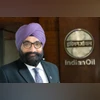
Arvinder Singh Sahney
Indian Oil Corporation (IOC) Chariman Arvinder Singh Sahney
Shubhangi Mathur New Delhi
4 min read Last Updated : Sep 15 2025 | 12:29 AM IST
Indian Oil Corporation (IOC), India’s largest oil refiner, is working on an expansion plan in line with the country’s growing fuel requirements. In an exclusive interaction with Shubhangi Mathur, Chairman Arvinder Singh Sahney talks of the company’s growth plan and also sets the record straight on the E20 controversy. Edited excerpts.  
 
How do you look at the controversy over ethanol-blended petrol? Do you plan to offer consumers the choice of buying non-blended petrol too? And is E20 (20 per cent ethanol blending) as efficient as petrol?
 
As of now, we do not have any plans to offer non-blended petrol. We will see how it pans out and take a call accordingly. There is no controversy on E20 petrol. All the equipment manufacturers, labs, and agencies have certified that there is no problem with E20. We have a good example of Brazil, where petrol with 27-32 per cent ethanol blending is being sold. The efficiency of E20 is more or less on a par with that of petrol.
 
India aims to become a refining hub. How would IOC contribute to that?
 
Given the need for India’s increasing demand for fuel, IOC started expanding brownfield refineries three-four years ago. These projects are set to increase the group’s refining capacity from 80.4 million tonnes to 98 million tonnes per annum. They are scheduled to be commissioned next year. The increased capacity will take care of a large part of the increased demand for petroleum products. In the same timeframe, other refinery projects will also come up, including the expansion of the Rajasthan and Numaligarh (Assam) refineries.
 
The Indian market is expanding at a moderate pace, with diesel consumption growing at 2–3% and petrol at 5–7%. The industry will also actively pursue exporting surplus petroleum products once production begins following the completion of planned refinery expansions.
 
Which markets do you plan to target for export?
 
Petroleum products will go primarily to the African subcontinent and South American continent. Certain refineries are closing in the European Union. They will need products that meet Euro VI standards. Our products meet those quality standards. So, Europe is another geography. For IOC, export accounts for 5-8 per cent of its volumes. This is going to increase.
 
What are the timelines involved in these expansion projects?
 
We are aiming to complete the expansion of the Panipat refinery by March. Those in Gujarat and Bihar (Barauni) too will see completion by next year. Much of our refinery expansion will be commissioned by 2026.
 
Are you planning to set up greenfield refineries?
 
Not at present. We are focused on executing brownfield expansion while addressing the energy transition. With the rise of electric vehicles, green hydrogen, ethanol, sustainable aviation fuel, and other alternative fuels, the growth of petroleum products will be moderate. However, as the country’s leading energy provider, we may consider setting up a greenfield refinery, depending on the evolving demand-supply scenario.
 
Indian Oil has an upcoming greenfield refinery with Chennai Petroleum in Tamil Nadu. 
We are working out the configuration, which will be more suitable for petrochemicals and less for refineries. We want to convert it into a petrochemical-oriented project. The detailed feasibility report is being prepared for the project.
 
Saudi Arabia is looking to increase its share in the global oil market. Are you in talks with the people there?
 
We are not in any kind of talks. We know some newer (Indian) refineries are in talks but we are keeping our crude oil portfolio in an open manner because we want to process as many type of crude oil as possible. We have flexibility of 10 refineries which can process almost all kinds of crude oil. That is our strength.
 
On IOC’s green-hydrogen plant in Panipat?
 
We are putting up India’s largest green hydrogen plant at Panipat, with a capacity of 10,000 tonnes per annum. It will be commissioned by December 2027 and will be utilised for mobility purposes if enough hydrogen-fuelled buses, trucks or cars are available in the market. Otherwise, we will use it in our refineries and replace the conventional grey hydrogen with green hydrogen. The cost of production will be less than $4 per kg.
 
IOC is also foraying into new energy such as nuclear and critical minerals.
 
Nuclear energy, critical minerals, and ship building are on our drawing board. It is premature to talk about these things.
 
What is your outlook on crude oil prices? 
Prices now are $66-67 a barrel in spite of all the disturbances happening across the world. My assessment is that if these disturbances ease then prices will further come down by $5-10, reaching $55-60.

One subscription. Two world-class reads.

Already subscribed? Log in

Subscribe to read the full story →
*Subscribe to Business Standard digital and get complimentary access to The New York Times

Smart Quarterly

₹900

3 Months

₹300/Month

SAVE 25%

Smart Essential

₹2,700

1 Year

₹225/Month

SAVE 46%
*Complimentary New York Times access for the 2nd year will be given after 12 months

Super Saver

₹3,900

2 Years

₹162/Month

Subscribe

Renews automatically, cancel anytime

Here’s what’s included in our digital subscription plans

Exclusive premium stories online

  • Over 30 premium stories daily, handpicked by our editors

Complimentary Access to The New York Times

  • News, Games, Cooking, Audio, Wirecutter & The Athletic

Business Standard Epaper

  • Digital replica of our daily newspaper — with options to read, save, and share

Curated Newsletters

  • Insights on markets, finance, politics, tech, and more delivered to your inbox

Market Analysis & Investment Insights

  • In-depth market analysis & insights with access to The Smart Investor

Archives

  • Repository of articles and publications dating back to 1997

Ad-free Reading

  • Uninterrupted reading experience with no advertisements

Seamless Access Across All Devices

  • Access Business Standard across devices — mobile, tablet, or PC, via web or app

Topics :Indian Oil CorpOil industryoil exportsOil imports

Next Story



