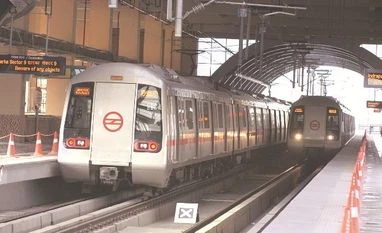
The Supreme Court on Monday stayed a Reliance Infrastructure-owned company from recovering Rs 4,800 crore in arbitration award from state-run Delhi Metro Rail Corporation. DMRC has filed a curative petition with the court to reconsider the arbitration that last year went in favour of Delhi Airport Metro Express Private Limited (DAMEPL). The legal battle continues, but in a corner of public policy the expenditure department of the finance ministry is working to ensure such instances do not hurt ease of doing business.
The second edition of the Vivad Se Vishwas scheme, launched by the department last week, is meant to take on the ogre of contractual disputes. These are disputes which sour relations between the private sector and government agencies. The problem is about what happens when arbitration cases go against the government. Department officers do not give up leading to interminable court cases.
In a rare candour, the ministry has noted that statistics show “in cases where the arbitration award is challenged, a large majority of cases are decided in favour of the contractor”. Moreover, “in such cases the amount becomes payable with interest, at a rate which is often far higher than the government’s cost of funds”. (PIB release, February 2023)
This is exactly what has happened in the DMRC versus RInfra case. The award will make a sizable hole in DMRC finances for which its joint venture partners, the centre or the Delhi government will have to step in. Yet it is also significant that the state owned company has lost the fight at every court. The state, if it had paid up as lost arbitration in 2017, the bill would have been Rs 2,950 crore. In six years of court cases since then the sum has leapt up by nearly 63 percent.
The ballooning cost is brought on by officers of state owned companies who make efforts like the last ditch curative petition as in this case to delay the inevitable. The government is telling its officers these measures are counterproductive.
Even when the draft scheme was released early this year, the finance ministry was aware of the impact of the DMRC case. In the list of cases, where the scheme will apply it specifically mentions the Metro. “To all organisations, where central government like Metro Corporations, where the central government has shareholding of 50 percent”. (ibid)
This is a major business reform, as the Niti Aayog has also pointed out in its Task Force Report on Conciliation Mechanism of 2021. The report had noted that after several years of rapid jump in the World Bank’s Ease of Doing Business, India’s progress had slowed by 2019 rising to 69th from 77 a year earlier, principally because it “still lags behind on critical aspects such as that of enforcing contracts, at the core of which lies the effective resolution of disputes arising out of contracts”.
The notable culprits in this respect are the large central public sector organisations. After the Vivad se Vishwas scheme was announced in August this year, upstream oil company ONGC soon came out with its version. Company insiders said the sum that ONGC is locked into domestic arbitration is over Rs 1000 crore.
The sum does not include the arbitration cases like those over the allegations of dispute over gas migration from fields operated by state-owned ONGC in the KG basin. This too is a long running case with RIL since 2013, principally because the case is one of international arbitration. The notification by the department of expenditure makes it clear. “The scheme shall apply only for cases involving domestic arbitration and cases under international arbitration are not eligible to be settled under this scheme”. The government had imposed a penalty of $ 1.55 billion on RIL which an arbitration panel in Singapore had set aside. While a Delhi High Court order has upheld the arbitration, the scheme which was announced by finance minister Nirmala Sitharaman in her budget speech this year has no provision for those cases.
There was a reason for the finance minister to make the announcement. India is trying to position itself as the preferred arbitration centre in Asia. If state owned companies keep on standing up against arbitration awards that makes a poor advertisement for the move.
Over several years, the government of India has fought several high profile arbitration cases within India and abroad. More importantly it has refused to keel over to the awards when they have been adverse. This not only includes Vodafone but also against Cairn over a demand for retrospective tax. The government often conflated its sovereign rights with that of adverse arbitration awards and fought tooth and nail to reverse those. While tax cases are relatively new, there has been problems over contractual issues too. Twenty years ago, an Australian company White Industries won an arbitration case abroad against government owned Coal India over a contractual dispute. The award for 4 million Australian dollars is still pending as a commentary in Financial Express notes. “India’s higher judiciary has been expansively interpreting the Arbitration and Conciliation Act of 1996 (A&C Act) to set aside or not enforce ICA awards in India”, it notes potentially running foul of international law.
An indication of a changed perspective was the report in 2017 of the High Level Committee under Justice BN Srikrishna to make Indian courts more amenable to international arbitration.
The next event was in August 2021 when the finance ministry steered the Taxation Laws Amendment Act to remove these retrospective tax demands. According to this law any tax demanded for indirect transfer of Indian assets before May 2012, “would be nullified on fulfilment of specific conditions”.
The Vivad Se Vishwas—II announced in Budget 2023 scheme takes this thought process forward. It is however meant to apply only for those domestic cases where there is a case over contractual liability. Also if the cases involve a third party like a state government or a private party, those will not qualify under this out of court process.
But overcoming those hiccups the terms of settlement of the Vivad se Vishwas cases are generous. It draws its strength from an early observation in the draft scheme, which says, “It is in public interest to take the risk of paying a substantial part of the award amount…” Officers of companies were reluctant to draw the curtains on any arbitration, because since 2002, the Central Vigilance Commission had instructed that all legal routes must be explored before any payment was to be made in cases like arbitrations. Government officials said drawing curtains on ceaseless arbitration became possible only after the Commission issued a revised standard operating procedure for Integrity Pacts to cover all procurements by government agencies, in January, 2022.
After these clearances, the expenditure department has found the room to announce the present scheme. The contours were drawn up by the time finance minister Sitharaman got up to read her speech on 1 February this year.
Under the terms of the schema where the court has passed an award before 30 April 2023, the settlement amount offered to the contractor will be up to 85 percent of the net amount awarded or upheld by the court. For older cases, i.e. those passed on or before 31.01.2023, the settlement amount offered is up to 65 percent of the net amount awarded. It also says that the mere settlement of the dispute does mean any question of law has been settled. And, for cases where the dispute is above Rs 500 crore while the public sector companies or government departments have the right "not to accept the settlement offered by the contractors", it has to be evaluated by a committee and then some more why the offer was not acceptable.
These are big numbers and should attract investors, showing the government is serious about exorcising the arbitration voodoo from the Indian industry.