Agri growth pegged at 7-year low of 1.8% in FY24 due to poor Kharif harvest

However, some experts said the GVA numbers could stand to be revised as the initial estimates are based on extrapolation of figures for five-six months and a final picture will emerge only around Feb
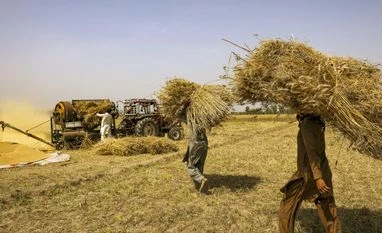
Farming
Photo: Bloomberg
Sanjeeb Mukherjee New Delhi
3 min read Last Updated : Jan 06 2024 | 12:14 AM IST
The agriculture sector is projected to see a growth of 1.8 per cent in the FY24, a seven-year low, due to poor Kharif harvest and weak initial sowing of Rabi crops, according to the first advance estimates of national income released by the National Statistical Office (NSO) on Friday.

However, some experts said the Gross Value Added (GVA) numbers could be revised as the initial estimates are based on extrapolation of figures for five to six months and the final picture will emerge only around February. 

“Nonetheless, this is a disappointment as we were expecting agriculture GVA to be somewhere around 3-3.5 per cent in FY-24,” said Madan Sabnavis, chief economist at Bank of Baroda.


As per first estimates, production of almost all Kharif crops is down in 2023-24 due to uneven rainfall while the initial sowing of some Rabi crops like chana has also been impacted because of deficient soil moisture. The data also showed that at current prices, GVA for agriculture, forestry and fishing is projected to grow at 5.5 per cent in FY24 as against 12.1 per cent in FY23. This translates into an inflation impact of 3.7 per cent in FY24 as against 8.1 per cent in FY23.

As per the first advance estimate released a few months ago, production of rice, the main crop during the Kharif season, could drop by 3.79 per cent in 2023-24 to 106.31 million tonnes as compared to the 110.5 million tonnes as per the final estimate of 2022-23 due to uneven monsoon. The estimate also showed that production of all major Kharif crops this year could see a dip with moong, urad, soybean and sugarcane leading the pack.

The area covered under rabi crops till January 5, 2024 was 1.24 per cent less in comparison to the previous year mainly due to a drop in acreage under chana, the main pulses grown in the country. Chana acreage has gone down due to deficient soil moisture in some of the major growing states due to poor monsoon and post-monsoon showers.

The southwest monsoon in 2023 was highly uneven and skewed mainly due to the adverse impact of El Nino. Statistically, the June to September season ended with a deficit of 5.6 per cent which classified the 2023 monsoon as ‘below normal’, the first in more than four years.

 
*Subscribe to Business Standard digital and get complimentary access to The New York Times

Smart Quarterly

₹900

3 Months

₹300/Month

SAVE 25%

Smart Essential

₹2,700

1 Year

₹225/Month

SAVE 46%
*Complimentary New York Times access for the 2nd year will be given after 12 months

Super Saver

₹3,900

2 Years

₹162/Month

Subscribe

Renews automatically, cancel anytime

Here’s what’s included in our digital subscription plans

Exclusive premium stories online

  • Over 30 premium stories daily, handpicked by our editors

Complimentary Access to The New York Times

  • News, Games, Cooking, Audio, Wirecutter & The Athletic

Business Standard Epaper

  • Digital replica of our daily newspaper — with options to read, save, and share

Curated Newsletters

  • Insights on markets, finance, politics, tech, and more delivered to your inbox

Market Analysis & Investment Insights

  • In-depth market analysis & insights with access to The Smart Investor

Archives

  • Repository of articles and publications dating back to 1997

Ad-free Reading

  • Uninterrupted reading experience with no advertisements

Seamless Access Across All Devices

  • Access Business Standard across devices — mobile, tablet, or PC, via web or app

More From This Section

Topics :Indian Economyagriculture economyfarm sectorEl Nino

First Published: Jan 05 2024 | 7:48 PM IST

Next Story