


BS-VI rule in Delhi explained: What it is and how to check your vehicle
BS emission standards are enforced to phase out high-polluting vehicles. Here's what BS-VI means, how it differs from older norms, and how to check your vehicle's category
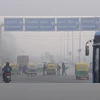 "Smog, Delhi Pollution, Delhi Air Quality, Pollution")
Under the BS-VI category, diesel vehicles release at least 70 per cent less harmful nitrogen oxides, while petrol vehicles emit around 25 per cent less. (Photo:PTI)
Listen to This Article
Delhi Environment Minister Manjinder Singh Sirsa on Tuesday said that all non-Delhi-registered vehicles below the BS-VI standard will not be allowed to enter the capital when the Graded Response Action Plan (GRAP)-III and IV are in force. The move aims to curb vehicular emissions amid worsening air quality.
Last month, the state government also banned commercial goods vehicles that do not meet BS-VI emission norms and are not registered in Delhi. The Commission for Air Quality Management (CAQM) has repeatedly flagged vehicular emissions as a major contributor to pollution in the National Capital Region.
Here is what the BS categories mean and how vehicle owners can check their compliance status.
What is a BS category?
BS, or Bharat Stage, refers to India’s vehicle emission standards that set limits on pollutants such as carbon monoxide (CO), nitrogen oxides (NOx), hydrocarbons (HC) and particulate matter (PM).
These standards are aligned with European emission norms and are enforced to gradually phase out vehicles that emit higher levels of pollutants.
Also Read

 "Fog, New Delhi Fog, Winter, Delhi Fog")
 "china Flag, China")
 "SpaceX, Elon Musk")
 "Pollution, Gurugram Pollution")
 "Donald Trump, Trump")
- BS-I: Applied to vehicles manufactured before 2005. These norms allowed relatively high emissions and are now largely phased out.
- BS-II: In force between 2005 and 2010, with tighter limits than BS-I.
- BS-III: Implemented nationwide from 2010 to 2017, significantly reducing permissible emissions.
- BS-IV: Applicable from 2017 to 2020, further tightening norms, particularly for diesel vehicles.
- BS-VI: In force since April 2020. India skipped BS-V and moved directly to BS-VI to accelerate pollution control. These vehicles emit far lower pollutants and require low-sulphur BS-VI fuel.
How to check the BS category of your vehicle
Vehicle owners can check the BS category using their registration details:
Registration Certificate (RC): The emission norm is mentioned on the physical RC book or smart card under fields such as “Emission Norms” or “Bharat Stage”.
VAHAN portal: By entering the vehicle registration number on the Ministry of Road Transport and Highways’ VAHAN website, owners can view complete vehicle details, including the applicable BS emission norm.
Why BS categories matter
BS standards are critical to controlling vehicular pollution and pushing manufacturers towards cleaner technologies.
The shift from BS-IV to BS-VI has led to a sharp reduction in emissions. Diesel vehicles under BS-VI emit at least 70 per cent less nitrogen oxides, while petrol vehicles emit about 25 per cent less. Advanced filters in BS-VI diesel engines cut particulate matter by nearly 80 per cent. Lower sulphur content in BS-VI fuel also reduces smoke and protects engines.
Delhi’s air quality context
The restrictions come amid sustained poor air quality in Delhi-NCR. Delhi’s AQI has remained in the ‘very poor’ category for weeks, with several monitoring stations recording ‘poor’ to ‘very poor’ levels, according to CPCB data. Authorities say stricter vehicle controls are necessary to prevent further deterioration during winter.
More From This Section
 "Parliament, Budget session, Lok Sabha")
 "Saurabh and Gaurav Luthra")
 "Delhi Environment Minister Manjinder Singh Sirsa")
 "Justice J Nisha Banu")
 "Bondi beach shooting, Australia")
Topics : BS-VI Norms Air Quality Index BS-VI BS-VI fuel Vehicle documents air pollution in India air pollution Delhi air quality Delhi-NCR BS Web Reports
Don't miss the most important news and views of the day. Get them on our Telegram channel
First Published: Dec 17 2025 | 10:20 AM IST