Home / Economy / News / India must shape global outcomes, not remain passive spectator: Sitharaman
India must shape global outcomes, not remain passive spectator: Sitharaman
'Very foundation of the global order is shifting beneath our feet,' says Finance Minister
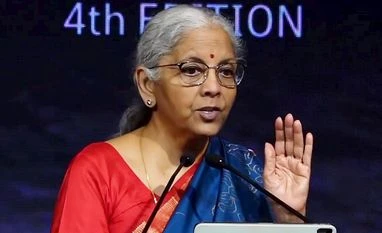
Union Finance Minister Nirmala Sitharaman delivers the inaugural address at the Kautilya Economic Conclave 2025 on the theme 'Seeking Prosperity in Turbulent Times', in New Delhi. (Photo:PTI)
2 min read Last Updated : Oct 03 2025 | 2:18 PM IST
India and other developing countries have to be active participants in shaping decisions that determine their destinies, said Finance Minister Nirmala Sitharaman on Friday amid United States imposing punitive trade tariffs and wars in various countries.
“For developing countries, this is a necessity, not just a romantic aspiration. We cannot afford to be passive spectators in a world where decisions elsewhere determine our destinies,” she said at the fourth Kautilya Economic Conclave in New Delhi.
“We gather at a time when the very foundation of the global order is shifting beneath our feet. The world that emerged after the end of the Cold War, which led to the expansion of globalisation, open markets and the perceived pursuit of multilateral cooperation now appears to be a relic of the past.”
Geopolitical conflicts are intensifying with sanctions and tariffs, while decoupling strategies reshape global supply chains. “Alliances that once appeared solid are being tested, and new coalitions are emerging. For India, these dynamics highlight both vulnerability and resilience,” Sitharaman said.
India can absorb shocks and its economic leverage is strengthening. “Our choices will determine whether resilience becomes a foundation for leadership, or merely a buffer against uncertainty.”
India’s rise as a stabilising force in the world is neither accidental nor transient but the result of a powerful combination of factors, Sitharaman said, adding that the country’s growth rested on domestic factors that minimise the impact of external shocks.
The fragmentation of the global economy could give rise to more sustainable and unforeseen forms of cooperation, but the challenge is to ensure that inclusive principles shape such a trend.
India’s policy of being Atmanirbhar (self-reliant) did not mean that it wanted to shut its economy and look inward. She said that reaching gross domestic product growth of 8 per cent would help India achieve its goal of becoming a developed country by 2047. Private sector investment was increasing in the country alongside public expenditure on infrastructure and research and innovation.
The three-day conclave began Friday and it will have 75 economists and policymakers from over 30 countries speaking on the theme “Seeking Prosperity in Turbulent Times”.

 "India must shape global outcomes, not remain passive spectator: Sitharaman")


