
India-EU trade talks: Tariffs, market access, regulatory clashes in focus
Talks for an India-EU free trade agreement, stalled for eight years, resumed in 2021, now cover investment protection and geographical indications.
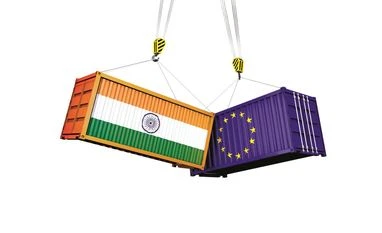 "India-EU trade talks: Tariffs, market access, regulatory clashes in focus")
WebinarsNew
Deep DiveNew
Explore Business Standard
Talks for an India-EU free trade agreement, stalled for eight years, resumed in 2021, now cover investment protection and geographical indications.
European Union leaders are likely to urge India to lower its tariffs on cars and alcoholic beverages, and expand market access during European Commission President Ursula von der Leyen's visit to New Delhi.
Talks for an India-EU free trade agreement, stalled for eight years, resumed in 2021, now cover investment protection and geographical indications.
The EU is India's largest trading partner in goods, with bilateral trade reaching $137.5 billion in 2023-24 fiscal year, marking a growth of about 90 per cent over the previous decade.
Here are key differences between the two trading partners:
HIGH TARIFFS ON CARS, WINES
The EU wants India to cut tariffs of 100 per cent-150 per cent on imported cars, whiskey and wine.
India argues World Trade Organisation rules allow for differential tariffs between developed and developing nations, but has shown willingness to reduce tariffs gradually in consultation with local industry.
CARBON TAX, DEFORESTATION RULES
India is opposed to EU's proposal to impose high tariffs of 20 per cent to 35 per cent from January 2026 on high-carbon goods including steel, aluminium and cement.
The EU has so far not indicated any relief, saying the higher tariffs were part of its clean energy targets.
India also opposes EU's deforestation regulations, which mandate that products imported into the bloc must not come from land deforested after December 31, 2020.
The regulation takes effect from December for large companies and from June 2026 for small enterprises.
INVESTMENT PROTECTION
The EU seeks easier profit repatriation and faster dispute resolution for its companies operating in India, while India insists disputes go through local courts before international arbitration.
DATA SECURITY
India wants the EU to recognise it as a data-secure country, saying that stringent EU data transfer rules hinder trade in digital services.
MOVEMENT OF PROFESSIONALS
India seeks easier temporary work access for its skilled professionals in the EU, which could help its IT sector.
The EU says visa policies are managed by member states and demands India liberalise its accountancy, architecture and legal services - opposed by local industry groups.
MARKET ACCESS
India counters EU market access demand by highlighting EU's substantial exports: $416 million in wine and over $2 billion in automobiles and parts in 2023/24, including $416 million in fully built-up vehicles. Most EU car exports to India arrive in knocked-down form, attracting a 15 per cent duty for local assembly.
India imported $61.5 billion worth of EU goods in 2023/24, while exports to the bloc reached $75.9 billion.
AGRICULTURE
India fears opening its market to highly subsidised EU farm products would hurt millions of local farmers.
The EU wants lower Indian tariffs on agricultural goods, which are currently at 35 per cent to 60 per cent.
INTELLECTUAL PROPERTY
The EU opposes India's intellectual property policies, arguing patent "ever-greening" hampers its pharmaceutical companies.
India wants greater access for its cheaper drugs and chemicals in the EU market.
(Only the headline and picture of this report may have been reworked by the Business Standard staff; the rest of the content is auto-generated from a syndicated feed.)
First Published: Feb 27 2025 | 2:18 PM IST


