
India expects to increase energy trade with US, says Piyush Goyal
Goyal is leading a delegation for meetings in New York with the US side to achieve an early conclusion of a bilateral trade agreemen
 "India expects to increase energy trade with US, says Piyush Goyal")
Explore Business Standard

Associate Sponsors
Co-sponsor
Goyal is leading a delegation for meetings in New York with the US side to achieve an early conclusion of a bilateral trade agreemen
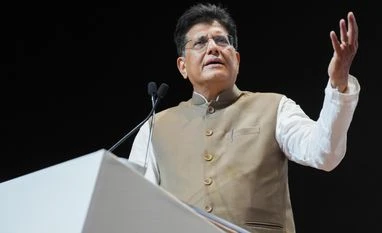
India expects to increase its trade with the US in energy products in the years to come, and the country's energy security goals will have a significant element of US involvement, Commerce and Industry Minister Piyush Goyal has said.
"Clearly, the world recognizes that (energy security) is one area where we all have to work together. India is a big player in the energy field... we are big importers of energy from across the world, including from the US," Goyal said here on Tuesday.
Goyal delivered the keynote address at an event, 'Energy Security in a Shifting Global Landscape: Building Resilient Energy Markets Across Borders' hosted by the Consulate General of India in New York, US-India Strategic Partnership Forum (USISPF), and India's leading decarbonisation solutions provider, ReNew.
"We expect to increase our trade with the US on energy products in the years to come. And being close friends, natural partners, our energy security goals will have a very high element of US involvement, which will ensure price stability, diversified sources of energy for India and help us unlock limitless possibilities with the US on various fronts, energy and beyond, he said.
Goyal is leading a delegation for meetings in New York with the US side to achieve an early conclusion of a bilateral trade agreement.
Noting that September 22 is the commencement of Navratri, a very auspicious day of the Hindu calendar, he said it's said that on this day, "things are expected to turn for the better." The dignitaries attending the event included Member of Parliament Anurag Thakur, Secretary in the Ministry of Petroleum and Natural Gas Pankaj Jain, USISPF CEO and President Mukesh Agni, ReNew co-founder Vaishali Nigam Sinha and ReNew Chairman and CEO Sumant Sinha.
Goyal stressed that another area where India and the US can work together and plan to work together is nuclear power.
"It's an area that we've been talking of for a long time. There were certain elements which needed to be set right. And I believe we are working in India to support private efforts on nuclear power," "I think the best way forward for all of us is to ensure resilient critical mineral supplies, see how we can diversify our sources to ensure that trade is not weaponized. We have to work on creating infrastructure, particularly transmission grid infrastructure within countries and across borders," which can become the backbone of clean energy transition for different nations, he said.
"We all have to work very seriously to align our regulatory frameworks to see how this cross-border energy can be guaranteed without any concerns of geopolitics overtaking the energy resilience or energy security, he said.
Goyal added that India continues to invest in nuclear power and looks to double "our nuclear power in the coming years through government intervention, but we do hope to take it on a much bigger scale. It does have challenges related to price and energy costs, which will need to be addressed. We'll have to make it more competitive, he said.
He underlined that collectively today, India is in a sweet spot to expand its clean energy and over the next five years, we hope to grow from 250 gigawatt to 500 gigawatt.
Goyal referred to the European Union's Carbon Border Adjustment Mechanism (CBAM), which, he said, has far-reaching implications.
"In fact, it could isolate the EU and hurt their economy because they would be like a small island and everybody else around them would be trading, whereas they would become price-competitive, they would actually cause inflation in their own economy, Goyal said, adding that they would cause their infrastructure and their cost of living to become unviable. Their products would lose market share and exports.
"And at the same time, this green protectionism is like a trap in which, if somebody buries his head, he may find it very difficult to come out of the sand," Goyal said.
(Only the headline and picture of this report may have been reworked by the Business Standard staff; the rest of the content is auto-generated from a syndicated feed.)
First Published: Sep 24 2025 | 11:09 AM IST

