India may offer zero import duty on auto components for US at BTA

US last week imposed a 25% tariff on the import of automobiles and certain automobile parts
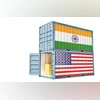
india us trade deal
Indian auto component exporters may see their operating margins compress by 125–150 basis points due to the US decision.
Puja Das New Delhi
5 min read Last Updated : Mar 31 2025 | 12:13 AM IST
As negotiations for the bilateral trade agreement (BTA) with the United States (US) are ongoing, India may propose a 0-1 per cent tariff on the import of automobile parts, if the US reduces its 25 per cent duty on the same, a senior official said. 
 
The US, under the Donald Trump administration, last week imposed a 25 per cent tariff on the import of automobiles and certain automobile parts. While vehicle tariffs will come into force from April 3, the tariffs on import of auto parts will be effective no later than May 3.
 
“In automobiles, they are not ready to reduce the duty, but in components, they may reduce the duty. So, we don’t have an issue in lowering the import duty for components to 0-1 per cent from the existing 10-15 per cent,” the official said.
 
“The components sector has unofficially said it, but we haven’t mentioned it in the BTA yet because the US hasn’t officially talked about import tariff on auto components either. This is informal, but conversation around it will likely be there in BTA. If they do it, we are ready with our offer. Our people need not to worry,” the official added.
 
Queries sent to spokespersons and secretaries of commerce and heavy industries ministries remained unanswered at press time.
 
According to market analysts, the operating margins of Indian automobile component exporters will likely compress by 125-150 basis points due to the Trump administration's decision. Their operating margins are now in the range of 12-12.5 per cent.
 
The 25 per cent tariff by the US will apply to imported passenger vehicles like sedans, SUVs, crossovers, minivans, cargo vans and light trucks, and critical auto parts such as engines, transmissions, powertrain components, and key electrical components, with processes to expand tariffs on additional parts if necessary, the White House said in a fact sheet.  
 
Though India does not export much of their vehicles to the US, it captures 80 per cent of auto component exports headed to the world’s largest economy, with engine components, power trains and transmissions being the largest export items.
 
US auto components in India attract three kinds of tariffs- 7.5 per cent, 10 per cent and 15 per cent, while the US imposes tariffs of 3.4-4.0 per cent on imports from India.
 
Rationalising the likely move to reduce import tariff on US auto parts, the government official said that the reason why India can reduce import tariff on auto components is because it will allow the US greater access to the Indian automotive market.
 
India exported auto components worth $11.1 billion globally in the first half of 2024-25. Of this, nearly 28 per cent—valued at $3.67 billion—was shipped to the US. In FY24, India’s exports were worth $6.79 billion, according to the Automotive Component Manufacturers Association of India.
 
However, India exported motor cars and vehicles worth only $37.11 million to the US in 2023, the United Nations COMTRADE database showed.
 
“The challenge will come if the US gives certain countries a better concession than India. India is talking about a BTA with the US. There could be other countries that are also talking about the same. In that case, those countries could become more competitive. Then, how that tax structure gets distorted and to whose advantage and whose disadvantage, we will only know in due course,” an industry executive said on condition of anonymity.
 
Secondly, the challenge could be that the US’ new tariff could lead to a huge price hike of the US vehicles, and that will affect their domestic demand, which in turn could impact the demand for parts they are importing into the country. 
 
The US cannot rely on other major suppliers, like China, Mexico and Canada, as the cost structure in these countries is often higher or less predictable due to geopolitical factors.
 
“Thirdly, China, which is already facing a 21 per cent import tariff, can give opaque subsidies and make their imports cheaper. Canada is under huge scrutiny from the US and it will be unlikely, but you never know,” the industry executive added.
 
Mexico, Canada and China together make up nearly two-thirds of auto component imports into the US. The total import of the US last year was $89 billion worth of auto parts globally, with Mexico accounting for $36 billion and China $10.1 billion.
 
According to Saurabh Agarwal, Tax Partner at EY India, “The government should consider re-opening the PLI auto scheme, specifically targeting EV passenger cars, which will enable OEMs (original equipment manufacturers) to make their products competitive in the Indian market.” 
 
Furthermore, exploring a capital subsidy scheme by moving unutilised budgets from some other schemes for export-oriented EV passenger car facilities is crucial. This strategic move will enhance India's global competitiveness and leverage the current geopolitical landscape, Agarwal added.

One subscription. Two world-class reads.

Already subscribed? Log in

Subscribe to read the full story →
*Subscribe to Business Standard digital and get complimentary access to The New York Times

Smart Quarterly

₹900

3 Months

₹300/Month

SAVE 25%

Smart Essential

₹2,700

1 Year

₹225/Month

SAVE 46%
*Complimentary New York Times access for the 2nd year will be given after 12 months

Super Saver

₹3,900

2 Years

₹162/Month

Subscribe

Renews automatically, cancel anytime

Here’s what’s included in our digital subscription plans

Exclusive premium stories online

  • Over 30 premium stories daily, handpicked by our editors

Complimentary Access to The New York Times

  • News, Games, Cooking, Audio, Wirecutter & The Athletic

Business Standard Epaper

  • Digital replica of our daily newspaper — with options to read, save, and share

Curated Newsletters

  • Insights on markets, finance, politics, tech, and more delivered to your inbox

Market Analysis & Investment Insights

  • In-depth market analysis & insights with access to The Smart Investor

Archives

  • Repository of articles and publications dating back to 1997

Ad-free Reading

  • Uninterrupted reading experience with no advertisements

Seamless Access Across All Devices

  • Access Business Standard across devices — mobile, tablet, or PC, via web or app

Topics :Trump tariffsAutomakersUS India relations

Next Story



