
No direct impact of US tariffs on domestic industry, says steel secy
India does not import much steel from the US. So, the steel trade between India and the US is not very direct, he said
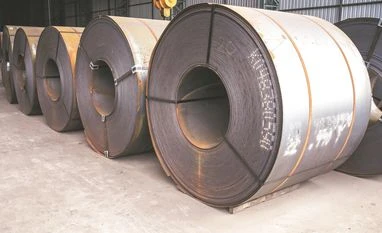 "No direct impact of US tariffs on domestic industry, says steel secy")
Explore Business Standard

Associate Sponsors
Co-sponsor
India does not import much steel from the US. So, the steel trade between India and the US is not very direct, he said
The imposition of tariffs by the US will not have a direct impact on the domestic steel industry as India's own consumption of the alloy is growing, Steel Secretary Sandeep Poundrik said on Wednesday.
Besides, the exports of steel to the US is around lakh tonnes -- out of 152 million tonnes production, the senior ministry official said in a session at 'FT Live Energy Transition Summit India' in the national capital.
"So, if we take direct impact on steel, it's not much because, practically speaking, we don't export much steel to the US," Poundrik said in reply to a question related to the US tariffs.
Last year, India's total steel exports to the US stood at around 1,00,000 tonnes. Similarly, India does not import much steel from the US. So, the steel trade between India and the US is not very direct, he said.
However, there may be some indirect impact because of the products made of steel that are traded between the two countries, Poundrik said.
The domestic production of steel was about 152 million tonnes (MnT) last year, and India is the only country in the world which is clocking a very high growth in steel production. In fact, in the last three years, the sector has grown at an average rate of around 12 per cent annually.
This robust domestic growth alone provides sufficient impetus for Indian steel producers to ramp up their capacities.
Speaking further, he said that last year the country's steel exports were roughly 4.5 MnT, which is only about 3 per cent of the total domestic production.
Therefore, while exports add value to steel production, they are not a particularly significant factor for domestic producers, as the consumption growth within the country itself is sufficient to keep the steel sector viable.
"So, from that angle, I think tariffs by any country on steel will not be very important for Indian steel producers," he noted.
On steel consumption, Poundrik said, "We expect that by 2030, our consumption will be somewhere between 225 to 240 MnT. And, to cater to that consumption, we will need about 300 MnT capacity. India last year crossed the threshold of 100 kilograms per capita consumption. Now, that's an interesting landmark.
(Only the headline and picture of this report may have been reworked by the Business Standard staff; the rest of the content is auto-generated from a syndicated feed.)
First Published: Sep 17 2025 | 12:54 PM IST

