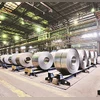
The Ministry of Steel has decided to suspend Quality Control Orders (QCOs) pertaining to 55 steel products to address raw material constraints faced by consumer industries such as automobiles and MSMEs, taking the total number of such orders put in abeyance based on high level reform panel’s recommendation to 76.
The panel on non-financial regulatory reforms headed by NITI Aayog member Rajiv Gauba, had proposed the revocation, suspension, and deferment of QCOs for more than 200 products, citing concerns that they had increased compliance burden and disrupted supply chains, and were hurting India’s manufacturing competitiveness. Its report, submitted in October, advised the Centre to scrap 27 QCOs for key products such as plastics, polymers, base metals, footwear, and electronic components.
Over Wednesday and Thursday, the Ministries of Chemicals and Fertilisers, and Mines, had scrapped QCOs pertaining to 14 products containing plastics and synthetic fibres, and seven products such as tin, aluminium, lead, zinc, nickel and copper, respectively.
The rollback of the QCOs is likely to gather pace as more ministries are expected to act on the Gauba panel’s recommendations with the Cabinet Secretariat steering the way. The secretariat has sought action taken reports from concerned ministries, including textiles, mines, steel, chemicals and fertilisers, and the Department for Promotion of Industry and Internal Trade (DPIIT), by November 15.
The developments assume significance in the backdrop of India’s attempts to secure a trade deal with the United States (US) and get some respite from the 50 per cent tariffs imposed on Indian goods since late August. Washington had termed India’s QCO regime a non-tariff barrier that hampers American exports, and these barriers have been a key issue in Indo-US negotiations for a bilateral trade agreement.
An email to the Cabinet Secretariat seeking comment on the matter did not elicit a response till the time of going to press.
“The ministry decided to suspend QCOs on 42 Bureau of Indian Standards (BIS) mandates for three years and on 13 specialty-steel-related standards for one year,” a senior steel ministry official said on Friday, adding a notification is expected by next week.
The suspension will expand sourcing options for importers. “Suspending QCOs means you can import from a non-licensee,” the official said. “Today, you must import from a BIS licensee, but now, you can import from anywhere,” he explained, stressing that the intent is to ensure consumer industries do not face problems and receive steel at competitive prices.
This translates into a suspension of more than a third of the 151 products covered by the Steel and Steel Products Quality Control Order (QCO) that mandates BIS certification for 151 carbon steel, alloy steel and stainless steel products mainly used in sectors like construction, infrastructure, automobiles and engineering applications.
Another 15 steel products where India has some domestic capacity, will be taken up by an inter-ministerial group (IMG). “The IMG will examine whether they need to be suspended or retained,” he said.
“The High-Level Committee evaluated the standards, and we have accepted some of its recommendations,” the official said, adding that the ministry will “keep reviewing the suspension if it has any adverse impact”. “We have to balance the interests of steel producers and steel consumers. While steelmakers want stronger restrictions, consumer industries say QCOs affect imports and increase prices,” the official noted.
The steel ministry has retained QCOs in categories considered sensitive or where Indian production capacity is adequate. These include five standards where domestic capacity is adequate, as well as standards related to health and safety, and products primarily made by small producers, and those used in defence and atomic energy on grounds of national security.
Delhi-based think tank Global Trade Research Institute (GTRI) said that as QCOs are rolled back, India must monitor import trends — daily if needed — to ensure quality products and prevent dumping. “…Global suppliers may attempt to offload excess inventory at predatory prices. Continuous surveillance of customs data, Directorate General of Trade Remedies alerts, and landed price patterns will help the government act swiftly through anti-dumping, safeguard or tariff-rate measures if unfair trade practices emerge,” it said in a report on Friday.

 "The shift: QCO rollbacks gather steam, suspended for 55 steel products")











