4 min read Last Updated : Mar 31 2025 | 12:34 AM IST
With the Tamil Nadu Assembly elections looming, both the ruling Dravida Munnetra Kazhagam (DMK) and the main Opposition All India Anna Dravida Munnetra Kazhagam (AIADMK) are recalibrating strategies.
A fresh twist came last week when AIADMK leader Edappadi K Palaniswami met Union Home Minister Amit Shah, fuelling speculation of a renewed alliance with the Bharatiya Janata Party (BJP). The two parties had parted ways in 2023 over ideological and “personality” clashes with state BJP chief K Annamalai. The potential tie-up is seen as crucial amid concerns that actor Vijay’s (Joseph Vijay Chandrasekhar’s) Tamilaga Vettri Kazhagam (TVK) could split anti-DMK votes.
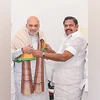
“As far as Tamil Nadu is concerned, our friends in the AIADMK and leaders in the BJP are talking. When a decision is arrived at, we will make it public,” Shah told the media, signalling a possible realignment. Palaniswami, meanwhile, downplayed the meeting as routine, stating, “Alliance talks will happen as the election nears. The AIADMK only went to speak on people’s issues.”
Reports suggest that AIADMK is seeking to reduce Annamalai’s role in the state’s politics, while accepting the presence of estranged AIADMK figures like T T V Dhinakaran, V K Sasikala, and O Panneerselvam in the National Democratic Alliance (NDA). Annamalai, for his part, has stated that he will not be a “problem for anyone”.
In the 2021 Assembly elections, the DMK, led by Chief Minister M K Stalin, secured a decisive victory, winning 159 of 234 seats. The NDA won 75, with the AIADMK (then part of the tie-up) itself securing 66. Despite the difference in seats, the vote share gap was narrower: The DMK at 37.7 per cent and the AIADMK at 33.29 per cent. Other NDA partners — The BJP and the Pattali Makkal Katchi (PMK) — polled 2.62 per cent and 3.8 per cent, respectively.
The September 2023 rupture in the tie-up stemmed from Annamalai’s remarks about Dravidian leader C N Annadurai, in which he claimed that Annadurai had insulted Hinduism in 1956 and later had to issue an apology.
While Annamalai had previously criticised the late J Jayalalithaa, the AIADMK’s sharp response to his comments on Annadurai signalled a breaking point. The AIADMK, founded in 1972 by M G Ramachandran (MGR), includes “Anna” in its name as a tribute to Annadurai.
The split proved costly. The AIADMK contested the Lok Sabha elections alone, suffering a crushing defeat as the DMK-Congress alliance swept all 39 parliamentary seats. The AIADMK’s standalone vote share dropped to 20.46 per cent (23 per cent with allies), while the BJP-led NDA polled 18.28 per cent. With Palaniswami’s leadership under scrutiny, the upcoming state elections are critical.
“We have given the Centre a list of corruptions and failures of the DMK. We have to wait and watch if they are concerned about the wrongdoings of the DMK. The DMK claims to be custodians of Tamil rights, but these debates only happen within the state. On the delimitation and the language issues, we are on the same lines, but we work towards a solution. We stand by our ideology,” Kovai Sathyan, national spokesperson of the AIADMK, told Business Standard.
Internal party divisions (AIADMK leader K A Sengottaiyan met Shah separately days ahead of Palaniswami’s talks with the Union minister) and the rise of Vijay in the political scene add to the AIADMK’s challenges. “Vijay may play spoiler,” said writer-activist Maalan Narayanan. “His ability to convert crowds into votes is untested, but he could siphon off anti-DMK votes,
hurting the AIADMK.”
Political analyst R Venkatesh estimates the TVK could take 7-8 per cent of this bloc. “During the Lok Sabha polls, the AIADMK lost deposit in seven constituencies and was in third place in nine places. Hence, they need a good alliance to win a battle against the Stalin-led government,” said Venkatesh, faculty member at the University of Madras.
Though the Opposition is fractured, the DMK is facing anti-incumbency pressures, said Narayanan. Protests by government employees demanding the old pension scheme, grievances from teachers and transport workers, and allegations of inconsistencies in women’s welfare payouts pose challenges. “The anti-incumbency may not be overwhelming, but an undercurrent exists,” Narayanan noted. A divided Opposition, however, may still work in the DMK’s favour.




